Amazon Globalstar Acquisition: Impact on Apple’s Satellite Ecosystem
Article Content
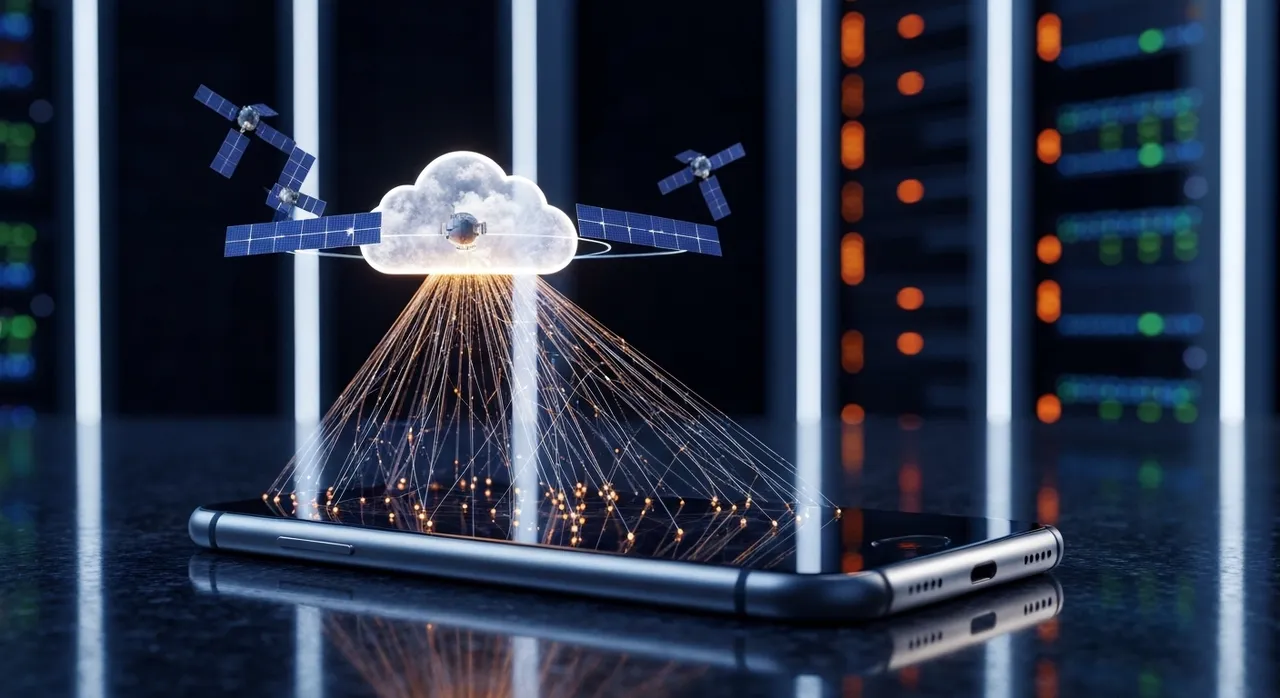
The telecommunications landscape shifted on its axis this morning, April 15, 2026, as Amazon finalized its most aggressive move into the space sector to date. The Amazon Globalstar acquisition, a definitive $11 billion merger agreement, places the e-commerce and cloud giant at the helm of the very infrastructure that powers the safety features of its most formidable rival: Apple. By absorbing Globalstar’s satellite operations and its coveted spectrum, Amazon has effectively transformed from a broadband aspirant into a vertically integrated space powerhouse, signaling the end of the experimental era for satellite-to-phone connectivity.
The Anatomy of the $11 Billion Amazon Globalstar Acquisition
The transaction, valued at approximately $90.00 per share, represents a significant premium for Globalstar, a company that has spent years evolving from a niche satellite provider into a cornerstone of the modern mobile ecosystem. Under the terms of the deal, Globalstar stockholders were given the option to receive their consideration in either cash or Amazon common stock, with a proration mechanism limiting aggregate cash payments to 40% of the total shares. This structure ensures that many of Globalstar’s legacy investors will maintain a stake in what is now being branded as the Amazon Leo ecosystem.
Beyond the headline price tag, the deal is conditional on Globalstar achieving specific operational milestones related to its HIBLEO-4 replacement satellites, currently being manufactured by MDA Space and Rocket Lab. For Amazon, the acquisition is not merely about purchasing hardware in orbit; it is a strategic “regulatory shortcut.” By acquiring an existing operator, Amazon bypasses the decades-long process of filing for international spectrum rights and orbital slots. Globalstar brings with it a mature network of 25 second-generation satellites and a roadmap for the C-3 constellation, which will eventually double the network’s capacity to 54 active spacecraft.
The Spectrum Goldmine: Band n53 and L-Band Assets
The true “crown jewel” of the Amazon Globalstar acquisition is the licensed spectrum. Globalstar holds globally harmonized licenses in the L-band and S-band, specifically the 2.4 GHz Band n53. Unlike the high-frequency Ka-band used by the original Project Kuiper (now Amazon Leo) for residential broadband, the n53 band is exceptionally well-suited for Direct-to-Device (D2D) services. This frequency can penetrate atmospheric interference and, crucially, connect directly to standard, unmodified smartphones without the need for a bulky satellite dish.
Technical analysts point out that Amazon’s existing satellite venture was facing a “spectrum bottleneck.” By folding Globalstar’s terrestrial and satellite spectrum into its operations, Amazon can now offer a seamless transition between its AWS Ground Station services and mobile hardware. This enables a hybrid connectivity model where Amazon Leo provides high-speed backhaul while the Globalstar assets handle low-latency, low-bandwidth communications for mobile users and industrial IoT sensors.
The Apple Dilemma: A “Tripartite Alliance” of Necessity
The most intriguing aspect of this acquisition is the immediate impact on the Apple ecosystem. Since the launch of the iPhone 14, Apple has relied exclusively on Globalstar to power its “Emergency SOS via satellite” and “Find My” satellite features. Apple’s 20% equity stake in Globalstar, resulting from a 2024 investment of $1.5 billion, initially appeared to be a barrier to any hostile or competitive takeover. However, the 2026 merger includes a comprehensive, long-term agreement between Amazon and Apple that ensures the continuity of these vital services.
Industry insiders describe this as a “Tripartite Alliance” where Amazon provides the infrastructure, Globalstar provides the spectrum, and Apple remains the primary consumer-facing client. Amazon Leo will eventually become the underlying network for all iPhone satellite features, with the transition expected to be invisible to the end user. This agreement covers several key areas:
- Emergency SOS and Roadside Assistance: Guaranteed support for current and future iPhone and Apple Watch models.
- Messages via Satellite: Support for the enhanced satellite messaging protocols introduced in iOS 18 and beyond.
- Satellite API for Developers: A new framework allowing third-party apps to access limited satellite data, likely powered by Amazon’s high-capacity LEO network.
- Indoor Connectivity: Rumors suggest that by 2027, the combined Amazon-Globalstar network will use Dynamic Beam Steering to provide limited satellite signal penetration within buildings for emergency alerts.
While the agreement provides immediate stability, the competitive tension is palpable. Amazon now possesses a “kill switch” (at least theoretically, once current contracts expire) over a core safety feature of the iPhone. Analysts suggest that Apple may have approved the deal only after securing ironclad guarantees and perhaps a favorable rate for the next generation of Satellite over 5G services.
Integration with Project Kuiper (Amazon Leo)
The rebranding of Project Kuiper as Amazon Leo in late 2025 was the first signal that Amazon was moving toward a unified connectivity brand. With the Amazon Globalstar acquisition, Amazon Leo now operates on two distinct tiers. The primary LEO constellation, consisting of thousands of satellites, will handle high-speed internet for homes, aircraft, and maritime vessels. Meanwhile, the Globalstar “bent-pipe” architecture will serve as the specialized mobile layer.
Technical Synergies and Ground Infrastructure
Amazon plans to integrate Globalstar’s 90 new Earth station antennas across 35 global gateway sites into the AWS infrastructure. This allows for localized data processing at the edge, reducing the latency for satellite-to-phone communications. By using Software-Defined Radio (SDR) and Beamforming technology, Amazon can reconfigure the Globalstar satellites in real-time to prioritize high-traffic areas or emergency zones during natural disasters.
- Dynamic Spectrum Management: Amazon will use AI-driven algorithms to manage interference between the various bands, ensuring that high-speed data streams from Amazon Leo do not drown out the faint signals from a smartphone in a remote canyon.
- Supply Chain Automation: Beyond consumer devices, Amazon intends to use Globalstar’s two-way industrial IoT capabilities to monitor its global logistics fleet. This includes autonomous trucks and warehouse robots that require “always-on” connectivity, even in areas where terrestrial 5G is non-existent.
- Launch Efficiency: Leveraging Blue Origin’s New Glenn rocket, Amazon can deploy the next generation of Globalstar (C-3) satellites at a lower cost than previous SpaceX Falcon 9 launches, further improving the unit economics of the space division.
The New Space Race: Amazon vs. Starlink vs. AST SpaceMobile
The Amazon Globalstar acquisition is a direct shot across the bow of Elon Musk’s SpaceX. Until now, Starlink held a dominant lead in the D2D market through its partnership with T-Mobile and its acquisition of spectrum from EchoStar. With over 10,000 satellites in orbit as of mid-2026, Starlink remains the leader in sheer volume, but Amazon’s move secures a unique “luxury” tier of customers through Apple.
Meanwhile, AST SpaceMobile continues to represent a third front in this war. While Amazon and Starlink rely on standard mobile bands or modified satellite bands, AST SpaceMobile’s massive “BlueBird” satellites (some reaching 2,400 square feet in area) function as literal cell towers in space. Amazon’s acquisition of Globalstar allows it to compete with AST’s signal strength by using a denser constellation of smaller, more nimble satellites that integrate directly with existing Mobile Network Operator (MNO) partners.
Market Implications for 2027 and Beyond
As the deal moves toward a projected close in early 2027, the telecommunications industry is bracing for a wave of consolidation. The barrier to entry for new satellite startups has skyrocketed; it is no longer enough to launch a satellite—one must own the spectrum and the cloud infrastructure to make that hardware useful. Amazon Leo is now positioned as a “Space-as-a-Service” provider, potentially offering its satellite backbone to other smartphone manufacturers like Samsung or Google, further diluting Apple’s original first-mover advantage.
Conclusion: A Seamlessly Connected World
The Amazon Globalstar acquisition marks the definitive transition of satellite connectivity from a “last-resort” emergency feature to a standard component of global telecommunications. For the average consumer, the corporate maneuvering of Jeff Bezos and Tim Cook matters less than the result: a world where “no service” becomes a relic of the past. Whether through an iPhone or an upcoming Amazon-branded device, the integration of L-band spectrum into the Amazon Leo network ensures that the digital divide is finally being bridged—not from the ground up, but from the stars down.
As the regulatory reviews begin, the industry will be watching closely to see how the Federal Communications Commission (FCC) and international bodies view this massive concentration of orbital power. For now, one thing is certain: the $11 billion spent today has secured Amazon’s place in the pockets of millions of users, regardless of whose logo is on the back of their phone.
Written by
TempMail Ninja
Digital privacy and online security expert. Passionate about creating tools that protect users' identity on the internet.