Amiga Unix 2.02c Rediscovered: A Major Retro-Computing Breakthrough
Article Content
The retro-computing and digital preservation worlds were recently set ablaze when YouTuber Forgotten Computer successfully recovered and archived a legendary, long-lost version of Amiga Unix (affectionately known within the retro-community as AMIX). For decades, software preservationists and digital archaeologists have meticulously cataloged the developmental lineage of Commodore’s official, proprietary port of AT&T System V Release 4 (SVR4) UNIX. While a nearly complete record of operating system versions spanning from 1.0 to 2.03 was securely archived, version 2.02 remained a glaring blank spot—existing solely as a ghost in old hardware documentation and categorized strictly as lost media.
This missing link in computing history was dramatically unearthed at an auction celebrating the 40th anniversary of the Free Software Foundation (FSF). The creator of Forgotten Computer won a historic Amiga 3000UX workstation that was originally deployed in the early 1990s by the pioneering staff of the FSF. What followed was a brilliant exercise in hardware preservation and forensic data recovery, ultimately revealing the long-sought AMIX version 2.02c running alongside a historic, pristine digital time capsule of early GNU utilities.
The Forgotten History of Amiga Unix: SVR4 on Motorola 68k
To fully appreciate the gravity of this discovery, one must look back to the high-stakes workstation wars of the early 1990s. Released in 1990, the standard Commodore Amiga 3000 was a powerhouse, featuring an advanced 32-bit architecture, native SCSI-II storage, and the Zorro III expansion bus. Sensing an opportunity to break into the lucrative scientific, academic, and enterprise computing markets, Commodore launched the Amiga 3000UX in 1991. This specialized workstation bypassed the standard AmigaOS/Workbench environment by default (though a dual-boot option remained accessible), instead shipping pre-installed with Commodore’s proprietary Amiga Unix.
AMIX was not merely a UNIX-like clone; it was a fully licensed, exceptionally compliant port of AT&T’s UNIX System V Release 4. Commodore’s marketing campaign, famously featuring the slogan “Born To Run UNIX SVR4,” emphasized this rigorous standard. It was one of the very first commercial ports of SVR4 to the Motorola 68000 architecture. However, unlike Apple’s A/UX, which featured a hybrid compatibility layer allowing users to run standard Macintosh applications, AMIX was a pure UNIX environment. It lacked a translation layer for traditional Amiga software, isolating the workstation’s capabilities from the Amiga’s vast commercial software library.
Despite this software isolation, the hardware driving AMIX was undeniably impressive. The technical specifications of the Amiga 3000UX included:
- Processor & FPU: A Motorola 68030 CPU clocked at 25 MHz, paired with a physical Motorola 68882 Floating-Point Unit (FPU) operating at the same frequency. The CPU’s integrated Memory Management Unit (MMU) was a strict hardware requirement for handling UNIX memory virtualization.
- Memory Configuration: Typically shipped with 9 MB of RAM (1 MB Chip RAM and 8 MB Fast RAM), expandable up to a maximum of 18 MB on the motherboard.
- High-Speed Storage: Powered by an integrated Western Digital WD33C93 SCSI controller, driving a 200 MB internal SCSI hard disk, backed up by an external A3070 SCSI tape drive.
- Advanced Graphics: Managed by the Amiga’s Enhanced Chip Set (ECS) and an internal “Amber” scan-doubler/flicker-fixer that output a clean 31 kHz VGA signal. For true color X11 environments, the workstation was often equipped with the rare A2410 “Lowell” graphics card, which utilized a Texas Instruments TMS34010 graphics co-processor to provide 8-bit color depth.
- Networking Architecture: Built-in support for the Zorro III-based A2065 Ethernet adapter, allowing the system to seamlessly integrate into standard TCP/IP university and laboratory networks.
This technical prowess was formidable enough that Sun Microsystems reportedly explored a deal to OEM the Amiga 3000UX as a low-end, cost-effective complement to their high-performance SPARC workstations. Ultimately, due to Commodore’s notorious managerial missteps, the deal fell through, and AMIX slowly faded into obscurity as commodity PCs running Linux began to dominate the computing landscape.
The FSF 40th Anniversary Auction: A Historic Provenance
In early 2025, the Free Software Foundation celebrated its 40th anniversary. Having transitioned out of their physical office spaces in Boston, the organization decided to catalog, archive, and auction off some of their most iconic historical artifacts to the open-source community. The auction included legendary items like the original Etienne Suvasa pencil sketch of the GNU head and Richard Stallman’s Internet Hall of Fame medal.
Nestled among the physical memorabilia was a true holy grail of computing: an authentic Amiga 3000UX workstation that had been utilized in the FSF’s old offices at the Massachusetts Institute of Technology (MIT) during the late 1980s and early 1990s. This machine was a quiet witness to the absolute genesis of the GNU Project, back when programmers relied on proprietary UNIX workstations to build the compilers, shells, and utilities that would eventually define modern computing.
The creator of Forgotten Computer set their sights on the machine, winning the unit in a nail-biting online auction where the next highest bidder was blocked by missing the clock by just a single second. When the hardware arrived, it was clear that this was not just a rare piece of industrial design, but a highly sensitive digital vault.
A Masterclass in Retro-Hardware Forensic Acquisition
Faced with a historic hardware artifact of this caliber, a less-experienced hobbyist might have immediately plugged the system into a wall outlet and flipped the power switch. In the realm of retro-computing preservation, however, this is a cardinal sin. Vintage electronics face several catastrophic failure modes when booting cold after decades of storage:
- The Infamous Varta Battery: Amiga 3000 series motherboards are notorious for utilizing barrel-style Varta nickel-cadmium (NiCd) rechargeable clock batteries. Over time, these batteries inevitably leak a highly corrosive, basic electrolyte that creeps across the PCB, eating through delicate copper traces and rendering the motherboard useless. Powering a corroded board can cause short circuits and permanent chip damage.
- Degraded Power Supply Capacitors: Electrolytic capacitors inside vintage power supply units (PSUs) dry out or leak. Under load, these compromised capacitors can fail spectacularly, releasing toxic smoke or sending over-voltage surges directly into irreplaceable custom chips like Fat Agnus, Denise, or Paula.
- SCSI Drive Stiction: The magnetic media platters on 30-year-old SCSI hard drives are incredibly fragile. Over decades, the lubricating fluids inside the spindle bearings can seize, or the read/write heads can stick to the platters (a phenomenon known as stiction). Forcing the motor to spin without diagnostic checks can shear the drive heads off, physically scraping the magnetic layer off the platters and destroying the data forever.
To mitigate these risks, the creator of Forgotten Computer performed a methodical, non-invasive digital forensic extraction. Before introducing any electricity to the Amiga’s internal motherboard, they carefully extracted the 3.5-inch SCSI hard drive. Using a dedicated hardware write-blocker to prevent the host operating system from modifying or corrupting any of the drive’s logical sectors, they connected the physical SCSI interface to a modern Linux workstation via a SCSI-to-USB adapter.
Using raw sector-by-sector copying utilities, they created a precise 1:1 bitstream image of the drive’s contents. Once the raw image was captured, they computed cryptographic hash signatures (using SHA-256) to verify its mathematical integrity and distributed multiple mirrored backups across separate local storage pools and offsite cloud repositories. Only when the data was completely secured did the creator attempt to mount and boot the filesystem.
Unveiling AMIX 2.02c: The FSF Open-Source Time Capsule
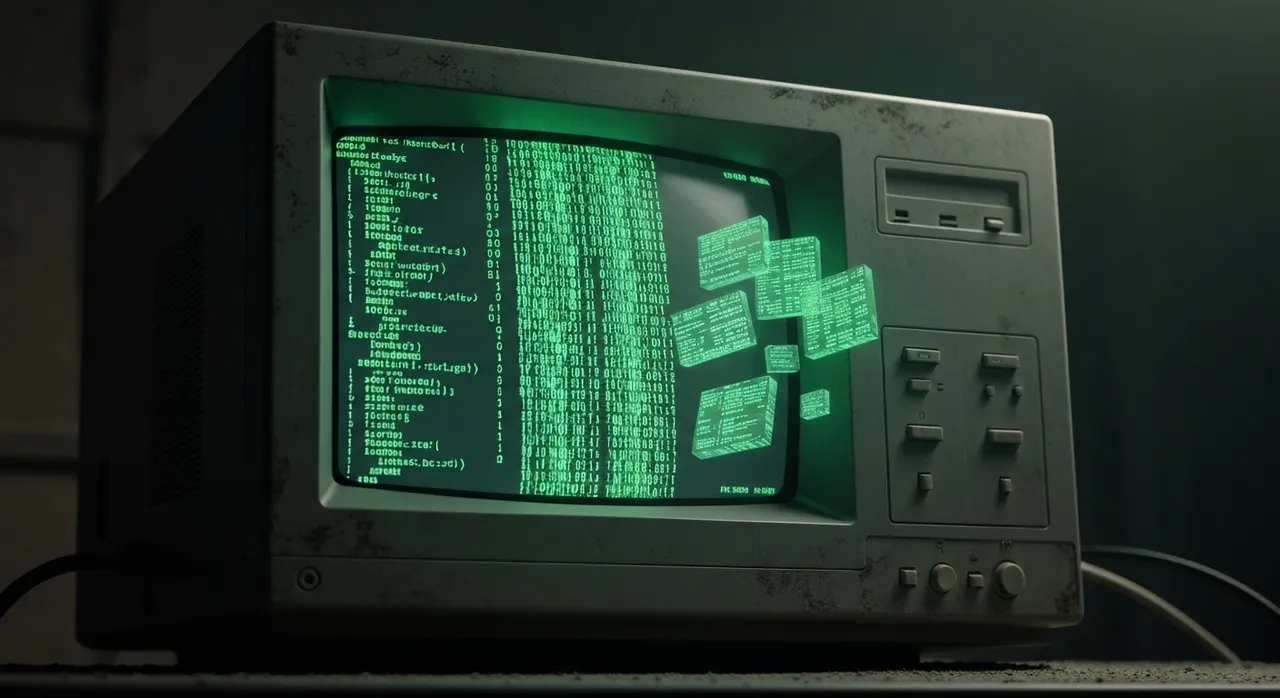
Once the digital image was safely mounted within a simulated emulation environment, the operating system was booted. To the creator’s astonishment, the terminal displayed a version string that had never been archived by the retro-preservation community: AMIX version 2.02c. Up to this moment, the community had presumed that version 2.02 was either a myth or a transient internal testing build that had been entirely overwritten by the subsequent 2.03 and 2.1 releases.
But the rediscovery of the operating system files was only half the story. Because this hard drive had belonged to the early developers of the Free Software Foundation, the user directories and local software partitions served as an extraordinary digital time capsule. In the early 1990s, the GNU project was rapidly developing its core software suite, yet developers lacked a completely free operating system to run them on (as Linux was still in its infancy and BSD was entangled in legal disputes). Workstations like the Amiga 3000UX running AMIX served as the developmental breeding ground for these open-source utilities.
Deep within the filesystem, the creator discovered early, historical builds of foundational GNU software:
- Early GNU Compiler Collection (GCC): Pristine, pre-standardization builds of the GCC compiler configured specifically for m68k SVR4 targets, providing invaluable insights into how early cross-compiling structures were implemented.
- Vintage G++: An early iteration of the GNU C++ compiler, dating back to an era when C++ object-oriented design patterns were actively being established and integrated into Unix environments.
- GNU Command-Line Staples: Historical versions of fundamental command-line utilities, including early releases of
less. Findinglesson this drive captures a fascinating moment in terminal history, showing the utility at a point when it was actively being written to replace the more restrictive, standard UNIXmoreutility.
The drive also featured custom scripts, developmental configuration files, and early X11 graphics assets. Navigating the filesystem reveals an elegant, historical cross-section where Commodore’s proprietary industrial engineering met the absolute dawn of the modern open-source movement.
Why This Discovery Alters Our Understanding of UNIX History
The rediscovery of AMIX 2.02c is a triumph that extends far beyond mere nostalgia. In the grand tapestry of computer science, the transition from proprietary, highly guarded mainframe UNIX environments to free, community-driven operating systems is one of the most critical eras. The contents of this Amiga 3000UX hard drive illustrate precisely how the FSF utilized commercial UNIX installations to build, test, and bootstrap the very GNU tools that would eventually form the userland of GNU/Linux.
Furthermore, it preserves a rare engineering triumph from Commodore. While the company is historically remembered for its mass-market home computers like the Commodore 64 and the Amiga 500, AMIX proves that their engineering teams were capable of developing highly sophisticated, stable, and standards-compliant workstation software. Thanks to the diligent, non-destructive digital forensics of Forgotten Computer, a lost chapter of this legacy has been permanently salvaged from the decay of magnetic media. The raw system files and historical GNU builds have now been uploaded to online archives, ensuring that future generations of computer scientists can boot, explore, and study this pristine monument to the birth of free software.
Written by
TempMail Ninja
Digital privacy and online security expert. Passionate about creating tools that protect users' identity on the internet.