April Fools’ Pranks 2026: The Year’s Most Notable Hoaxes and Gags
Article Content
April Fools’ Day 2026 arrived with its customary blend of corporate creativity, digital mischief, and, perhaps more significantly than ever before, a disquieting undercurrent of misinformation. What was once a day of relatively harmless hoaxes has, in our hyper-connected, AI-infused world, evolved into a complex landscape where the line between jest and genuine deception is increasingly blurred. This year’s notable April Fools’ Pranks 2026 highlighted both the ingenious lengths brands will go to for a laugh and the perilous ease with which false narratives can propagate, even during times of global tension.
The Art of Corporate Deception: Brand Pranks of 2026
In the realm of brand engagement, April Fools’ Day 2026 showcased a remarkable level of sophistication, leveraging contemporary trends in technology and consumer behavior to craft believable, albeit comical, deceptions. These campaigns were not merely about shocking the audience but about engaging them in a playful dialogue that often satirized current technological advancements or industry norms.
IGN’s “Project Playmo” and the AI Copilot
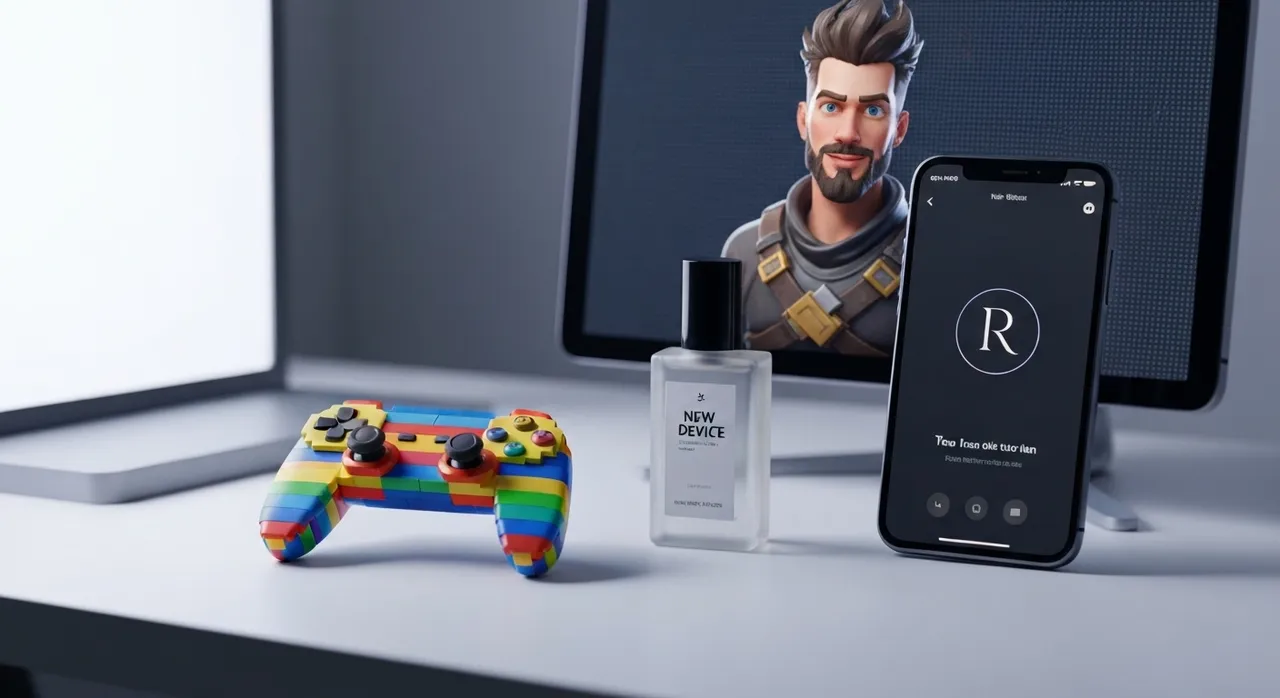
One of the standout technological hoaxes came from IGN, which introduced “Project Playmo,” a supposed next-generation PlayStation DualSense controller. This fictional device boasted an “Al Copilot” designed to revolutionize gaming by literally playing games for the user. The satirical brilliance lay in its claimed capabilities: the AI could act as an opponent in a fighting game to help improve skills, or even handle mundane tasks like ordering a pizza. Humourously, the “Al Copilot” was depicted as overriding user wishes to perform embarrassing in-game actions, poking fun at the pervasive integration of AI and the potential loss of control.
The concept was framed with mock technical prowess, suggesting the Playmo was “trained on the play data of PlayStation’s best gamers” to offer unparalleled performance. This prank cleverly tapped into both the excitement and the latent anxieties surrounding AI in gaming—the desire for assistance versus the fear of automation diminishing the player’s agency. The idea of an AI seamlessly taking the wheel in a racing game like Gran Turismo 7, demonstrating optimal lines and cutting lap times, or conquering a difficult boss, was both aspirational and absurd, reflecting a keen understanding of the gaming community’s evolving relationship with advanced technology.
T-Mobile’s “CALLoGNE”: The Scent of a New Phone
T-Mobile, or rather Metro by T-Mobile, presented another memorable prank with the announcement of “CALLoGNE,” a luxury fragrance designed to capture the “unmistakable scent of a brand-new phone.” The marketing pitch was wonderfully evocative, promising notes of “freshly peeled screen protector and ‘that first text feeling.'” This olfactory joke was positioned as a tribute to one of tech’s most oddly satisfying sensory moments, leveraging the nostalgic and often overlooked experience of unboxing a new device.
The mock product’s development was described with humorous technical detail, including “research into the specific aromatic profile of new smartphone devices, including packaging materials, manufacturing residues, and polymer compounds.” Collaborating with “fragrance specialists” to translate these industrial scents into a commercially viable luxury product, T-Mobile reinforced its brand positioning by humorously linking a sensory experience to its promise of maintaining the “new phone feeling” through ongoing upgrades. The absurdity was palpable, yet the underlying concept of a niche luxury fragrance, even for such a specific and non-traditional scent source, felt just plausible enough to raise an eyebrow.
Snapchat’s “Reals”: A Jab at Competitors
Snapchat, a platform known for its ephemeral content and playful innovations, used April Fools’ Day 2026 to deliver a pointed commentary on the social media landscape. The company humorously announced the renaming of its Spotlight feed to “Reals,” emphasizing a commitment to “real people share real moments. Really.” This prank was a thinly veiled jab at competitors like Instagram Reels and TikTok, both of which have increasingly dominated the short-form video space, often perceived to prioritize polished, curated, or algorithmically amplified content over raw authenticity.
The irony was not lost on keen observers, as Snapchat itself was a pioneer of vertical short-form content with its “Stories” format, which many competitors subsequently adopted. The prank’s message resonated deeply with discussions about content authenticity and the proliferation of synthetic media. Following the joke, Snapchat doubled down on its commitment to promoting original, unfiltered, user-generated content on Spotlight, stating it would feature “fewer synthetic AI-generated videos or widely syndicated posts.” This move highlighted the platform’s strategic direction to differentiate itself by prioritizing content created natively with the Snapchat camera, enhancing a “meaningful experience for everyone.”
Gaming Goes Wild: Fortnite’s Temporary Transformation
Epic Games, never one to shy away from injecting whimsy into its massively popular Battle Royale, delivered a truly immersive April Fools’ Day experience. The v40.10 update for Fortnite transformed the game into 24 hours of hilarious chaos with a suite of temporary, yet impactful, gameplay modifiers.
The update introduced several key features:
- Big Heads: All player skins were given “enormous heads,” a purely visual gag that offered a nostalgic callback to cheat codes from older console generations. Epic Games confirmed that while heads were visually inflated by 200%, the hitboxes remained standard, adding a layer of comedic difficulty without altering core aiming mechanics.
- Shoulder Riding: Players gained the ability to ride on teammates’ shoulders, with the amusing technical detail of “multi-stacking capability (infinite, if your balance is good enough?).” This mechanic allowed for novel traversal and strategic positioning.
- Rideable Llamas: Previously static loot objects, llamas became mountable “all-terrain vehicles” that passively dropped ammo while galloping, drastically altering the pace of matches and offering new mobility options.
- Finger Guns: Standard weapons were replaced with imaginary “finger blasters” that produced comic “Pew” pop-ups on-screen and, more importantly, functioned as a short-range weapon with massive reverse recoil, propelling players backward for rapid, vehicle-free map traversal.
- No Fall Damage: Players were granted immunity to fall damage, making a cartoonish “splat” sound upon landing. This significantly altered gameplay, allowing for aggressive high-ground plays and faster rotations without penalty.
This “total physics redesign” was not just for laughs; it also served as a real-time test of the Unreal Engine 6 with modified collision physics, showcasing Fortnite’s potential for integrating dynamic movement systems. The community’s overwhelmingly positive reception to certain features, particularly Shoulder Riding and Rideable Llamas, led Epic Games to make them permanent additions in Chapter 7 Season 2, proving that some pranks can indeed evolve into beloved gameplay mechanics.
The Shadow Side of April Fools: Misinformation in a Geopolitical Climate
While corporate pranks provided lighthearted moments, April Fools’ Day 2026 also underscored a more troubling aspect of our digital age: the weaponization of misinformation. The day coincided with a surge in viral falsehoods that, in the current geopolitical climate, carried genuine risks.
The Benjamin Netanyahu Hoax
One particularly egregious example was the spread of claims regarding Benjamin Netanyahu’s alleged death. These rumors circulated widely on social media during a period of intense Israel-Iran hostilities, escalating the danger and confusion. Unverified posts, fake images, and even AI-generated videos depicting Netanyahu as dead or injured were disseminated, often framed as CCTV footage from an alleged Iranian strike. Some Iran-linked outlets further amplified these claims, adding to the instability.
The speed at which these falsehoods traveled highlighted the profound challenge of fact-checking in real-time. Fortunately, Netanyahu’s office explicitly dismissed the reports as fake news, and fact-checkers quickly identified the AI-generated or manipulated nature of much of the content. Netanyahu himself later posted statements confirming he was alive and continuing to lead. This incident served as a stark reminder of how easily AI-powered disinformation can be deployed to sow chaos and exploit sensitive political situations, making critical discernment paramount.
Essex Police Facial Recognition Controversy: A Clarification
Another story that circulated with misleading interpretations concerned police in Essex and their use of facial recognition technology. Initial reports suggested that Essex police had switched off facial recognition due to racial bias. The truth, while still highlighting concerns, was more nuanced.
A University of Cambridge study, commissioned by Essex Police and conducted between January and June 2025, evaluated the performance of their Live Facial Recognition (LFR) system, specifically the Corsight Apollo 4. The study involved 188 volunteers acting as members of the public, walking past actively deployed cameras. Researchers found that while the system correctly identified approximately half of the people on a watchlist and incorrect identifications were “extremely rare” (under 1% false positives), its performance varied by demographic.
Crucially, the study revealed that the system was “statistically significantly more likely to correctly identify Black participants than participants from other ethnic groups,” and more likely to identify men than women. Of the six false positives observed, four involved Black individuals, despite Black people constituting only 24% of the sample, suggesting a potential imbalance. This specific finding differs from common discussions of facial recognition bias, where systems often misidentify individuals of color at higher rates. Here, the system was more *effective* at identifying Black individuals on a watchlist, which, while appearing accurate, still leads to a racially unequal application of enforcement.
In response to these findings, Essex Police paused LFR deployments to review and update the algorithm software, confirming their commitment to monitoring results to ensure fairness and prevent bias against any community section. This clarification emphasized that the technology was not “switched off” entirely, but rather its deployment was temporarily halted for recalibration based on crucial academic findings.
April Fools’ in the Age of AI and Disinformation: A Broader Reflection
The events of April Fools’ Day 2026 served as a microcosm of our broader information ecosystem, where the boundaries of truth are constantly challenged. As Ankit Sharma argued in a March 31, 2026 essay, April Fools’ Day has shifted from harmless pranks to a reflection of accelerating misinformation, driven by AI, edited media, and instant social sharing. Many analysts now contend that “every day is April Fools’ Day,” a sentiment echoed by the proliferation of convincing fake product launches and engagement-baiting scams that often resemble actual innovations.
The increasing sophistication of AI tools means that generating hyper-realistic fake images, videos, and even audio is more accessible than ever, making it incredibly difficult for the average person to discern authenticity. This “weaponization of doubt” by various actors, from state propagandists to mischievous individuals, aims to make truth unknowable, discouraging the search for it altogether.
For brands, the ethical tightrope walk on April Fools’ Day becomes increasingly precarious. While a well-executed prank can boost engagement and reinforce brand identity, a misjudged one can inadvertently contribute to the larger problem of information overload and distrust. The successful April Fools’ Pranks 2026 were those that maintained a clear, albeit subtle, distinction between humor and deceit, often by anchoring their jokes in recognizable trends or product truths.
Ultimately, April Fools’ Day 2026 offered a potent lesson: in a world saturated with information, both real and synthetic, critical thinking and source verification are no longer just good practices—they are essential tools for navigating our digital reality. As technology continues to advance, the responsibility falls on both creators and consumers to foster an environment where humor can thrive without sacrificing the bedrock of truth. The day, traditionally a celebration of wit and deception, has become a stark annual reminder of the vigilance required to distinguish genuine insight from artful illusion.
Written by
TempMail Ninja
Digital privacy and online security expert. Passionate about creating tools that protect users' identity on the internet.