Digital Preservation and the Vanishing Culture Podcast Series
Article Content
For decades, we have comforted ourselves with a seductive digital myth: that the internet is forever. This comforting narrative, however, has blinded us to a silent, systemic erosion of our shared cultural heritage. As physical books, music records, and community archives are replaced by transient streaming contracts, paywalled platforms, and fleeting web domains, our collective memory is beginning to dissolve. To confront this modern crisis, the Internet Archive, in partnership with the Authors Alliance, has launched *Vanishing Culture*, a six-part podcast series under its *Future Knowledge* umbrella. This series serves as an urgent wake-up call, emphasizing that without intentional, structured digital preservation, the defining records of the 21st century are poised to disappear entirely.
The podcast series, which debuted on July 1, 2026, is inspired by the Internet Archive’s landmark book, Vanishing Culture: A Report on Our Fragile Cultural Record, co-edited by librarian Chris Freeland and scholar Luca Messarra. Hosted by Swedish musician and artist Vida Vojić, the audio project is a deep dive into the legal, technical, and social battles currently raging to keep our history alive.
Exploring Ephemeral Loss in the “Future Knowledge” Podcast
The debut episode of *Vanishing Culture* featured Luca Messarra, who detailed how copyright laws, corporate platform monopolies, and the rapid shift from media “ownership” to temporary “licensing” have fundamentally compromised our capacity to maintain a historical record. When a user purchases a digital book or movie today, they do not own an artifact; they license access, which can be altered or revoked by corporate entities at any moment without notice.
This systemic vulnerability is not limited to commercial entertainment. It threatens the structural integrity of public knowledge. If physical libraries have served as decentralized repositories where books could survive for centuries simply by existing on shelves, the digital landscape has centralized control. Today, a single technical glitch, corporate acquisition, or shift in platform policy can render thousands of cultural assets permanently inaccessible.
Domestic Archaeology: The Silent Erasure of Cookbooks
On July 8, 2026, *Vanishing Culture* released its second episode, titled **”The Stories Hidden in Cookbooks with Katie Livingston,”** taking the preservation debate into the intimate realm of domestic history. Host Vida Vojić sat down with Stanford University doctoral researcher Katie Livingston, whose work focuses on domestic culture and women’s literature, to examine how everyday, non-academic histories are experiencing rapid erasure in the digital transition.
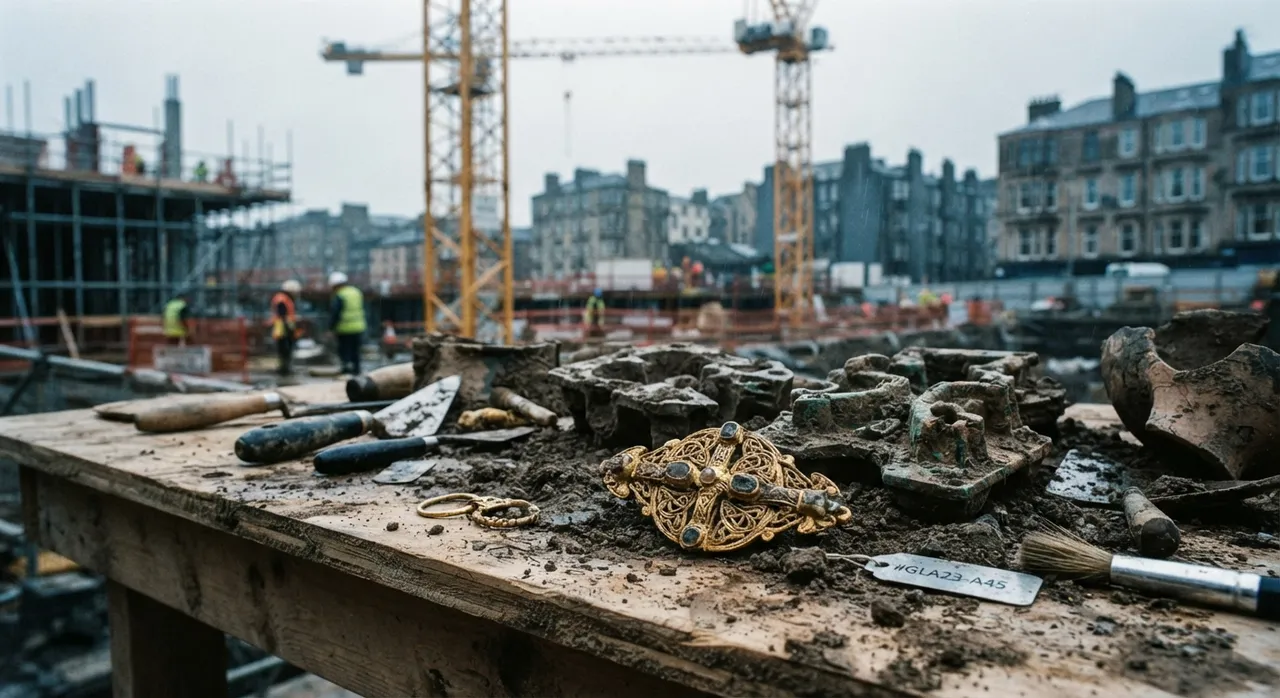
Livingston introduces the concept of “domestic archaeology” through the lens of a highly personal artifact: her grandmother’s copy of Down Home Cookin’, a community cookbook published by the Grady County Extension Homemaker Council in Apache, Oklahoma. The physical book is fragile, missing its cover, and held together by three red rubber bands. Yet, its yellowed pages are stained with grease, and its margins are filled with handwritten family marginalia—substitutions, adjustments, and personal notes left by three generations of women.
This physical cookbook is not merely a collection of instructions; it is a primary historical text. It documents:
- Regional migration and agricultural history in rural Oklahoma.
- Social networks, community organizations, and women-led cultural spaces.
- The evolution of domestic labor and economic survival strategies.
As cooking and culinary culture migrate from permanent, physical prints to online search-engine-optimized (SEO) food blogs, this entire layer of history is at risk. When a food blogger lets their domain registration lapse, or when a hosting platform shuts down, years of localized culinary traditions are wiped out overnight. Unlike physical books, which can sit in a grandmother’s cupboard or a thrift store for decades, digital archives require active, continuous maintenance to exist. When that maintenance stops, the culture vanishes.
The Myth of the Eternal Internet and the Crisis of Digital Preservation
The launch of the *Vanishing Culture* podcast series coincides with an intensifying public debate over the vulnerability of modern media. On July 3, 2026, *Current Affairs* published a comprehensive interview with Wayback Machine director Mark Graham and Internet Archive librarian Chris Freeland, conducted by editor-in-chief Nathan J. Robinson.
Graham dismantled the long-held assumption of web permanence. “I don’t understand why anyone ever thought that that was true,” Graham remarked, pointing out that web pages are rewritten, deleted, or locked behind paywalls at an unprecedented rate. While misinformation remains highly accessible, the validated historical truths of our era are increasingly locked behind expensive academic and journalistic paywalls, creating a dangerous asymmetry in public knowledge.
The preservation crisis extends far beyond commercial websites. Public records, social media movements, and independent creative works are disappearing in real time. Government portals routinely purge historical databases during political transitions, and platforms like Instagram and TikTok offer no standardized, public mechanism for archiving social movements. Without a centralized, non-profit initiative dedicated to digital preservation, future historians will look back at the early 21st century as a “Digital Dark Age”—a period of immense information production that left behind almost no recoverable primary sources.
Collateral Damage: The AI Scraping War and Crawler Blocks
While the technical task of crawling the web has always been difficult, the Internet Archive now faces a profound existential threat: the collateral damage of the artificial intelligence boom. Over the past year, major news publishers and digital platforms have entered a fierce legal and economic battle against commercial generative AI companies, who utilize massive web scrapers to train proprietary Large Language Models (LLMs) without compensation.
In response to this unauthorized scraping, hundreds of publishers have begun implementing sweeping blocks against all automated crawlers. Unfortunately, they are not differentiating between commercial AI scrapers and non-profit library crawlers. The Internet Archive’s primary crawling bot, ia_archiver, is increasingly being locked out of the very websites it has spent three decades preserving.
The scale of this web blockade is staggering:
- The Scale of the Blockade: A recent analysis reveals that over 241 major news publications across nine countries have restricted the Internet Archive’s bots.
- Systemic Local Erasure: Approximately 87% of these blocked sites are owned by USA Today Co. (formerly Gannett), the largest newspaper publisher in the United States. By blocking
ia_archiver, the publisher is effectively deleting the contemporary history of hundreds of local American communities from the global archive. - Programmatic “Hard Blocks”: Outlets like The New York Times and platforms like Reddit have implemented severe technical blocks that bypass traditional
robots.txtconventions, ensuring their sites can no longer be archived. - Surgical Exclusion: The Guardian has adopted a hybrid approach, allowing homepages to be scanned but excluding its actual journalistic articles from the Wayback Machine API and search interface, directly limiting researchers’ ability to verify how news stories are edited post-publication.
Mark Graham and other preservation advocates have expressed profound concern over these developments. While publishers’ fears of commercial AI exploitation are justified, treating the Wayback Machine as “collateral damage” is a catastrophic mistake. The Internet Archive is not building commercial software; it is maintaining a public library. Blocking its crawlers does not stop commercial AI companies—who can easily disguise their bots or purchase private web data licenses—but it does successfully erase the open historical record for future generations of journalists, historians, and legal experts.
Reclaiming Our Collective Memory
The *Vanishing Culture* podcast series makes it clear that digital preservation is not a passive technical task; it is an active political and cultural struggle. When we rely entirely on commercial platforms to host our music, books, news, and personal histories, we outsource our memory to corporations whose primary obligation is to their shareholders, not to history.
Preserving our culture requires a multi-front defense: reforming outdated copyright laws that prevent libraries from lending digital books, creating robust decentralized archiving tools, and pressuring publishers to exempt non-profit library crawlers from their anti-AI defenses.
The humble, grease-stained community cookbook in Oklahoma and the digital front page of *The New York Times* are part of the same continuum. They are the artifacts of how we lived, what we cared about, and how we understood our world. If we do not fight to save them, we risk waking up in a future where our past has been completely erased.
Written by
TempMail Ninja
Digital privacy and online security expert. Passionate about creating tools that protect users' identity on the internet.