Backrooms Digital Archaeology: Solving the Web’s Iconic Mystery
Article Content
In the quiet, digitized corridors of the internet’s collective memory, few images have carried as much weight—or as much dread—as the original “Backrooms” photo. As we approach the theatrical debut of the A24 feature film on May 29, 2026, the digital archaeology community has entered a fever pitch. A viral retrospective trending today, May 16, marks the definitive closure of one of the web’s longest-running investigations. This is no longer just a ghost story for the 4chan era; it is a masterclass in Backrooms digital archaeology, a forensic victory that proved even the most extradimensional nightmares have a physical zip code.
The resolution of the mystery, which identifies the location as a former furniture store in Oshkosh, Wisconsin, serves as a cornerstone for modern internet culture. It represents the transition from “creepypasta” folklore to a verified historical artifact. For years, the image was debated as a 3D render or a deep-learning hallucination. Today, it is recognized as a specific moment in 2002, captured on a consumer-grade digital camera, documenting a mundane renovation that accidentally birthed a new genre of horror.
The 4chan Genesis: Decoding the Liminal Spark
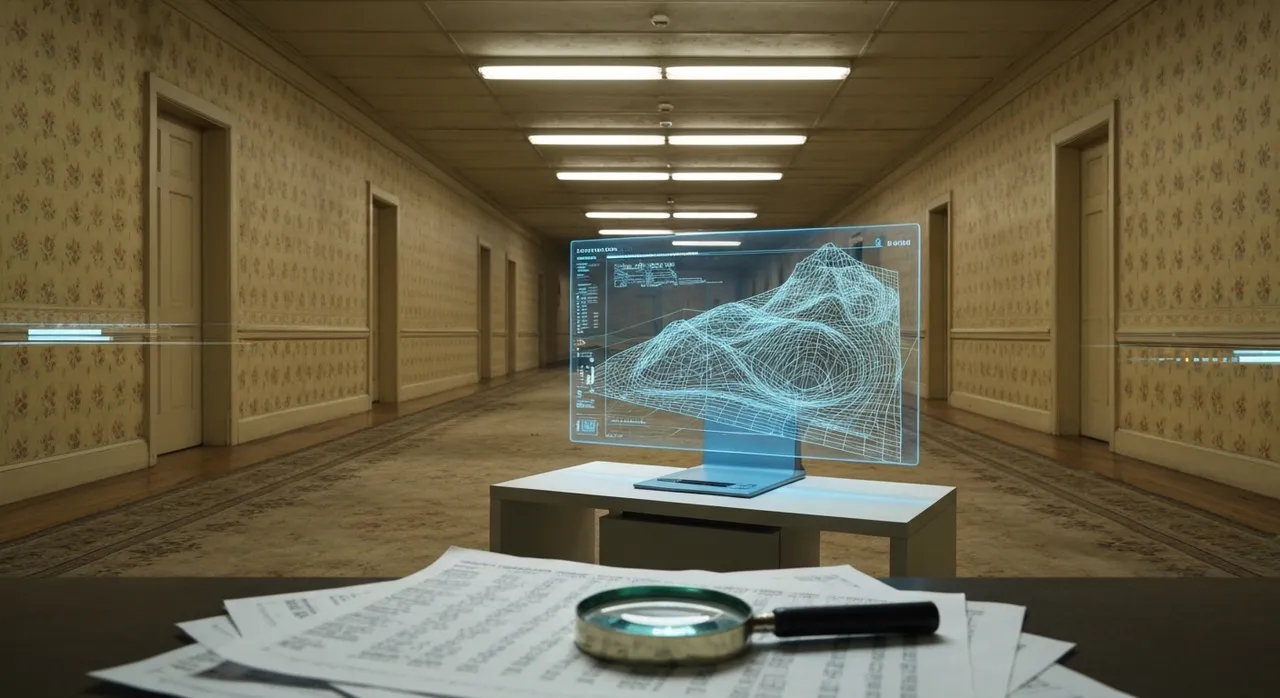
The “Backrooms” phenomenon officially began on May 12, 2019, when an anonymous user on 4chan’s /x/ (paranormal) board posted a photograph of a yellow-walled, fluorescent-lit room with the prompt to share “disquieting images that just feel ‘off.'” The response was instantaneous and legendary. A subsequent reply established the “lore”: the idea that one could “noclip” out of reality and end up in a 600-million-square-mile labyrinth of empty office spaces, defined by the “stink of old moist carpet” and the “hum-buzz” of fluorescent lights.
However, Backrooms digital archaeology has since revealed that the image had been circulating in the darker corners of the web as early as 2011. This multi-year gap between the photo’s existence and its viral “lore” creation is what necessitated a new kind of investigator. Sleuths weren’t just looking for a building; they were looking for a digital ghost that had been stripped of its metadata through years of compression and re-uploading.
The Technical Hurdle: Filename Forensics
The primary challenge in de-anonymizing the image was the lack of original data. Most versions of the photo online were saved as generic strings or “backrooms.jpg.” The breakthrough came when a dedicated group of investigators on Discord—most notably the researcher known as Serrara—began a grueling process of image hash tracking. By cross-referencing archives of 4chan and early 2000s image boards, the team eventually recovered a version of the file that retained its original name: Dsc00161.jpg.
This filename was the Rosetta Stone. It indicated a Sony Cyber-shot digital camera, a staple of early 2000s consumer photography. This narrowed the search parameters from “anything yellow” to “photos taken between 2001 and 2004.” Using this data, digital archaeologists moved away from Google’s modern algorithms and pivoted toward the Wayback Machine, targeting defunct hobbyist blogs and small-business sites from the Midwest, which the image’s “vibe” seemed to suggest.
Oshkosh, Wisconsin: 807 Oregon Street
The hunt concluded at a specific street address: 807 Oregon Street, Oshkosh, Wisconsin. The “extra-dimensional” maze was, in reality, the second floor of a former Rohner’s Home Furnishings store. The building, constructed over a century ago, was being converted into a HobbyTown USA outlet in 2002. The iconic photo was taken on June 12, 2002, by store personnel documenting the renovation progress for a renovation weblog.
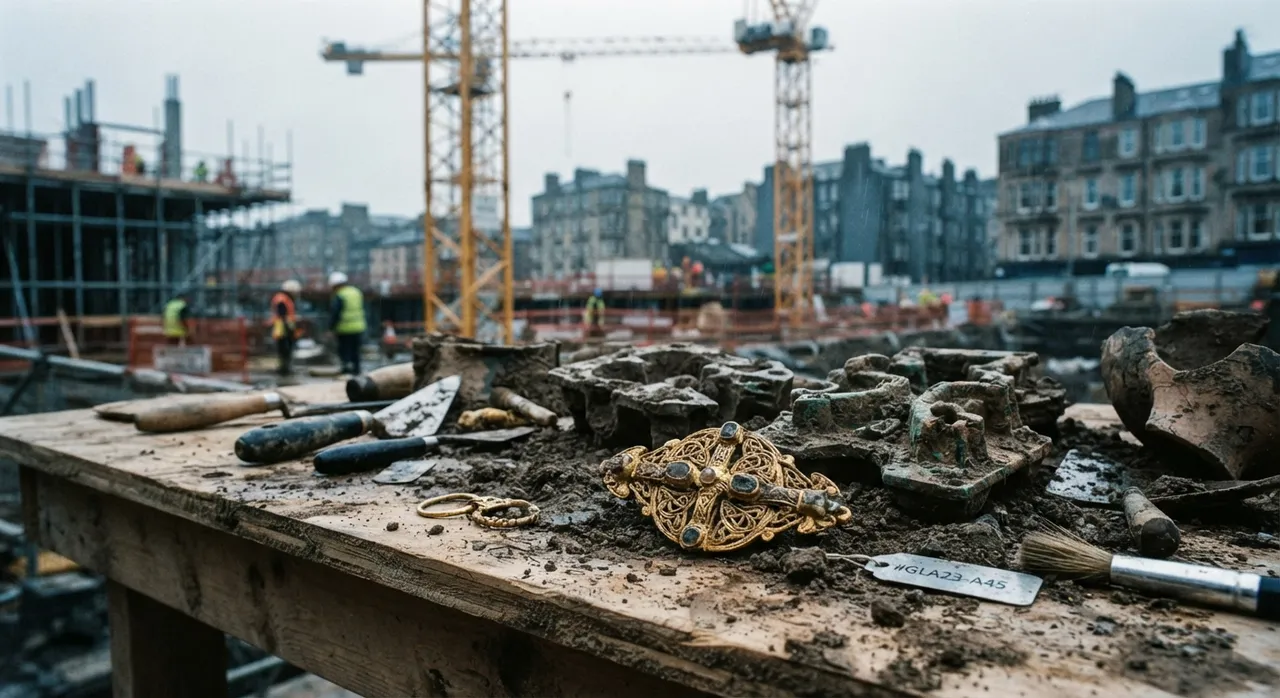
The “masterclass” designation for this search stems from the granular level of detail required to confirm the match. Investigators utilized the following technical benchmarks:
- Fluorescent Light Configuration: Sleuths mapped the specific 2×4 troffer layout and the reflection patterns on the linoleum to architectural blueprints from the building’s 2002 renovation permit.
- Texture Analysis: The “moist carpet” texture, which became a staple of the lore, was identified as commercial-grade loop pile carpeting that had suffered significant water damage from a localized pipe leak during the building’s transition period.
- Window Parallax: By analyzing the shadows cast from what appeared to be boarded-up windows, investigators were able to triangulate the building’s orientation relative to Oregon Street.
- The “Dutch Angle”: The unsettling, off-kilter tilt of the original photo was not an artistic choice for horror, but a byproduct of the photographer attempting to capture the scale of a wide-open floor plan with a limited lens.
From Furniture Showroom to RC Track
Ironically, the space that millions associated with eternal isolation and cosmic dread was intended for high-energy community gatherings. The owner of the HobbyTown, Robert “Bob” Mazza, was clearing the furniture partitions to build what would become Revolution Raceway—a premier indoor track for remote-control car racing. The “Backrooms” were literally being torn down to create a space for hobbyists. By the time the internet began its obsession with the yellow walls in 2019, the physical “Backrooms” had already been gone for 15 years, replaced by a brightly lit, modern racing facility.
Backrooms Digital Archaeology as the “Gold Standard”
Why does the 2026 retrospective hail this as the “gold standard” of internet sleuthing? It is because the search for the Backrooms represents the peak of collaborative digital archaeology. Unlike the search for a missing person or a criminal, there was no tangible reward for finding 807 Oregon Street. The motivation was purely intellectual—a collective desire to anchor a digital myth to a physical reality.
The methodology utilized by these sleuths has since been codified into a set of practices used for identifying other “lost” media. These techniques include:
- Exif Data Restoration: Using AI to estimate original camera sensors based on noise patterns.
- Geographic Vibe-Checking: Correlating specific building materials (like the “Midwest Yellow” wallpaper) with regional supplier databases from the early 2000s.
- Chronological Web Indexing: Manually crawling archived versions of local newspapers and business directories that haven’t been indexed by modern search engines for decades.
The A24 Impact: A Full-Circle Moment
The upcoming A24 film, directed by Kane Parsons (the teenage prodigy whose “Kane Pixels” YouTube series redefined the Backrooms), is a testament to the power of this discovery. Parsons, who famously recreated the Oshkosh location in 3D using Blender long before the real site was found, has reportedly worked closely with the digital archaeology findings to ensure the film’s “Level 0” is architecturally accurate to the original 807 Oregon Street layout.
The film, starring Chiwetel Ejiofor and Renate Reinsve, centers on a therapist who ventures into the dimension in search of a patient. The production design is said to be a direct homage to the “HobbyTown” era, incorporating the specific water stains and ceiling tile defects identified by the sleuths in 2024. This represents a “full-circle” moment for digital culture: an image taken for a small-town blog in 2002 becomes a 4chan nightmare in 2019, a forensic puzzle in 2024, and a cinematic masterpiece in 2026.
The Psychological Resilience of the Myth
Even with the mystery solved, the “Backrooms” has not lost its power. If anything, the knowledge that it was a real, mundane place in Wisconsin makes it more terrifying. It taps into the concept of kenopsia—the eerie atmosphere of a place that is usually bustling with people but is now abandoned and quiet. The fact that this “infinite dimension” was actually just a few thousand square feet of empty floor space in the Midwest emphasizes the power of the human mind to project its greatest fears into empty corners.
Conclusion: The Future of the Digital Past
As we look forward to the film’s release, the Backrooms digital archaeology movement reminds us that the internet is a vast, un-excavated landscape. There are thousands of other images—”cursed” photos, lost videos, and anonymous artworks—waiting for a new generation of investigators to apply the Oshkosh Protocol. The Backrooms search proved that nothing on the web is truly anonymous if you have enough patience, the right filename, and a deep understanding of early-2000s retail architecture.
The yellow walls of 807 Oregon Street are now a part of history, sitting alongside the great ruins of the physical world. They serve as a reminder that in the age of the digital, the most profound mysteries are often hidden in plain sight, tucked away in an archived blog post from a hobby shop in Wisconsin. The search is over, but the “noclip” into our collective imagination has only just begun.
Written by
TempMail Ninja
Digital privacy and online security expert. Passionate about creating tools that protect users' identity on the internet.