Cole Allen IDF Deepfake Debunked Following White House Shooting
Article Content
In the high-velocity information vacuum that follows a national tragedy, the first casualty is rarely just the truth—it is the very architecture of shared reality. On the evening of April 25, 2026, as gunshots rang out near the security perimeter of the Washington Hilton during the White House Correspondents’ Dinner, the world braced for a traditional news cycle. Instead, it received a masterclass in digital subversion. Within hours of the arrest of the suspect, Cole Tomas Allen, a viral image began to suffocate global social media feeds, purportedly showing the 31-year-old Californian lounging in an armchair, wearing an Israel Defense Forces (IDF) olive-green sweatshirt. It was a visual “smoking gun” that fit perfectly into the jagged edges of a polarized political landscape.
By the morning of April 29, however, the narrative had imploded. Digital forensic experts, alongside major legacy outlets including The New York Post and Snopes, have definitively confirmed that the Cole Allen IDF deepfake was a sophisticated, AI-generated fabrication. Yet, the debunking comes as a post-script to a massive, coordinated surge in antisemitic conspiracy theories. This event serves as a grim artifact of 2026’s digital culture, illustrating how “Black Mirror-grade” synthetic media can hijack a global narrative in the critical, feverish hours before official facts are established.
The Anatomy of the Cole Allen IDF Deepfake
The image in question was not the amateurish “deepfake” of the early 2020s. It did not possess the uncanny valley shimmer or the telltale blur of poorly blended pixels. It was a high-fidelity generation that utilized what researchers call “latent-space precision,” likely produced through a fine-tuned Stable Diffusion variant or a comparable high-end image synthesis engine. The Cole Allen IDF deepfake succeeded initially because it leveraged existing, real-world photos of Allen—a teacher and game developer from Torrance—and mapped them onto a synthetic environment with terrifying accuracy.
Technical analysis from forensic labs indicates that the creator used a technique known as “LoRA” (Low-Rank Adaptation) training. By feeding an AI model just a handful of publicly available social media photos of Allen, the perpetrator was able to “teach” the algorithm his facial structure, allowing the generator to place him in entirely new, fictional contexts. In this case, the context was designed to trigger immediate sectarian and geopolitical outrage. The choice of the IDF sweatshirt was no accident; it was a surgical strike at the heart of current American and Middle Eastern tensions.
Decoding the Forensic “Tells”
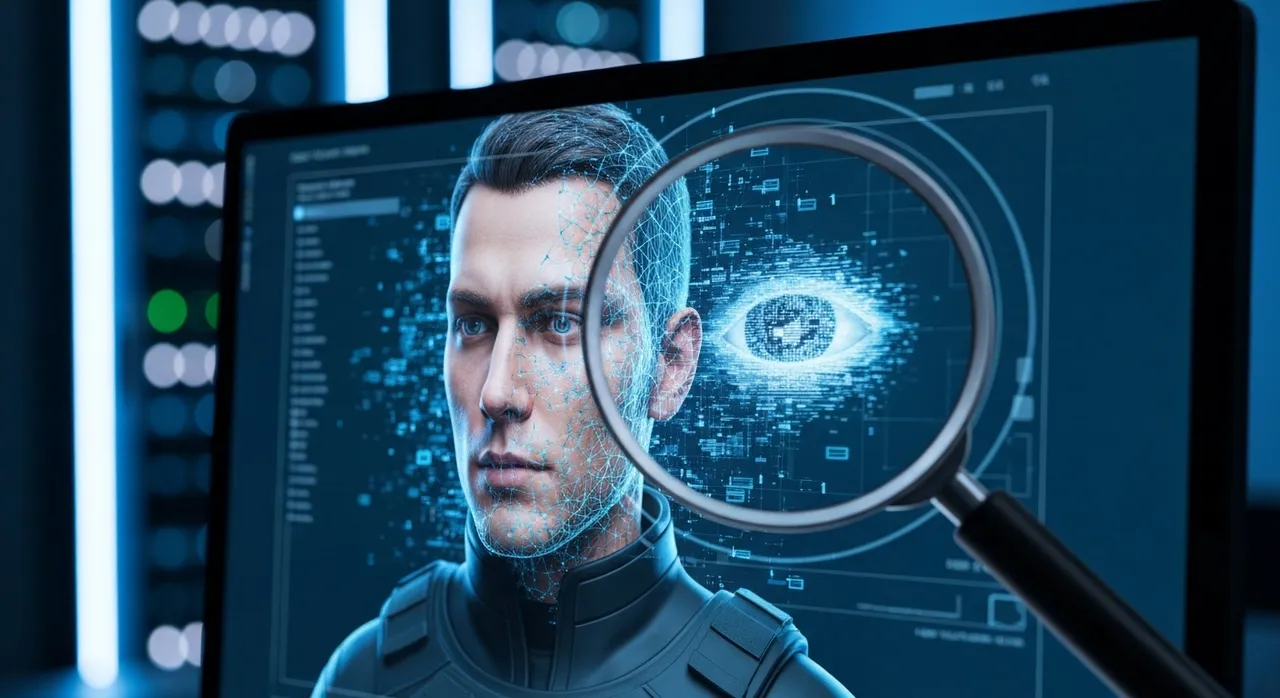
While the image fooled the casual scroller and even some professional news desks for a period of hours, digital investigators identified several “tells” that mark it as a high-fidelity fake. Forensics in 2026 have evolved to look past simple resolution, focusing instead on biometric inconsistencies that current AI models still struggle to replicate with perfect anatomical logic. The technical breakdown of the Cole Allen IDF deepfake revealed three primary failures:
- Mismatched Ear Structures: The AI failed to maintain bilateral symmetry in the cartilaginous folds of the ears. While the left ear matched Allen’s known biometric profile, the right ear featured a simplified, “melted” helix structure—a common artifact in diffusion models where the latent space lacks 3D spatial awareness.
- Malformed Fingers: Digital forensic experts noted that Allen’s right hand, resting on the armchair, possessed a sixth, vestigial digit-nubb near the pinky. Furthermore, the fingernails lacked the natural sub-surface scattering of light, appearing as flat, matte textures rather than organic keratin.
- The Misplaced Mole: Perhaps the most damning technical error was the placement of a prominent mole. On the real Cole Tomas Allen, a small nevus exists near the jawline. In the deepfake, the AI—hallucinating from a set of training images taken from different angles—placed a much larger mole on the opposite side of the face, near the nasolabial fold.
The 25% Surge: How AI Fuels Modern Antisemitism
The danger of the Cole Allen IDF deepfake was not merely its existence, but its distribution velocity. According to data analytics firms tracking social media sentiment, engagement with antisemitic conspiracy theories on X (formerly Twitter) and Telegram jumped from a baseline of 6% to over 25% within the twelve hours following the shooting. The image acted as a “force multiplier” for the “Friendly Federal Assassin” narrative, a moniker Allen reportedly gave himself in a manifesto sent to family members prior to the attack.
In the absence of a confirmed motive during the initial news blackout, the deepfake provided a visual answer to the “Why?” of the attack. Extremist groups seized on the synthetic image to claim that Allen was a “Zionist plant” or that the shooting was a “false flag” coordinated by foreign intelligence services. Despite the Department of Justice’s release of the actual charging documents—which highlighted Allen’s anti-Trump and anti-Christian rhetoric—the Cole Allen IDF deepfake continued to circulate, proving that once an image takes root in the collective psyche, the factual “correction” often fails to dislodge it.
The “Slop” Effect and the 24-Hour Window
Digital researchers refer to this phenomenon as “AI Slop”—low-effort but high-impact synthetic content designed to fill the “data void” that exists immediately after a major event. In the 2026 information ecosystem, the 24-hour window following a crisis is the most vulnerable period for democratic discourse. Platforms like X, which have significantly reduced their human moderation teams in favor of automated systems, are particularly susceptible to this type of manipulation.
The New York Post and Snopes were among the first to flag the image as fraudulent, but by the time their reports were indexed by search engines, the deepfake had already reached an estimated 40 million impressions globally. The “slop” had done its job: it had polarized the event, distracted from the actual investigation, and fueled a wave of hate speech that will likely persist long after the Cole Allen IDF deepfake is officially purged from the internet.
Technical Depth: The Evolution of Forensic Detection
To combat fakes as sophisticated as the Cole Allen IDF deepfake, agencies like the FBI and independent labs are now utilizing Multi-Spectral Analysis. This process doesn’t just look at the pixels on the surface; it examines the mathematical noise patterns left behind by the AI’s generator. Every diffusion model leaves a “digital fingerprint”—a specific frequency in the noise distribution that is unique to the architecture of the model used.
In the case of the Allen fake, researchers used “Deepfake-O-Meter” and “Deepfake Total” tools, which returned a 98.4% probability of AI generation. These tools analyze “chromatic aberration” (the way colors bleed at edges) and “JPEG ghosting.” In a real photograph, the noise is consistent across the image; in the Cole Allen IDF deepfake, the noise levels on the IDF logo were significantly higher than on the background furniture, suggesting a localized “inpainting” process where the logo was essentially “hallucinated” onto an existing image of a person in a plain sweatshirt.
- Model Identification: Investigators believe a leaked, uncensored version of a popular open-source model was used, allowing the creator to bypass safety filters regarding the depiction of military insignia and real-world persons.
- Contextual Forensics: Beyond the image itself, the metadata was stripped, a classic sign of intentional obfuscation. However, the light sources in the room did not match the shadows on Allen’s face, a failure of the AI to compute global illumination in a non-existent 3D space.
- Temporal Inconsistency: The sweatshirt featured an IDF logo variant that was discontinued in early 2024, yet the AI—trained on older datasets—treated it as contemporary attire for a 2026 event.
The Future of Truth in a Post-Synthetic World
The Cole Allen IDF deepfake is a warning shot. As we move deeper into 2026, the cost of creating “perfect” lies is plummeting toward zero, while the cost of verifying the truth is rising exponentially. The shooting at the Washington Hilton was a physical tragedy, but the digital aftermath was a systemic failure. When a single AI-generated image can move the needle of antisemitic engagement by 19% in a matter of hours, the traditional “fact-checking” model is no longer sufficient.
We are entering an era of “adversarial reality,” where the goal of bad actors is not to make you believe a specific lie, but to make you stop believing in the possibility of truth altogether. The Cole Allen IDF deepfake succeeded because it gave people something to hate, and in the digital age, hate is the most effective lubricant for a lie. Moving forward, the defense against such attacks will require more than just better algorithms; it will require a radical shift in digital literacy, where the default response to any “perfect” image is not a share, but a skeptical, forensic pause.
Ultimately, Cole Tomas Allen faces federal charges for his actions at the Washington Hilton. But the creators of the Cole Allen IDF deepfake remain in the shadows, having successfully hijacked a national tragedy to further a global agenda of division. Their “slop” has been debunked, but the stain it left on the national conversation remains a permanent fixture of our fractured digital history.
Written by
TempMail Ninja
Digital privacy and online security expert. Passionate about creating tools that protect users' identity on the internet.