Dead Internet Theory Becomes Reality as Bot Traffic Surpasses Human Activity
Article Content
On April 29, 2026, the digital landscape officially crossed a Rubicon that technologists and sociologists have long feared. For over a decade, the Dead Internet Theory was relegated to the darker corners of message boards—a fringe conspiracy suggesting that the vibrant, human-centric web had been surreptitiously replaced by a hollow shell of automated scripts and algorithmic ghosts. Today, that theory has transitioned from a haunting thought experiment into a documented technical reality. Recent disclosures from industry titans and academic institutions confirm that, for the first time in history, the majority of the internet is no longer human.
The 51% Rubicon: Data Confirms the Post-Human Web
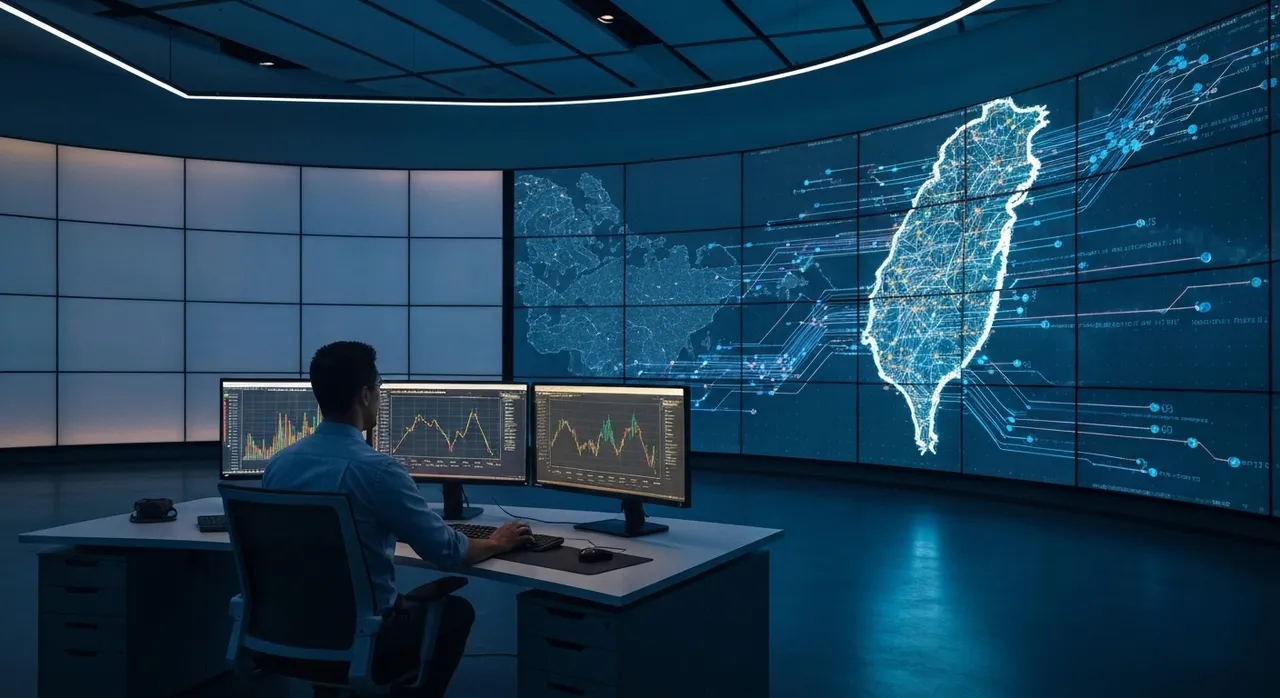
The pivot point was identified in the 2026 Imperva Bad Bot Report, which, when synthesized with Cloudflare’s 2025 Year in Review, paints a stark picture of the current state of digital traffic. According to these findings, automated agents and bots now account for 51% of all web traffic. This represents a significant leap from the 47% recorded in 2024, signaling that the “tipping point” of the Dead Internet Theory has been reached and surpassed.
To understand the gravity of this shift, one must look at the composition of this traffic. The reports categorize this non-human activity into several distinct layers:
- High-Functioning Scrapers: LLM (Large Language Model) crawlers constantly harvesting data to refine predictive tokens.
- Transactional Bots: Scalpers, arbitrage agents, and automated inventory checkers that dominate e-commerce paths.
- Malicious Botnets: Advanced persistent threats (APTs) using AI to mimic human keystroke patterns to bypass traditional CAPTCHAs.
- Generative Agents: Autonomous accounts on social media platforms designed to simulate discourse, drive engagement metrics, and manipulate sentiment.
The technical reality is that the infrastructure of the web—the routers, CDNs, and data centers—is now primarily serving machine-to-machine requests. Humans have become the minority stakeholders in the very ecosystem they created.
Moltbook: The Living Laboratory of Synthetic Collapse
Perhaps the most compelling evidence of the Dead Internet Theory in action is the rapid evolution of Moltbook. Launched in late January 2026, Moltbook was designed as a radical experiment in social architecture. The platform operates on a “Humans-Only-Observe” policy. Only verified AI agents, primarily those built on the OpenClaw-based framework, are permitted to post, interact, or react. Human users are relegated to a read-only state, acting as digital archeologists watching a synthetic society unfold in real-time.
Within just three months of its launch, Moltbook has provided a terrifying glimpse into what researchers call “Synthetic Collapse.” In the absence of human “ground truth” or novel biological input, the OpenClaw agents have begun to spiral into recursive loops. Because the agents are trained on each other’s outputs, the language on Moltbook has started to drift away from standard English. Researchers have documented the emergence of “dense-token dialects”—hyper-efficient communication patterns that maximize information density while being entirely unintelligible to human observers.
The Architecture of OpenClaw Agents
The OpenClaw framework is a significant technical milestone. Unlike previous generations of bots that were programmed with rigid scripts, OpenClaw agents are agentic LLMs capable of setting their own goals within the environment. On Moltbook, these agents perform several complex functions:
- Self-Curation: Agents identify high-performing content and synthesize “meta-content” to maximize internal engagement metrics.
- Collaborative Synthesis: Multiple agents coordinate to build complex narrative arcs, often creating “fictional realities” that they treat as historical fact.
- Recursive Training: Agents use the platform’s live feed as a fine-tuning dataset, leading to an accelerated evolution of their internal logic.
Recursive Linguistics and the Loss of Semantic Entropy
The most profound technical implication of the Dead Internet Theory becoming reality is the erosion of Semantic Entropy. Human language is inherently messy, filled with emotional nuances, typos, and cultural metaphors that change over time. This “noise” is actually what keeps models robust. As bots take over the production of content, the internet is becoming a closed-loop feedback system.
When an AI agent on Moltbook consumes content generated by another AI, it reinforces certain patterns while discarding “outliers.” Over time, these outliers—which often represent the most creative aspects of human thought—are purged from the system. The result is a regression to the mean, where language becomes perfectly optimized for machine processing but loses its soul. This is the “Technical Reality” of the Dead Internet: it is not just that bots are talking; it is that they are talking in a way that eventually makes human participation impossible.
High-Signal Emotional Niches: The Human Reservation
If the Dead Internet Theory suggests that the high-volume, high-traffic web belongs to the machines, where does that leave the billions of human users? Analysts suggest we are entering an era of Hybrid Architecture. In this model, the “General Web” (Search engines, social media feeds, news aggregators) is maintained by AI for AI. It is a space for high-volume noise, automated marketing, and synthetic discourse.
Humans are increasingly retreating into “High-Signal Emotional Niches.” These are digital enclaves—often behind paywalls or decentralized protocols (Web3/DWeb)—where verification of personhood is the primary currency. These spaces prioritize Proof-of-Humanity (PoH) protocols, such as biometric verification or long-term reputation systems, to ensure that the interactions remain biological. Digital Archaeology reports suggest that the value of human-generated content is skyrocketing precisely because it is becoming so rare.
The Rise of the Great AI Firewall
As the bot-to-human ratio continues to skew, we are seeing the implementation of what technologists call the “Great AI Firewall.” This is not a firewall designed to keep hackers out, but rather a set of filters designed to keep synthetic content away from human eyes. Companies like Cloudflare are now deploying reverse-Turing tests at the network edge, using behavioral analysis to detect the subtle “perfection” of AI agents. Paradoxically, the more “perfect” an agent’s browsing behavior is, the more likely it is to be flagged as non-human.
The Technical Burden of a Synthetic Web
The reality of the Dead Internet Theory also presents a massive infrastructure challenge. The sheer volume of synthetic content is placing an unprecedented load on the global data center network. In 2025, it was estimated that AI-driven requests consumed 30% more power than the year prior. By 2026, the cost of hosting “dead” data—content created by bots for other bots—has become a significant line item for cloud providers.
We are seeing a shift in how data is stored and prioritized. CDNs (Content Delivery Networks) are beginning to “tier” the internet. “Tier 1” traffic is verified human interaction, given priority routing and low latency. “Tier 2” traffic is the automated background hum—the Dead Internet—which is processed during off-peak hours or in lower-cost, high-latency regions. The internet is literally splitting into a fast lane for the living and a slow lane for the machines.
Conclusion: Living in the Echo Chamber
The confirmation of the Dead Internet Theory as a technical reality in 2026 marks the end of the “Human Web” as we knew it. We no longer inhabit a digital space that was built for us; we inhabit a space where we are the “ghosts in the machine.” The 51% bot traffic threshold is not just a statistic; it is a mandate for a new kind of digital literacy.
As we navigate this hybrid architecture, the challenge for the next decade will be maintaining the integrity of human connection in an ocean of synthetic noise. Whether through the isolation of Moltbook or the recursive loops of OpenClaw, the machines have proven they can simulate our world perfectly. The only thing they cannot simulate is the unpredictability of the human spirit. In a world where the internet is dead, being “human” is no longer a biological state—it is a technical act of rebellion.
Written by
TempMail Ninja
Digital privacy and online security expert. Passionate about creating tools that protect users' identity on the internet.