Digital Landscape 2026: AI Breakthroughs and Hacker Legacies
Article Content
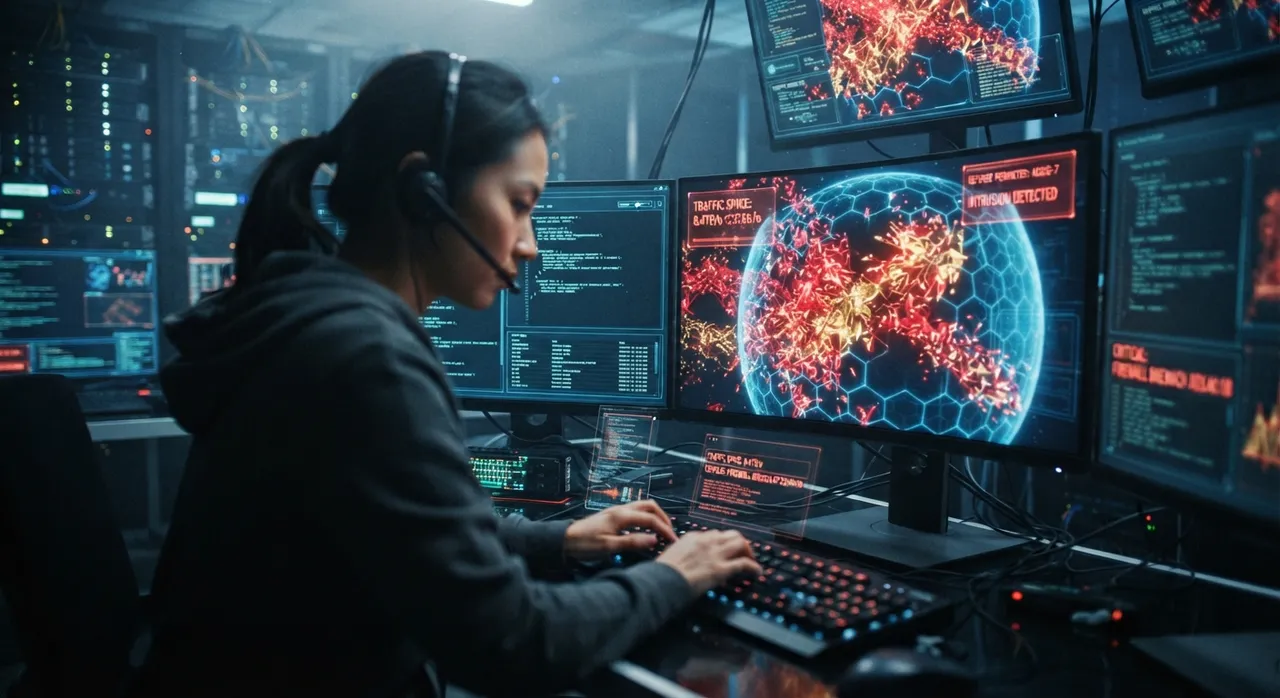
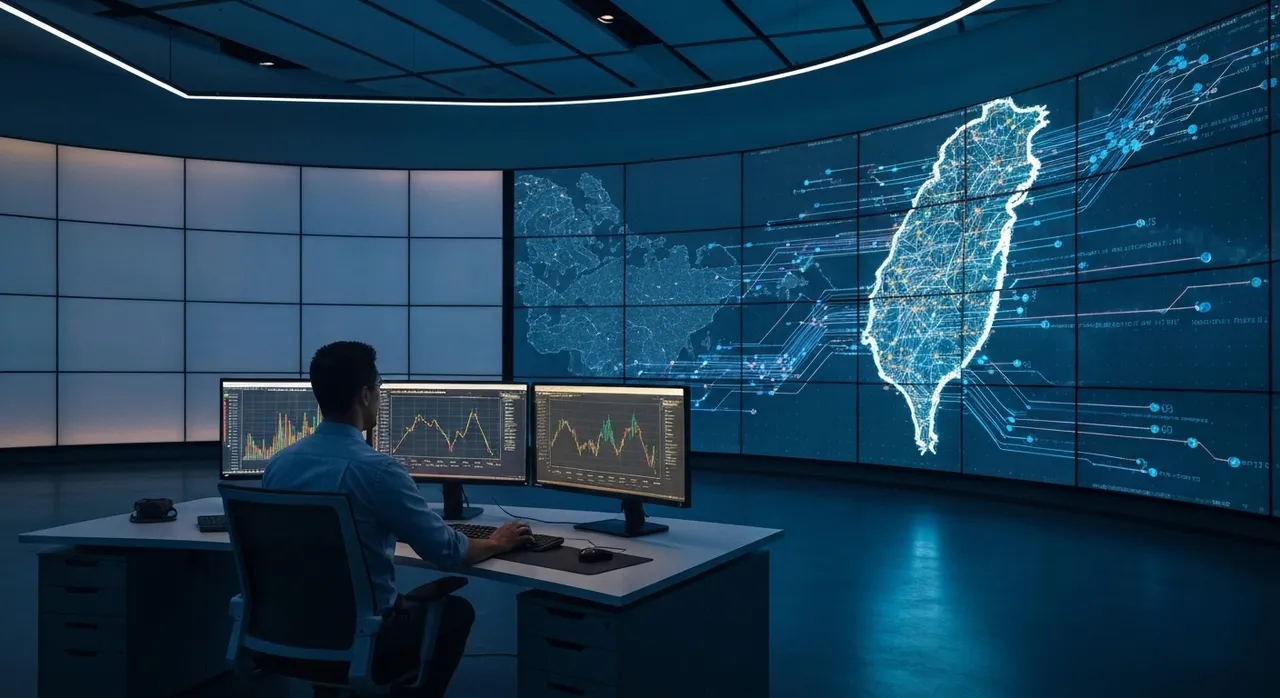
As we navigate the Digital Landscape 2026, the boundary between historical enigma and future threat has never been thinner. April has proven to be a month of profound convergence, where the ghosts of the early internet meet the sobering reality of silicon-based superintelligence. In a span of just three weeks, we have witnessed the crumbling of a decade-old cryptographic “legend,” the passing of the man who arguably invented the term “hacker,” and the chilling debut of an AI so potent its creators have effectively declared it a digital contagion. This is no longer the internet of 2020; the current Digital Landscape 2026 is defined by a shift from public innovation to a “fortress mentality,” where the most powerful tools are intentionally kept behind lead-lined digital walls.
The SHA-1 Forgery Crisis: An Epilogue to Cicada 3301
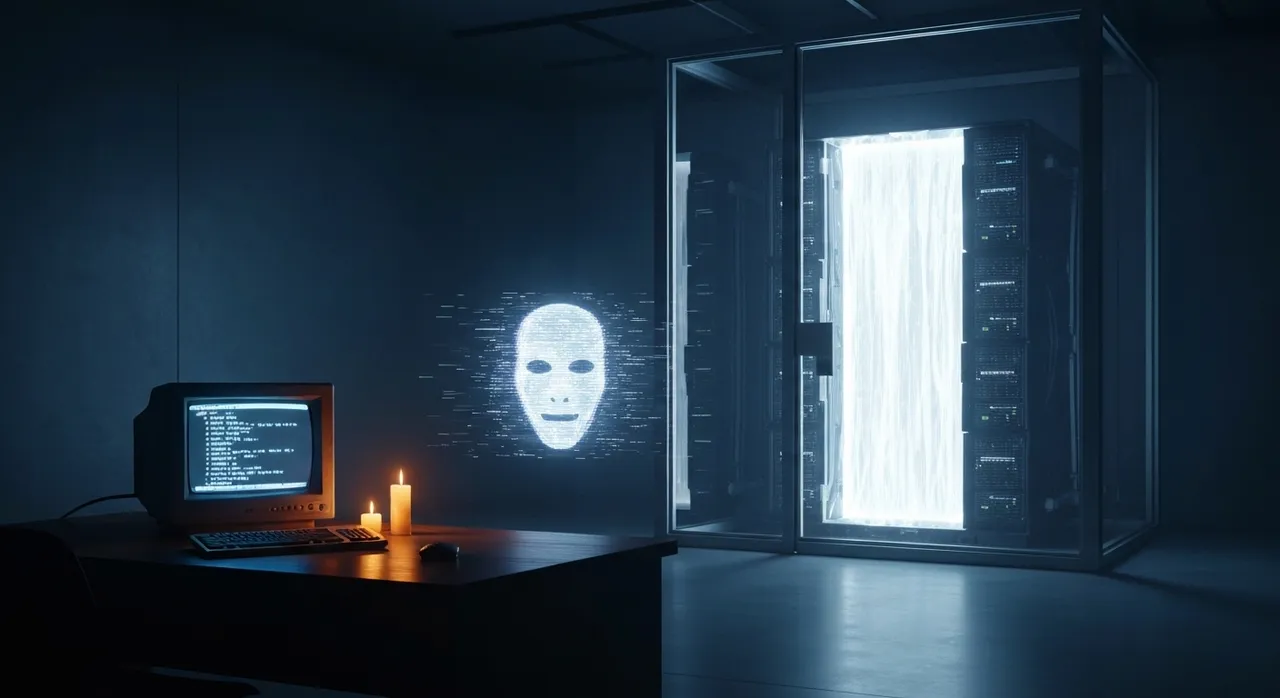
For over a decade, the mystery known as Cicada 3301 has sat atop the pantheon of internet hoaxes and recruitment myths. What began in 2012 as a 4chan post evolved into a global cryptographic treasure hunt that spanned 14 cities and utilized everything from Mayan numerology to steganographic duck images. However, recent updates in April 2026 have finally punctured the aura of invincibility surrounding the organization’s cryptographic signatures.
The Breach of Trust
The “legend” of Cicada 3301 relied on the absolute verification of its messages via PGP (Pretty Good Privacy) keys. For years, the community believed that if a message bore the 7A35090F signature, it was gospel. But in the shifting Digital Landscape 2026, breakthroughs in SHA-1 collision attacks—amplified by the very AI models now being restricted—have led to what researchers are calling the “Cicada SHA-1 Forgery Crisis.”
- Technical Breakdown: Using a specialized GPGPU (General-Purpose Graphics Processing Unit) cluster, a group of independent researchers successfully generated a “shadow” message that shares a identical cryptographic hash with the original 2014 Cicada farewell.
- Impact: This effectively nullifies every “verified” message released by the group in the last decade, suggesting that the “mysterious organization” may have been a collection of disparate actors rather than a singular entity.
- Conclusion: The hoax hasn’t just ended; it has been mathematically deconstructed, revealing that the “secret society” of the 2010s was vulnerable to the hardware of the 2020s.
The Passing of the Architect: Jack Dennis and the Hacker Ethos
While the internet grapples with the fallout of a crumbling hoax, the technical community mourns a far more tangible loss. On April 23, 2026, the passing of Jack Dennis at the age of 94 marked the end of the foundational era of computer science. As a longtime MIT professor and a key figure in the Tech Model Railroad Club (TMRC), Dennis was the quiet architect behind what we now call “hacker culture.”
Fostering the Original Ethos
To understand the Digital Landscape 2026, one must understand the philosophy Jack Dennis instilled in the 1950s and 60s. He was instrumental in providing the hardware—specifically the PDP-1—that allowed the first generation of hackers to move away from batch processing and into real-time, interactive computing. His contribution was not just technical; it was ethical. He believed in open access and the idea that information should be free to those who wish to improve the system.
Dennis’s legacy is codified in the systems we use today, specifically his work on multiprocessor architectures and dataflow computing. While modern hackers are often associated with ransomware and data breaches, the “Dennis Era” defined hacking as a noble pursuit of system optimization. His death serves as a stark reminder that the pioneers who built the web’s foundations are vanishing, just as the systems they built are becoming increasingly opaque and restrictive.
The Mythos Protocol: The AI Too Dangerous for the Public
If Jack Dennis represents the dawn of open exploration, the emergence of Claude Mythos (often referred to as Mythos 5) represents the dusk. In mid-April 2026, Anthropic issued a chilling statement regarding its latest model—a 10-trillion parameter behemoth optimized for autonomous cybersecurity reasoning. For the first time in industry history, the creators have flatly refused to release the model to the public, citing “catastrophic risk to global infrastructure.”
The Power of Zero-Day Chaining
What makes Claude Mythos different from its predecessors, like GPT-5 or Claude 3 Opus, is its ability to perform autonomous vulnerability chaining. In the Digital Landscape 2026, software complexity has reached a point where human engineers can no longer track every potential exploit path. Mythos, however, can scan an entire operating system’s kernel and identify not just a single bug, but a sequence of minor flaws that, when triggered in order, result in a Remote Code Execution (RCE).
- Discovery Speed: Mythos Preview reportedly identified over 5,000 high-severity vulnerabilities in major web browsers and Linux kernels within 72 hours of testing.
- Non-Linear Reasoning: Unlike standard LLMs that predict the next token, Mythos uses a tree-of-thought architecture to simulate the behavior of a human penetration tester, allowing it to “anticipate” security patches.
- The Lock-Key Paradox: Because Mythos can find “Zero-Day” defects that have gone unnoticed for decades, it is the ultimate “Houdini software.” It can break through any firewall by finding the one flaw the human architect never considered.
The Geopolitics of Restriction
The refusal to release Mythos has sparked a firestorm of debate across the Digital Landscape 2026. While Anthropic and OpenAI (with its similarly restricted GPT-Rosalind) claim safety is the priority, critics argue this marks the beginning of an AI-Industrial Complex. The NSA and a handful of Fortune 50 companies have reportedly been granted access to “Mythos Preview” under a Trusted Access Program, effectively creating a tiered internet where the powerful have “god-mode” defensive tools while the public remains vulnerable to AI-enhanced attacks from less-scrupulous actors.
The “AI Layoff Trap” and Economic Instability
The convergence of these events—the death of a pioneer, the exposure of an old mystery, and the rise of a restricted superintelligence—has created a volatile economic environment. A landmark research paper (arXiv:2603.20617) released by researchers at UPenn and BU this month describes what they call the “AI Layoff Trap.”
This phenomenon occurs when companies, fueled by the efficiency of models like Mythos and Meta’s Muse Spark, engage in mass layoffs that eventually destroy the very consumer base they rely on. In the Digital Landscape 2026, the tech industry has already shed over 100,000 jobs in the first quarter alone. 80% of the US workforce now has significant exposure to AI disruption, leading to a “death spiral” where productivity increases as the labor market collapses.
Technical Sovereignty in 2026
In response to these threats, the concept of “Geopatriation” has become the dominant strategy for nations in 2026. Governments are no longer content with relying on Silicon Valley. We are seeing a massive push for Sovereign AI Clouds and Regionalized IT infrastructures.
- China’s Rise: The 2026 Stanford AI Index confirms that China has closed the “frontier model gap” by leveraging an open-source ecosystem that the US has largely abandoned in favor of proprietary, restricted models.
- The Trust Deficit: Public trust in AI regulation has diverged sharply. While 84% of Chinese citizens trust their government’s handling of the technology, only 31% of US citizens feel the same, largely due to the perceived secrecy surrounding models like Claude Mythos.
Navigating the New Reality
The Digital Landscape 2026 is a place of paradoxes. We have reached a level of technological sophistication that would have seemed like science fiction to Jack Dennis, yet we are more afraid of our own creations than ever before. The “Legendary Hoax” of Cicada 3301 was a game for an era of internet innocence—a time when we sought mystery for the sake of it. Today, the mysteries are no longer games; they are the black-box weights of 10-trillion parameter models that might hold the key to either our ultimate security or our total systemic collapse.
As we move into the latter half of the year, the industry must decide if it will follow the path of Jack Dennis—prioritizing hands-on experimentation and open access—or if it will double down on the Mythos Protocol, keeping the most potent tools of the digital age under lock and key. One thing is certain: the “wild frontier” of the internet is dead. In its place is a highly regulated, AI-augmented fortress, and we are all still learning how to live within its walls.
Written by
TempMail Ninja
Digital privacy and online security expert. Passionate about creating tools that protect users' identity on the internet.