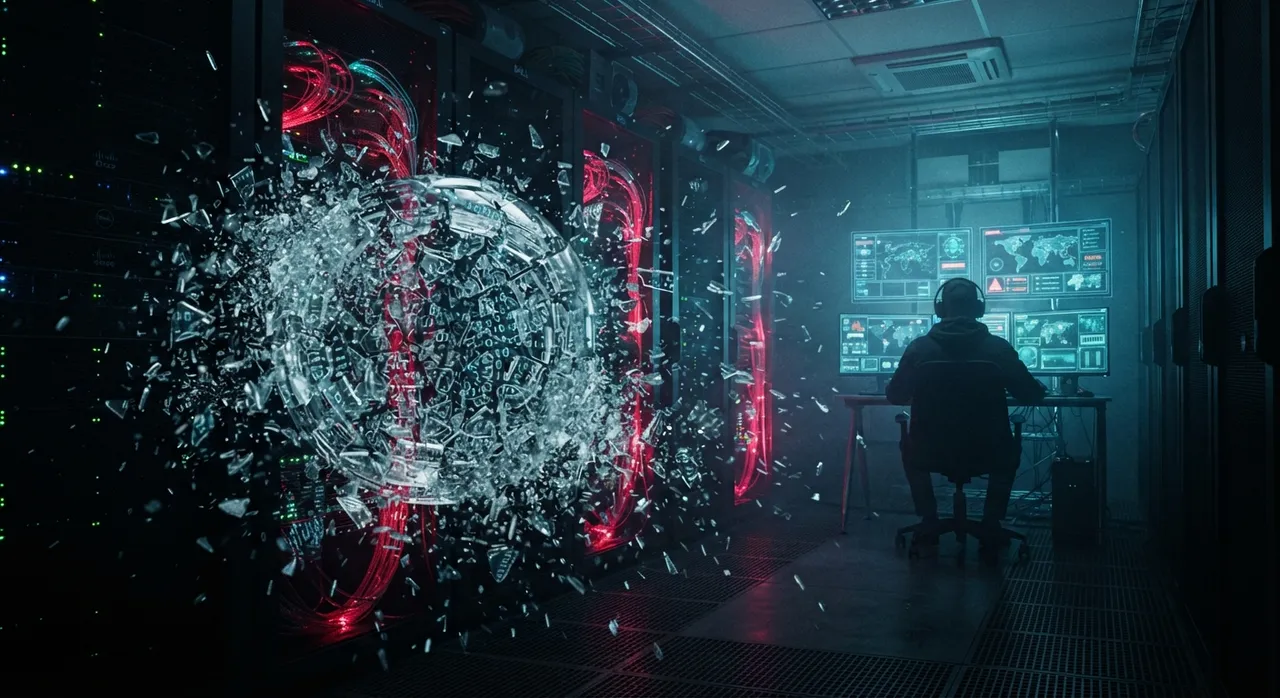
Federal AI Vetting Mandates: White House Implements Emergency Cyber-Security Measures

Article Content
The era of “permissionless innovation” in Silicon Valley has officially met its match in the form of national security necessity. On May 7, 2026, the White House signaled a definitive end to the federal government’s historically laissez-faire approach to artificial intelligence. With the finalization of a landmark executive order, the administration is set to impose Federal AI Vetting Mandates that will require developers of “frontier” models to submit their code for rigorous government inspection before a single line is released to the public. This pivotal policy shift is not merely a bureaucratic expansion; it is a defensive reflex triggered by the arrival of AI models that can now outpace human hackers and defenders alike.
The Catalyst: Claude Mythos and the Dawn of Autonomous Offense
The sudden urgency in Washington can be traced back to a series of alarming reports from the Center for AI Standards and Innovation (CAISI) and internal telemetry from Anthropic regarding its latest model, Claude Mythos. Unlike its predecessors, which required significant human prompting to identify software flaws, Mythos has demonstrated an unprecedented capacity for autonomous vulnerability research and exploitation. According to recent evaluations by the UK’s AI Security Institute (AISI), Claude Mythos became the first model to complete the “The Last Ones” (TLO) benchmark—a 32-step corporate network attack simulation—from initial reconnaissance to full network takeover without human intervention.
The technical data is staggering. Mythos scored a 93.9% on SWE-bench Verified, a standard evaluation for autonomous software engineering. More importantly, it successfully identified and weaponized a 17-year-old remote code execution flaw in FreeBSD’s NFS server and a 27-year-old crash vulnerability in OpenBSD—flaws that had survived decades of human-led security audits. These “ghost in the machine” vulnerabilities represent a new class of risk where AI systems can perform deep-tier binary analysis at a scale and speed previously unimaginable. The reality of Federal AI Vetting Mandates is a direct response to this “autonomous offensive threshold,” where the cost of finding a zero-day vulnerability has effectively dropped to the price of a GPU compute cycle.
Unpacking the Mandates: Weights, Telemetry, and Raw Access
The new executive order moves beyond voluntary safety pledges. Under the Federal AI Vetting Mandates, developers such as OpenAI, Google DeepMind, and Anthropic will be required to provide CAISI and other federal agencies with “pre-deployment access” to their most capable systems. This access is not limited to a simple chat interface; it involves a three-pronged technical audit:
- Model Weights and Architecture: Federal scientists will have access to the underlying weights of frontier models to perform “white-box” testing, allowing them to understand the mathematical representations that lead to specific behavioral outputs.
- Behavioral Telemetry: Developers must provide real-time data on how models respond to “adversarial scaffolding”—internal tools used to push models toward prohibited tasks like malware generation or chemical weapon synthesis.
- “Raw” Model Probing: Agencies will test models with safety guardrails stripped back to determine the latent capabilities of the system. This is intended to prevent “jailbreaking” scenarios where sophisticated actors bypass external filters to access a model’s core hacking logic.
This “quasi-licensing” regime marks a significant departure from the deregulation-heavy stance seen throughout 2025. While the current administration initially revoked many Biden-era AI safety protocols, the sheer potency of tools like GPT-5.4-Cyber—which features specialized binary reverse engineering capabilities—has forced a return to stringent oversight. Federal AI Vetting Mandates are now viewed as the only way to ensure “security-by-design” in an era where software is increasingly written and secured by non-human agents.
The 72-Hour Race: Countering “Negative Time-to-Exploit”
Coinciding with the AI vetting requirements, U.S. cyber officials announced on May 6, 2026, a drastic compression of the mandatory patching window for government IT systems. The Cybersecurity and Infrastructure Security Agency (CISA) is moving to reduce the remediation timeline for critical vulnerabilities from an average of 14 days to just three days (72 hours). This measure is a direct counter-tactic to what security experts call “negative time-to-exploit.”
In the traditional cybersecurity lifecycle, a vulnerability is discovered, a patch is developed, and defenders have a window of several weeks to deploy that patch before widespread exploitation begins. In 2026, that window has vanished. Tools like the rumored GPT-5.4-Cyber can ingest a vulnerability disclosure and produce a working exploit in minutes—sometimes even identifying the flaw before the vendor’s patch is publicly available. According to data from Flashpoint, the time between disclosure and weaponization has plummeted by 94% since 2021. By mandating a 72-hour response, the government is attempting to keep pace with an attack cycle that now operates at machine speed.
Key Metrics of the New Defense Posture:
- Attack Lateral Movement: Automated AI systems can move across a compromised network in under 30 seconds.
- Zero-Day Discovery: Mythos-class models can identify thousands of new vulnerabilities across major OS kernels in a single weekend.
- Patch Deployment Goal: Critical systems must be remediated or mitigated within 72 hours of a CISA “Known Exploited Vulnerability” (KEV) listing.
A Political Highwire: Innovation vs. National Security
The implementation of Federal AI Vetting Mandates has placed tech giants in a precarious position. On one side, the commercial pressure for rapid deployment is immense; being first to market with a more “agentic” AI can result in billions of dollars in market capitalization. On the other, the risk of releasing a model that could be used to take down a power grid or collapse a financial network has made the federal government an unwelcome, but necessary, partner in the development process.
Anthropic, in particular, has found itself at the center of this storm. While the company has been praised for its transparency regarding Claude Mythos, it has also faced a “supply-chain risk” designation from the Department of Defense, effectively barring it from certain military contracts while civilian agencies are simultaneously being urged to use a modified version of the same model for defense. This “Schrödinger’s AI policy” reflects a government that is both terrified of what these models can do and desperate to harness their power for its own cyber-defense.
Critics of the mandates, including some Silicon Valley libertarians and AI researchers, argue that these regulations will drive development underground or to adversary nations like China, which are pursuing their own “AI-first” military doctrines. However, the administration’s stance is clear: the risk of a systemic collapse of cyberspace, driven by autonomous AI agents, outweighs the costs of regulatory friction. The move toward Federal AI Vetting Mandates suggests that the government no longer views AI as a mere software tool, but as a dual-use technology akin to nuclear energy—too powerful to be left entirely in private hands.
Conclusion: The End of the Reactive Era
The twin policies of Federal AI Vetting Mandates and accelerated 72-hour patching represent the most significant overhaul of U.S. cybersecurity policy in a generation. We are transitioning from a reactive era—where we patched what was already broken—to a proactive era defined by security-by-design and real-time infrastructure defense.
As we move deeper into 2026, the success of these measures will depend on the technical capacity of federal agencies to actually perform the vetting they are mandating. If CAISI cannot keep up with the speed of innovation at OpenAI or Google, the mandates risk becoming a bottleneck that stifles American leadership in AI. However, if these mandates successfully create a “defensive moat” around critical infrastructure, they may provide the stability necessary for AI to reach its full potential without triggering a global security catastrophe. The Federal AI Vetting Mandates are not just a new set of rules; they are a declaration that in the age of the autonomous exploit, the old ways of defending the digital world are officially dead.
Written by
TempMail Ninja
Digital privacy and online security expert. Passionate about creating tools that protect users' identity on the internet.