Friendster Relaunch 2026: The Return of Slow Social Networking
Article Content
On April 30, 2026, a ghost from the early internet’s machine age officially re-emerged, but it did not return as the algorithmic leviathan many expected. Exactly one decade after its final descent into digital obscurity, Friendster has been resurrected. However, the Friendster relaunch 2026 represents something far more radical than a mere nostalgia play; it is the flagship vessel for a movement now being termed “Slow Social.”
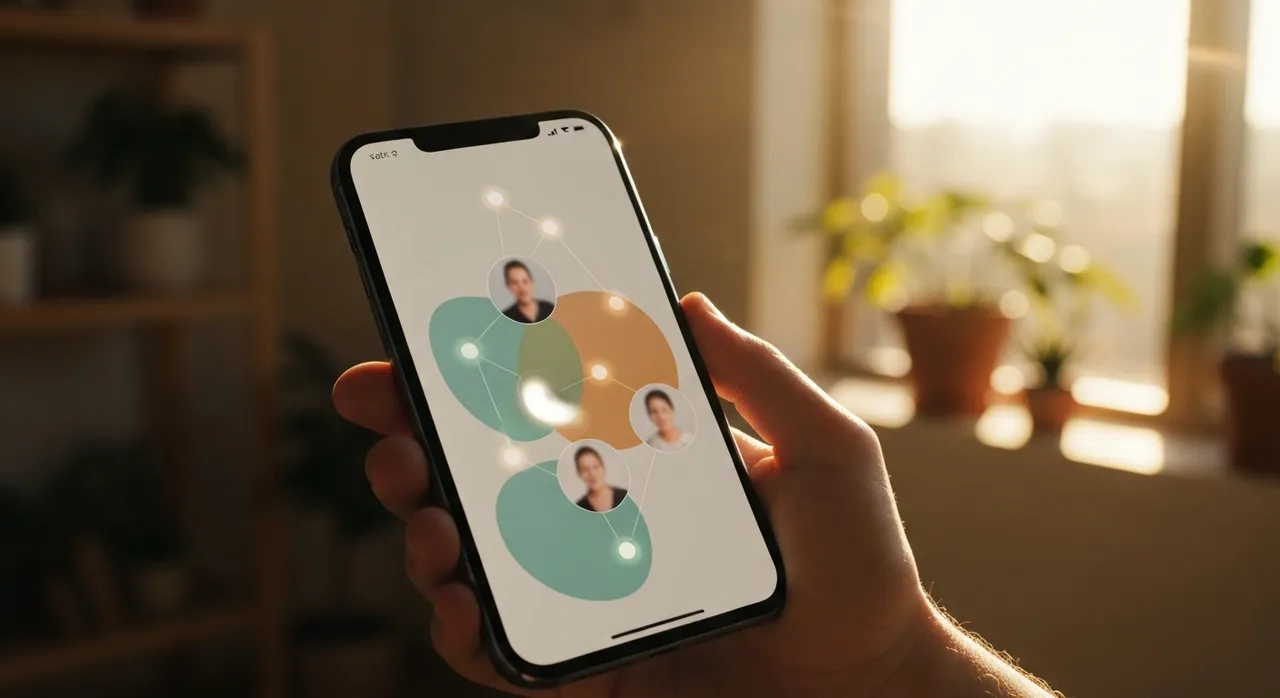
Acquired and rebuilt by Philadelphia-based developer and Park.io founder Mike Carson for a reported $30,000—a deal structured with $20,000 in Bitcoin and the transfer of a revenue-generating domain—the new Friendster is currently an iOS-exclusive environment. It is a platform that intentionally breaks the most sacred rules of modern Silicon Valley: it is ad-free, private, and arguably most shocking of all, it is difficult to use. By design, the new Friendster eschews the global search bars and infinite “follow” buttons that define the attention economy, replacing them with a philosophy of intentional proximity and physical presence.
The Philosophy of Slow Social: A Response to the Attention Economy
To understand the Friendster relaunch 2026, one must understand the “Slow Social” manifesto. For the past decade, social media has been defined by “reach”—the ability for a single piece of content or a single user to broadcast to millions across the globe via algorithmic acceleration. Carson’s Friendster is the antithesis of this model. It operates on the principle of “social de-growth,” prioritizing the depth of a user’s existing real-world network over the breadth of a digital follower count.
In this new paradigm, digital interaction is treated as a secondary layer to physical existence. The platform does not want you to scroll; it wants you to meet. This “Archaeology of Social Mechanics” involves stripping away the layers of gamified engagement—the likes, the streaks, the “Suggested for You” interruptions—to rediscover the early internet’s focus on intentional, peer-to-peer interaction. Carson, who met his wife on the early iteration of OkCupid, has often cited that specific era of the web as a peak for human-centric design, where the digital tool served a tangible, life-altering real-world purpose rather than acting as a closed loop of dopamine-seeking behavior.
The Technical Core: NFC and the “Tap-to-Connect” Mechanic
The most discussed feature of the new Friendster is the absolute removal of the global search function for adding friends. You cannot find your high school acquaintances or a distant celebrity by typing their name into a search bar. Instead, the platform utilizes a “phone-tapping” mechanic that requires two users to be in the same physical room to establish a connection.
Technically, this is achieved through the Core NFC framework on iOS. When two users want to connect, their devices utilize Near Field Communication (NFC) protocols—the same 13.56 MHz frequency used for Apple Pay—to exchange NDEF (NFC Data Exchange Format) records. This pairing is highly secure and proximity-dependent, typically requiring the devices to be within four centimeters of each other. This technical limitation serves as a “proof of presence,” a cryptographic verification that the two human beings behind the screens have actually met.
- Protocol: ISO 14443 / ISO 15693 (High-Frequency RFID).
- Handshake: Secure Out-of-Band (OOB) pairing via NFC to establish a Bluetooth Low Energy (BLE) or encrypted data link.
- Authentication: Peer-to-peer verification that bypasses the need for a central “Discovery” server.
- Privacy: No data is broadcasted to the public web; connections exist only within the private graph of the two users.
By forcing this physical friction, the Friendster relaunch 2026 effectively kills the concept of the “ghost follower” and the “bot army.” In a world increasingly saturated with AI-generated social identities, Friendster’s tap-to-connect mechanic ensures that every node in your social graph is a verified, living human being whom you have looked in the eye.
Fading Connections: The Digital Half-Life of Friendship
In perhaps its most controversial departure from standard social media logic, the new Friendster introduces “Fading Connections.” In traditional networks like Facebook or LinkedIn, a connection is a permanent state; once added, a person remains in your network until someone actively clicks “unfriend.” This creates a bloated, stagnant social graph filled with people from your past with whom you no longer have any meaningful tie.
Friendster 2026 treats digital friendship as a living entity that requires maintenance. If two users do not physically tap phones together for a full year, the digital link between them begins to “weaken” or “fade.” This is not a binary deletion but a softening of the connection. The visibility of their updates decreases, and eventually, the link becomes inactive unless renewed by a fresh in-person meeting. Carson describes this as a “gentle nudge that real friendships are kept alive in person, not online.”
The Return of the Testimonial
Nostalgia is not ignored in the relaunch, but it is repurposed. The “Testimonials” feature—the heart of the original 2002 Friendster—has returned. However, in keeping with the “Slow Social” ethos, these are not public accolades. Testimonials are visible only to mutual connections. This creates a private, walled garden of positive reinforcement where users write long-form reflections on their real-world experiences with friends, rather than performative comments designed for public consumption.
Architectural Differences: No Ads, No Algorithms
The business model of the Friendster relaunch 2026 is as quiet as its interface. The app is currently ad-free and does not sell user data—a feat made possible by Carson’s desire for the platform to be “positive” rather than immediately profitable. He has stated that while the platform may eventually introduce premium features to cover its overhead, it will never adopt the “engagement-at-all-costs” model that necessitates an algorithmic feed.
The feed itself is strictly chronological and limited. There are no “Explore” tabs or “Trending Topics.” The content you see is exclusively from people you have physically met and tapped phones with. This drastically reduces the cognitive load on the user. Without an algorithm constantly vying for more minutes of your life, the “doomscrolling” phenomenon is structurally impossible within the Friendster ecosystem.
- Chronological Sorting: Posts appear in the order they were shared, with no weight given to “viral” potential.
- Zero Tracking: The app does not utilize cross-site tracking or third-party marketing pixels.
- Data Sovereignty: Users have total control over their data, with an emphasis on local-first storage for messages and personal media.
Is the World Ready for Social Friction?
The critical debate surrounding the Friendster relaunch 2026 focuses on whether modern society can tolerate “friction.” For two decades, tech companies have spent billions of dollars removing friction from our lives—making it easier to buy, easier to watch, and easier to connect. By re-introducing friction as a feature, Friendster is betting that the “ease” of modern social media has actually led to its devaluation.
Critics argue that the tap-to-connect mechanic is too restrictive, particularly for people in remote areas or those with mobility issues. However, supporters view this as the necessary “cost” of authenticity. They argue that by making a connection difficult to obtain, the connection itself becomes valuable again. It transforms a “friend” from a data point in an advertiser’s spreadsheet back into a human relationship.
The “Friends of Friends” Bridge
To prevent the network from becoming completely stagnant, Friendster 2026 allows a “Friends of Friends” function. You can see the connections of your immediate circle and request to message them. However, the catch remains: the primary goal of this messaging is to facilitate a real-world meetup. The “Slow Social” philosophy encourages using the digital space as a bridge to the physical, rather than a destination in itself.
Friendster 2026 and the Future of Digital De-growth
As we navigate the mid-2020s, there is a palpable sense of exhaustion with the current state of the internet. The Friendster relaunch 2026 taps into a growing desire for a “digital Sabbath”—a space where the technology recedes into the background. Mike Carson’s $30,000 experiment may not have the billion-user ambitions of Meta or TikTok, but its success will not be measured by active user growth. Instead, its success will be measured by how many times it successfully encourages a user to put their phone down and have a conversation in the physical world.
In the “Archaeology of Social Mechanics,” we are finding that the most advanced feature a social network can offer is the permission to log off. By reviving Friendster as a “Slow Social” tool, Carson has provided a blueprint for how we might reclaim our attention and our physical proximity from the algorithms that have held them captive for far too long. April 30, 2026, marks the day that social media stopped trying to be a world of its own and started trying to be a part of ours again.
Written by
TempMail Ninja
Digital privacy and online security expert. Passionate about creating tools that protect users' identity on the internet.