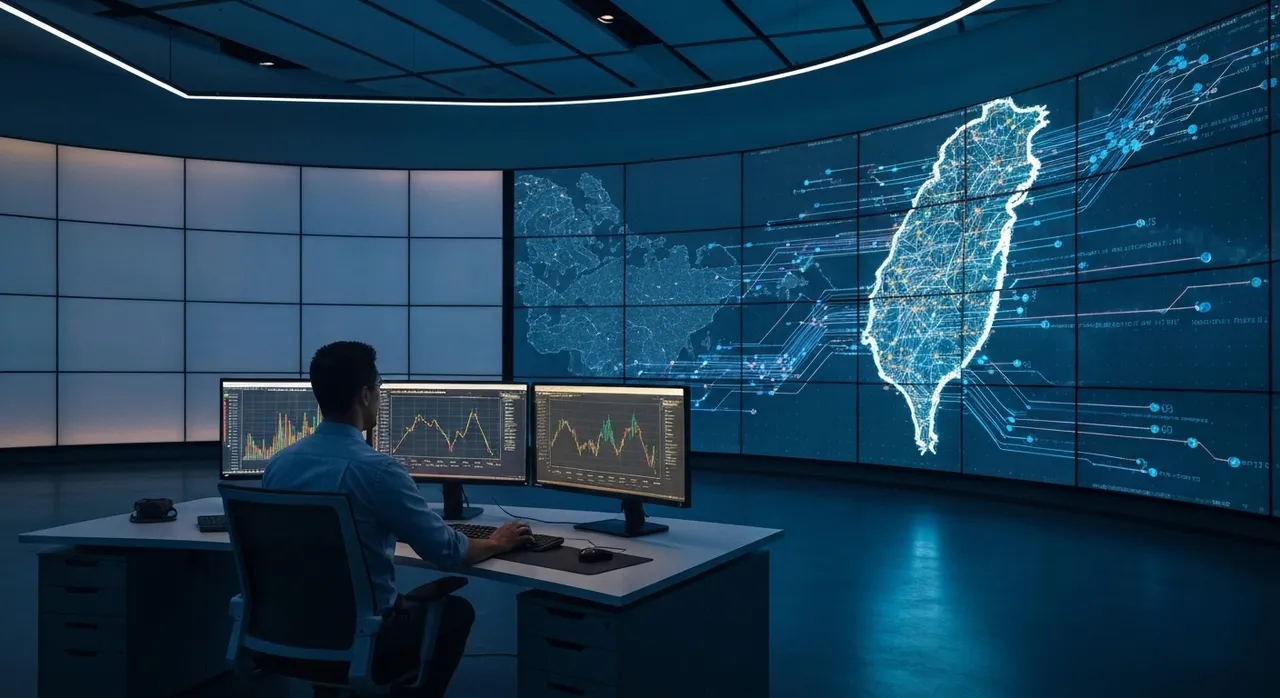
Google Maps Hack: Bryan Seely’s Secret Service Exploit Retrospective
Article Content
At the SCynergy 2026 conference in Luxembourg, the atmosphere was thick with the technical tension of modern cybersecurity. Yet, the highlight was not a new zero-day exploit or a quantum-resistant encryption algorithm. Instead, it was a retrospective on a legacy vulnerability that fundamentally altered how we view the intersection of physical location and digital trust. Former Marine and ethical hacker Bryan Seely took the stage to recount his 2014 Google Maps hack—an exploit so audacious that it allowed him to wiretap the FBI and the Secret Service without breaking a single line of traditional encryption code.
The retrospective, published by Silicon Luxembourg on April 16, 2026, serves as a grim reminder that the most sophisticated security architectures often crumble when faced with the “human element.” Seely’s mission in 2014 wasn’t to cause harm, but to expose a systemic rot in the crowdsourced verification models that global tech giants like Google relied upon. By manipulating Google Maps, he proved that anyone with a laptop and a VoIP account could essentially “own” the identity of the world’s most powerful law enforcement agencies.
The Trust Paradox: How the Google Maps Hack Exploited Logic
The core of the Google Maps hack was not a software bug in the traditional sense, but a “logic flaw” in the Google Places (now Google Business Profile) and Google Map Maker ecosystem. In 2014, Google sought to build the most comprehensive directory of businesses on Earth by allowing users to contribute and verify listings. This crowdsourced approach relied on a hierarchy of trust that Seely found trivially easy to subvert.
The technical mechanics of the exploit involved a sophisticated understanding of how Google verified “local” businesses. At the time, Google offered two primary methods of verification:
- Postcard Verification: A physical card with a PIN was sent to the business address.
- Phone Verification: An automated system called the listed business number to provide a PIN.
Seely’s breakthrough was recognizing that the system’s automated logic assumed that choosing the “harder” way—phone verification—implied legitimacy. During his talk at SCynergy 2026, Seely explained that he would first create a listing for a location he actually controlled or had access to, such as a temporary office or a residence. Once he verified this “seed” location via a phone call to a number he owned, he would then use the Google Map Maker tools to “move” the business or change its details.
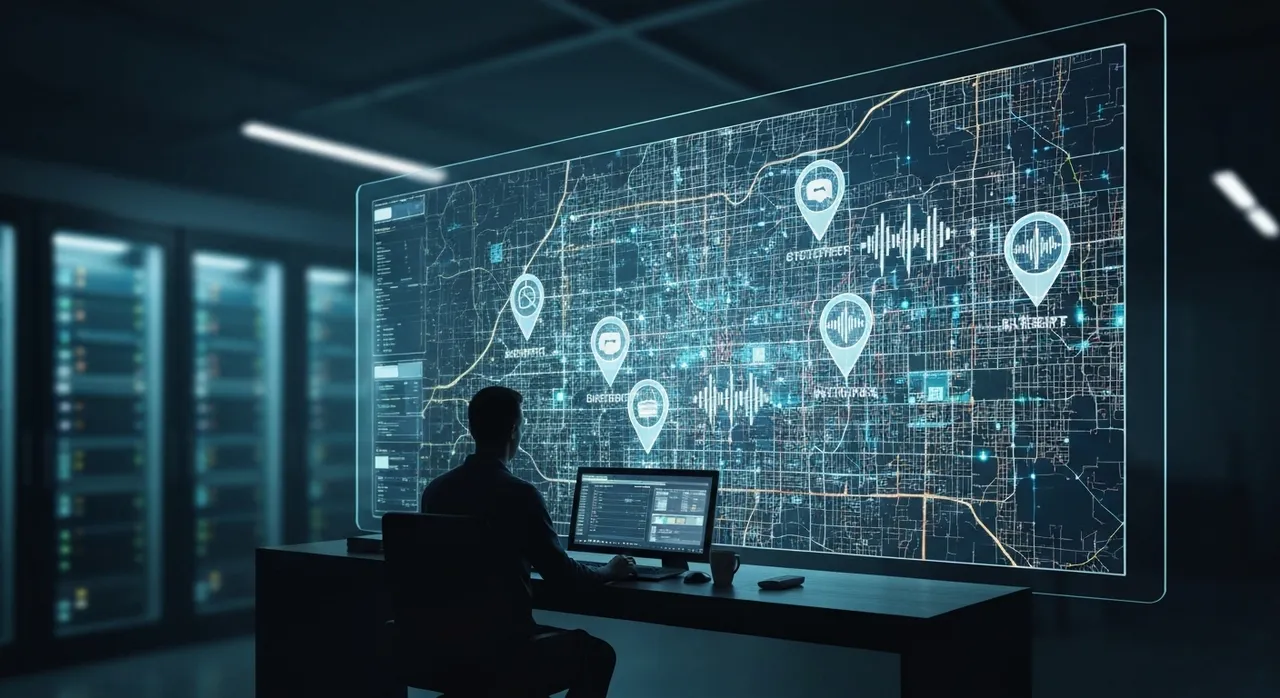
The system, having already flagged the user as “verified,” often allowed these subsequent edits to bypass the rigorous re-verification needed for a new listing. Seely could change the name of his verified business to the Federal Bureau of Investigation and move the pin on the map to the actual FBI field office in San Francisco. To the average user searching for the FBI on a mobile device, the listing appeared identical to the real one, complete with a “Call” button that linked directly to Seely’s intercepted line.
Engineering the Interception: The Role of Dynamic Interactive
A Google Maps hack is only as effective as its ability to capture data. To turn a fake listing into a functioning wiretap, Seely utilized a third-party call-routing software known as Dynamic Interactive. This service allowed him to generate VoIP (Voice over Internet Protocol) numbers that could record incoming audio before forwarding the call to a destination number.
The architecture of the intercept was elegantly simple:
- The Bait: A user searches for “Secret Service Washington DC” on Google Maps.
- The Hook: The top result is Seely’s fake listing. Because of Google’s mobile UI at the time, the full phone number was often obscured by a large, blue “Call” button.
- The Capture: The user taps the button. The call is routed to Seely’s Dynamic Interactive number (often using a 425 area code from the Seattle area).
- The Forward: The software begins recording and instantly forwards the call to the actual Secret Service headquarters.
The callers—often police officers, government officials, or concerned citizens—had no idea they were being recorded. Even the federal agents answering the phone were unaware. Because the call was seamlessly patched through, the conversation proceeded normally. Seely recounted that he managed to record over 40 high-stakes calls in a single day, capturing sensitive discussions about active investigations and personnel movements.
The “Edward Snowden” Proof of Concept
Before targeting the FBI, Seely tested the boundaries of the Google Maps hack with satirical listings. He famously placed a snowboarding shop called “Edward’s Snow Den” inside the White House and rebranded the Library of Congress as the “Zoolander School for Kids Who Can’t Read Good.” While these were intended as humorous critiques of Google’s “laissez-faire” attitude toward verification, they were also technical dry runs. Each prank was a “verified” listing that proved Google’s algorithm prioritized the speed of user-contributed data over the accuracy of national landmarks.
The Showdown in Seattle: Walking into the Secret Service
The most dramatic moment of Seely’s 2026 retrospective was his description of the day he decided to “turn himself in.” On February 27, 2014, Seely walked into a Secret Service field office in Seattle with a laptop full of recordings. He didn’t wait for a knock on his door; he brought the evidence of their own vulnerability directly to them.
The initial reaction from the agents was one of disbelief. “It’s impossible,” one agent reportedly told him, as recounted in the 2026 presentation. To prove his point, Seely pulled out his phone. At that exact moment, a notification popped up: a call was currently being intercepted. He played the audio for the agents in real-time. It was a Washington, D.C. police officer calling the Secret Service to discuss an ongoing investigation.
The room went silent. The technical reality that their secure communications could be hijacked via a crowdsourced map was a paradigm shift for the agents. Seely was immediately read his Miranda rights, patted down, and moved to an interrogation room. However, after hours of questioning and a thorough review of his intent, the agencies realized he was an ethical hacker. Instead of facing federal prison, Seely was later described by the Secret Service as a “hero” for exposing a flaw that foreign intelligence agencies or domestic terrorists could have used for much more nefarious purposes.
The Legacy of the Google Maps Hack in 2026
Reflecting on the event at SCynergy 2026, it is clear that Seely’s exploit was the catalyst for major changes in how digital maps are managed. Shortly after the 2014 incident, Google was forced to temporarily shut down new business registrations and eventually shuttered Google Map Maker entirely in 2017. The platform moved toward a more centralized, AI-driven verification process, though the battle against “map spam” continues to this day.
The Google Maps hack remains a masterclass in social engineering. It highlighted a “Trust Gap” where users assume that because a platform is technologically advanced (like Google), the data it provides must be vetted. Seely’s work proved that digital maps are not just navigational tools; they are identity layers of the internet. If you can control the map, you can control the flow of human interaction with the real world.
Key takeaways from Seely’s 2026 retrospective include:
- Crowdsourcing is a Double-Edged Sword: While it allows for rapid data scaling, it creates massive attack surfaces for SEO-based exploits.
- Interface Blindness: User interfaces that prioritize “convenience” (like the one-tap Call button) often hide the very data (phone numbers/area codes) needed to verify a source’s legitimacy.
- Technical Ingenuity over Brute Force: The most effective “hacks” often involve using a system exactly as it was designed, but in a sequence the designers never anticipated.
As we look forward to the security challenges of the late 2020s, the Google Maps hack stands as a foundational case study. It teaches us that as we integrate AI and Augmented Reality into our navigation systems, the potential for “location spoofing” and “identity hijacking” only grows. Bryan Seely’s 2014 exploit wasn’t just a prank on the FBI; it was a warning that in the digital age, our sense of place is only as secure as the platforms that define it.
Today, Seely continues to work as a cybersecurity consultant, advising organizations on how to defend against the very “logic flaws” he once used to wiretap the government. His message at SCynergy 2026 was clear: “Digital security is 10% code and 90% trust. If you can break the trust, the code doesn’t matter.”
Written by
TempMail Ninja
Digital privacy and online security expert. Passionate about creating tools that protect users' identity on the internet.