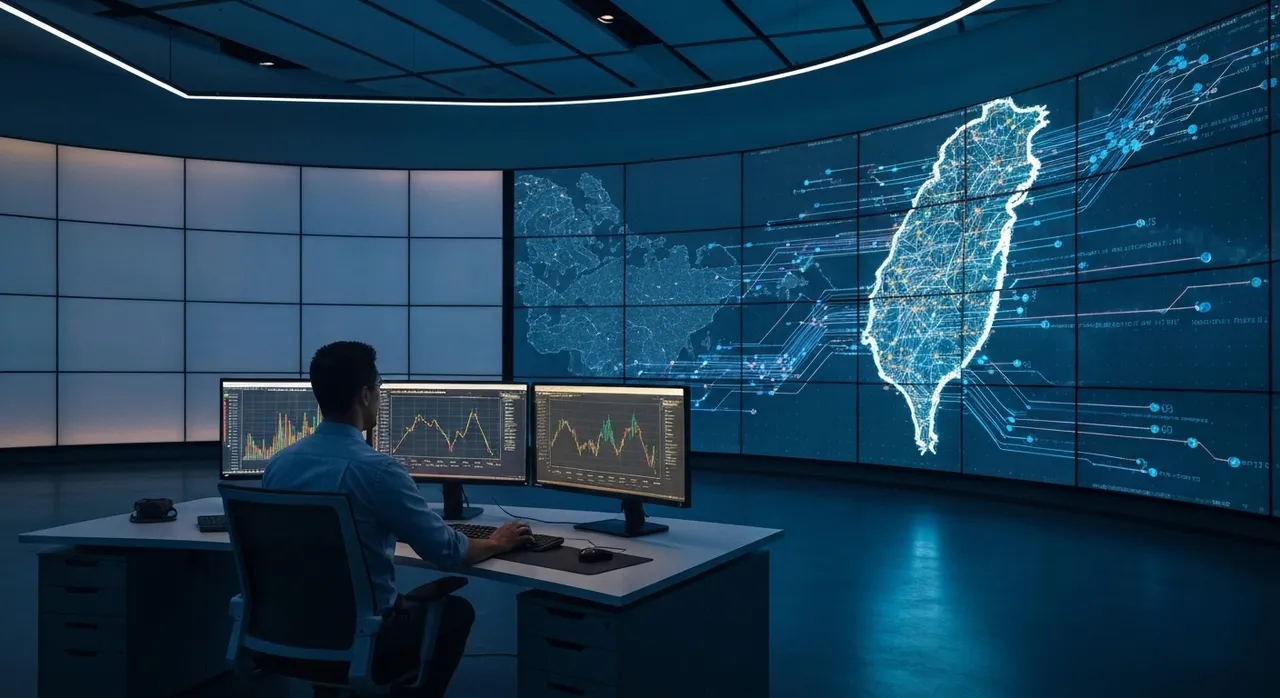
Internet History Initiative: Preserving the Legacy of the Early Web
Article Content
The history of the digital age is often told through the lens of what we can see: the rise of social media interfaces, the evolution of web design, or the viral videos that define a generation. However, beneath this visual “wallpaper” lies a complex, invisible architecture of routing tables, latency logs, and server handshakes. On April 17, 2026, at the APRICOT 2026 conference in Jakarta, internet infrastructure pioneer Jim Cowie—founder of the legendary internet intelligence firm Renesys—sounded an alarm that this foundational history is quietly being erased. His solution is the formal launch of the Internet History Initiative (IHI), a premier effort in “internet archaeology” designed to rescue the “operational exhaust” of the early web before it vanishes forever.
The Launch of the Internet History Initiative: A Mission for Digital Memory
The Internet History Initiative arrives at a critical juncture. As legacy systems from the 1990s and early 2000s are decommissioned, the raw data that explains how the internet actually functioned—and how it failed—is being deleted by the terabyte. During his keynote at APRICOT 2026, Cowie argued that while the Internet Archive’s Wayback Machine does an admirable job of saving web pages, it does not capture the “plumbing.” The IHI is dedicated to preserving the primary technical datasets: BGP (Border Gateway Protocol) snapshots, traceroute measurements, and DNS histories.
Cowie’s vision for the Internet History Initiative is not merely academic. He describes these datasets as the “missing link” for future historians. Without this data, we cannot fully understand how the technical architecture of the internet influenced global social and political shifts between 1990 and 2020. The initiative seeks to transition internet measurement from a real-time operational tool into a permanent historical record, utilizing a distributed network of technologists and library scientists to ensure that the digital heritage of our species remains intact.
Rescuing the “Operational Exhaust”: Why Technical Data Matters
To the average user, a log file is a discarded artifact of a successful connection. To the Internet History Initiative, these logs are the “operational exhaust” of civilization. This exhaust contains the high-resolution evidence of how the internet grew, branched, and occasionally fractured under the weight of geopolitical tension. The IHI focuses on three primary technical pillars:
- BGP Routing Data: The Border Gateway Protocol is the “map” of the internet. Historical BGP data reveals how traffic flowed between countries and how specific regimes utilized routing hijacks to intercept data or silence dissent.
- Traceroutes: These measurements show the exact path a packet takes from point A to point B. They are the primary evidence of physical infrastructure, documenting the activation of new submarine cables and the impact of natural disasters like the 2006 Hengchun earthquake on global connectivity.
- Latency and Performance Logs: These provide a “heartbeat” of the network, showing where the digital divide was most acute and how the quality of service evolved over decades.
The Internet History Initiative posits that if we lose this data, we lose the ability to verify the history of the digital world. “As time passes, information likes to disappear,” Cowie told The Register in a recent interview. “If you do not invest, its default is to die.” The IHI is the investment required to prevent a “digital dark age” where the technical mechanics of the 21st century become a mystery to the 22nd.
The PingER Rescue: 30 Years of Digital Heartbeats Saved
One of the most urgent successes of the Internet History Initiative is the “PingER Rescue” project. For nearly three decades, the SLAC National Accelerator Laboratory (formerly the Stanford Linear Accelerator Center) operated the PingER (Ping End-to-end Reporting) project. Started in 1991, PingER utilized simple ICMP “pings” to measure network performance between thousands of nodes worldwide, originally to help physicists collaborate on high-energy experiments.
When the last researcher on the project retired in late 2024, the thirty years of longitudinal data—representing the longest continuous record of global internet performance in existence—was slated for destruction. The Internet History Initiative intervened, moving the petabytes of SLAC data into a distributed archival system. This dataset is a treasure trove; it documents the slow rise of internet speeds in Africa, the sudden drops in connectivity during the Arab Spring, and the gradual transition from the wild-west early web to the centralized, high-speed infrastructure of today.
The Technical Blueprint: LOCKSS and Distributed Archiving
The Internet History Initiative does not rely on a single central server, which would represent a single point of failure. Instead, it employs the LOCKSS (Lots of Copies Keep Stuff Safe) principle. Originally developed by Stanford University, LOCKSS is a peer-to-peer system that allows libraries and archives to preserve digital content by creating multiple copies and constantly “auditing” them against one another to ensure data integrity.
By applying LOCKSS to internet measurement data, the Internet History Initiative ensures that even if one institution’s legacy system fails or an archive loses funding, the record survives elsewhere. The IHI’s technical architecture involves:
- Metadata Standardisation: Converting disparate log formats from the 90s into a unified, searchable schema.
- Bit Rot Protection: Using cryptographic hashing to detect and repair data degradation over time.
- Offline Cold Storage: Moving the most sensitive and historical records onto air-gapped media to prevent loss through cyberattacks or accidental deletion.
This technical rigor distinguishes the Internet History Initiative from standard data backups. It is a concerted effort to treat network logs as “scholarly records” equivalent to the physical papers of a 19th-century diplomat.
Jim Cowie: From Renesys to Internet Archaeology
Jim Cowie’s leadership of the Internet History Initiative is a natural evolution of his career. As the co-founder and CTO of Renesys (later acquired by Dyn and then Oracle), Cowie spent years at the forefront of “Internet Intelligence.” Renesys was famous for its real-time analysis of the internet during crises, such as the 2011 internet shutdown in Egypt. They were the first to “see” the internet go dark from a routing perspective.
However, Cowie realized that the commercial lifecycle of such data is short. Once the operational value of a BGP table or a traceroute expires, companies have no financial incentive to store it. In the “back-office crunch” that follows corporate acquisitions, this data is often the first thing to be purged. Through the Internet History Initiative, Cowie is using his industry expertise to reclaim that data from corporate graveyards, ensuring that the “Renesys era” of internet intelligence remains available for future research.
The Socio-Political Significance of the Packet
Why should a sociologist care about a 20-year-old traceroute? The Internet History Initiative argues that technical data is the most objective record of political power. When a government claims it has not restricted the internet, but IHI-preserved BGP data shows a sudden “withdrawal” of all domestic prefixes from the global routing table, the technical evidence contradicts the political narrative.
Furthermore, the physical topology of the internet—the way cables are laid and routers are peered—reflects historical colonial routes, economic alliances, and emerging regional powers. By studying the datasets preserved by the IHI, historians can trace how the digital world moved from a US-centric model to a multipolar system. The initiative aims to provide “interpretive derived datasets” that make this technical information accessible to researchers in political science, economics, and public health.
Conclusion: The Urgency of the Digital Past
The launch of the Internet History Initiative at APRICOT 2026 marks a turning point in how we view the history of technology. We are moving past the era where the internet’s growth was considered too fast to document. As Jim Cowie and his colleagues have demonstrated, the “operational exhaust” we are currently throwing away is the primary source material for the future.
Through the Internet History Initiative, the preservation of projects like PingER and the recovery of lost BGP sources from institutions like RIPE and RouteViews are securing the foundations of our digital memory. As we look toward an internet increasingly shaped by AI and automation, having a verified, technical record of our beginnings is more than a luxury—it is a necessity for understanding the evolution of the modern world. The mission of the “internet archaeologist” has only just begun, but with the IHI, the digital past finally has a permanent home.
Written by
TempMail Ninja
Digital privacy and online security expert. Passionate about creating tools that protect users' identity on the internet.