Iranian Threat Actors Target US Critical Infrastructure in Joint Agency Warning
Article Content
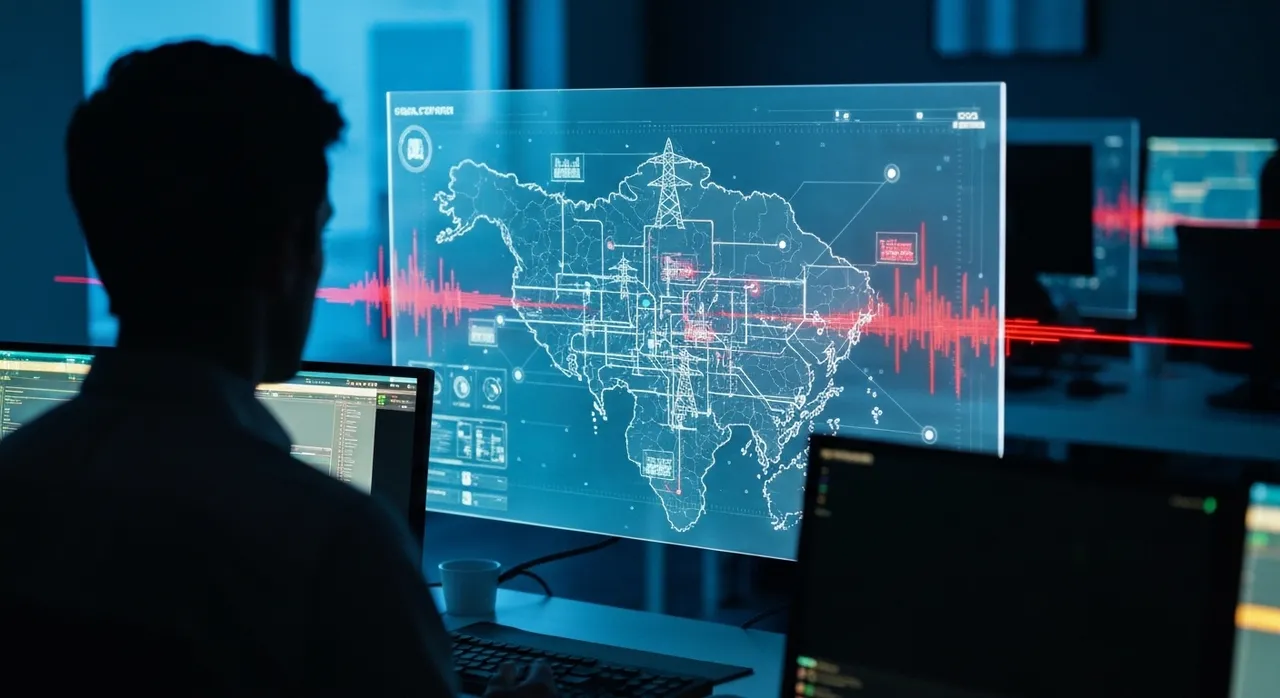
On April 15, 2026, the digital and physical security of the United States converged in a chilling display of state-sponsored aggression. A joint advisory issued by the FBI, the Cybersecurity and Infrastructure Security Agency (CISA), and the National Security Agency (NSA) has signaled an “urgent and ongoing” campaign where Iranian threat actors are actively compromising the backbone of American utility infrastructure. This is not a drill, nor is it a simple data breach. It is a targeted, systematic effort to gain functional control over the programmable logic controllers (PLCs) that regulate water treatment, energy distribution, and municipal governance across the nation.
The severity of this threat is underscored by a two-pronged attack strategy. While one arm of the Iranian campaign focuses on the operational technology (OT) layer—specifically targeting Rockwell Automation and Allen-Bradley hardware—the other leverages a high-precision IT exploit. Security researchers have confirmed the emergency patching of CVE-2026-5281, a critical “use-after-free” zero-day vulnerability in the Chrome Dawn WebGPU implementation. This technical synergy allows the adversaries to compromise the very personnel tasked with defending these systems, creating a bridge from a simple browser window to the pressure valves of a metropolitan water main.
The Evolution of Iranian Threat Actors in the OT Space
For years, Iranian cyber operations were often characterized by their loud, albeit less sophisticated, hacktivist personas. However, the 2026 campaign reveals a terrifying maturity. The Iranian threat actors currently in the crosshairs of federal agencies have moved beyond simple website defacements and basic credential stuffing. They are now employing “living off the land” techniques that utilize legitimate industrial engineering tools to blend into normal network traffic.
According to the joint advisory, these groups—linked to the Islamic Revolutionary Guard Corps (IRGC)—have moved from targeting smaller, Israeli-made Unitronics devices to the more ubiquitous Rockwell Automation and Allen-Bradley ecosystems. This shift is significant; Rockwell holds a dominant position in the North American market, with some estimates suggesting that over 74% of globally exposed Rockwell hosts are located within the United States. By focusing on these controllers, the attackers are targeting the heart of the U.S. industrial base.
- Targeted Devices: CompactLogix and Micro850 PLC families.
- Primary Vectors: Internet-exposed EtherNet/IP ports (Port 44818) and Modbus (Port 502).
- Observed Tactics: Direct manipulation of project files via stolen or bypassed authentication.
AI-Driven Reconnaissance and Automated Exploit Kits
What sets this 2026 campaign apart from its predecessors is the sheer speed of discovery. The Iranian threat actors are no longer manually scanning IP ranges. They are utilizing AI-driven reconnaissance engines that can ingest vast amounts of metadata from services like Censys and Shodan to identify vulnerable configurations in real-time. These AI tools identify the specific firmware versions and open ports of a water treatment plant’s PLC before a human operator even logs in for their shift.
Once a target is identified, automated exploit kits are deployed. These kits are pre-loaded with scripts designed to interact with the Rockwell Studio 5000 Logix Designer software. By mimicking an authorized engineering workstation, the attackers can upload modified project files to a PLC. These modified files can alter sensor thresholds, disable safety interlocks, or even “brick” the device entirely by wiping its configuration, leading to immediate operational failure and massive financial losses for municipal governments.
The Chrome Zero-Day: Analyzing CVE-2026-5281
While the direct attack on PLCs represents the “physical” end of the operation, the initial entry point often begins in the IT environment. This is where CVE-2026-5281 comes into play. This vulnerability is a high-severity use-after-free (UAF) flaw within Dawn, the open-source implementation of the WebGPU standard used in Chromium-based browsers. WebGPU is designed to provide high-performance 3D graphics and GPU computation within the browser, but its complex memory management requirements have opened a dangerous door.
A use-after-free vulnerability occurs when a program continues to use a pointer after the memory it points to has been deallocated. In the context of CVE-2026-5281, an attacker can craft a malicious HTML page that triggers an improper memory lifecycle handling event in the Dawn component. When an administrator or engineer managing a critical infrastructure network visits this page, the exploit triggers:
- Memory Corruption: The browser’s graphics stack is forced into a corrupted state.
- Renderer Compromise: The attacker gains control over the Chrome renderer process.
- Arbitrary Code Execution: By leveraging the corrupted memory, the Iranian threat actors execute malicious code on the local machine with the privileges of the user.
The strategic value of this zero-day cannot be overstated. By compromising the workstation of an industrial engineer, the attackers bypass traditional network firewalls. They “ride” the already-established VPN or secure gateway connection directly into the OT environment. Once the engineer’s machine is compromised via Chrome, the attacker has a direct line to the Human-Machine Interface (HMI) and SCADA systems that control the PLCs.
The Direct Impact on Water and Energy Infrastructure
The joint advisory highlights that the Iranian threat actors have already successfully disrupted multiple sites. In the water and wastewater (WWS) sector, the manipulation of HMI displays has led to instances where operators were shown “normal” levels while the actual chemical balance or water pressure was being dangerously altered. This “ghost in the machine” approach is reminiscent of the Stuxnet attacks, though applied with the brute force of modern automated tools.
In the energy sector, the focus has been on load-balancing controllers. By accessing the project files of Allen-Bradley PLCs in small-to-mid-sized power cooperatives, the attackers have the potential to trigger localized blackouts or damage transformer hardware. The financial loss associated with these disruptions is multifaceted, involving not just the cost of hardware replacement, but the massive economic ripple effects of utility downtime.
Critical Infrastructure Risks Identified by CISA:
- Configuration Wiping: Deleting the logic that allows a PLC to communicate with pumps and valves.
- Mechanical Sensor Tampering: Overriding physical safety limits in software to cause mechanical wear or failure.
- HMI Deception: Providing false telemetry to human operators to delay emergency response.
The Living-Off-The-Land (LotL) Strategy
A particularly concerning aspect of this campaign is the use of the Dropbear SSH client. After gaining initial access through the Chrome zero-day or exposed ports, the attackers install Dropbear to establish a persistent Command-and-Control (C2) channel. Because SSH is a common protocol in industrial environments, this traffic often goes undetected by standard intrusion detection systems (IDS). They aren’t using “malware” in the traditional sense; they are using the infrastructure’s own tools against it.
Defense and Mitigation: Securing the Frontier
The FBI and CISA have provided a rigorous set of requirements for organizations to defend against these Iranian threat actors. The first and most critical step is the immediate removal of all PLCs from the public-facing internet. There is no longer any justifiable reason for a CompactLogix or Micro850 device to be reachable via a public IP address.
Furthermore, the advisory recommends the following defensive posture:
- Physical Mode Switches: For all Rockwell Automation devices, the physical mode switch on the controller should be placed in the “RUN” position. This prevents remote modification of the logic even if the network is compromised.
- MFA for All Access: Implementing Multi-Factor Authentication (MFA) for all remote access to the OT network, specifically for engineering workstations.
- Browser Hardening: Immediate update of all Chromium-based browsers (Chrome, Edge, Vivaldi) to the latest patched version to mitigate CVE-2026-5281. Organizations should also consider disabling WebGPU in high-security environments where it is not required.
- Log Auditing: Reviewing logs for traffic on ports 44818, 2222, 102, and 502, particularly from overseas hosting providers or suspicious IP ranges identified in the advisory’s STIX/JSON data.
Conclusion: A Persistent Geopolitical Reality
The events of April 15, 2026, serve as a stark reminder that the “air gap” is a myth and that the border between a browser exploit and a physical catastrophe is thinner than ever. The Iranian threat actors involved in this campaign have demonstrated a sophisticated understanding of the American industrial landscape. They are leveraging the most modern tools available—from AI-driven reconnaissance to browser zero-days—to target the very resources that keep society functioning.
Securing critical infrastructure in this era requires more than just firewalls; it requires a fundamental shift in how we view the lifecycle of memory in our browsers and the physical switches on our machines. As the joint advisory makes clear, the threat is no longer theoretical. The exploitation is happening now, and the resilience of the nation’s water and energy systems depends on the immediate, technical response of every network defender in the country. Vigilance is the only viable strategy in a landscape where the code we run in our browsers can dictate the safety of the water we drink.
Written by
TempMail Ninja
Digital privacy and online security expert. Passionate about creating tools that protect users' identity on the internet.