Joybubbles Phone Phreaking: The Resurrection of a Legend
Article Content
In the spring of 2026, a peculiar wave of nostalgia has swept through the global tech community, triggered by the Sundance premiere of Rachael Morrison’s long-awaited documentary project. The film, titled simply Joybubbles, doesn’t just chronicle the life of a man; it resurrects a forgotten era of acoustic hacking that predates the modern internet. By utilizing thousands of hours of rare archival audio—tapes found in a dusty storage unit nearly two decades after his death—the documentary allows the late Joe Engressia, better known as Joybubbles, to narrate his own ascension as the world’s first “phone phreak.” This resurgence of Joybubbles phone phreaking lore serves as a stark reminder that the roots of our digital existence were not grown in silicon, but in the analog copper wires of a global telecommunications monopoly.
The Genesis of Joybubbles: Phone Phreaking and the 2600 Hz Miracle
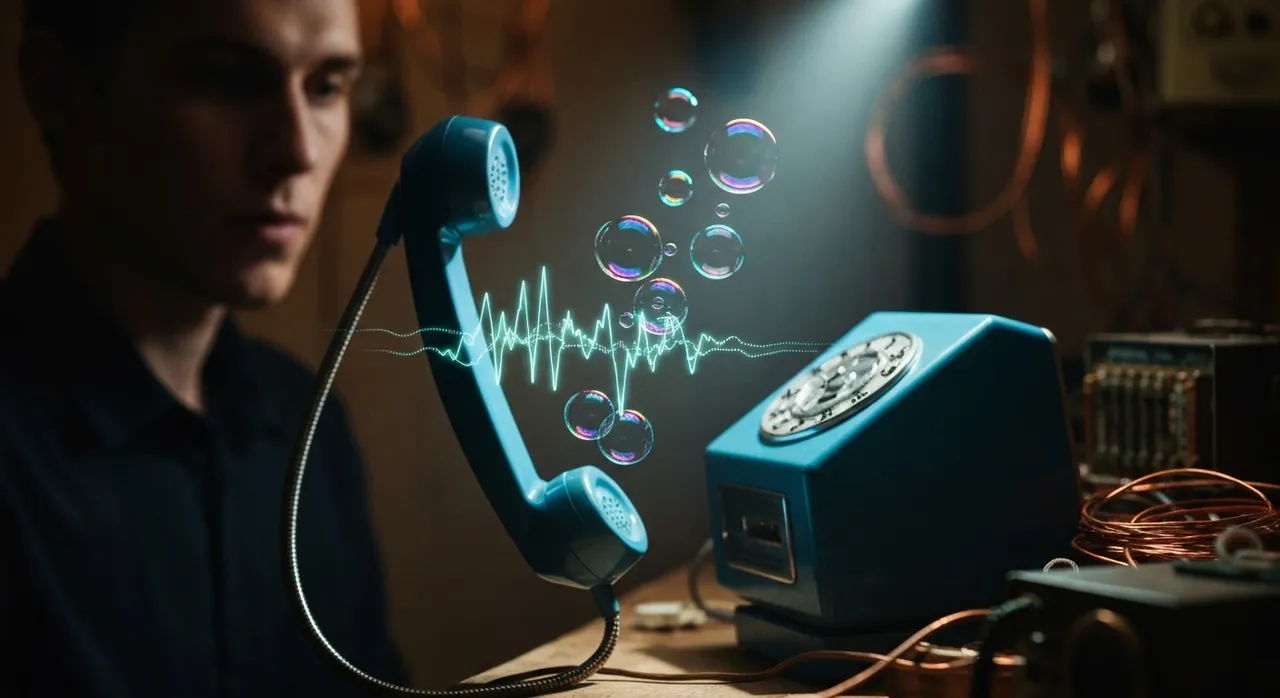
The legend began in 1957. A seven-year-old blind boy in Richmond, Virginia, discovered he possessed a superpower that no adult could fathom. Joe Engressia, born with perfect pitch, was idly whistling along to the high-pitched “busy” signals of a disconnected telephone line when the world changed. He realized that by whistling a specific, piercing note—precisely 2600 Hz—he could stop a pre-recorded operator message in its tracks. This was the birth of Joybubbles phone phreaking, an accidental discovery of a massive security flaw in AT&T’s multi-billion dollar infrastructure.
To understand the gravity of this discovery, one must look at the technical landscape of the mid-20th century. At the time, the Bell System utilized in-band signaling. This meant that the same channel used for your voice was also used for the control signals that told the switches what to do. The 2600 Hz tone was the “master key” of the network; it was the Single Frequency (SF) tone used to signal to a long-distance trunk line that a call had ended and the line was now “idle” and ready for a new connection. By whistling this tone into a receiver, Engressia was effectively telling the remote switch that he had hung up, while his local switch believed he was still on the line. This “limbo” state allowed him to seize control of the trunk and route calls anywhere in the world for free.
The Technical Mechanics of the Acoustic Exploit
While the 2600 Hz whistle is the most famous part of the Joybubbles phone phreaking narrative, the actual process of “blue boxing” (the electronic emulation of these tones) was a sophisticated feat of reverse engineering. The process followed a specific sequence that hackers in 2026 find remarkably similar to modern “handshaking” protocols:
- The Seizure: The phreaker would dial a toll-free number (like an 800-number or directory assistance) to establish a connection to a long-distance trunk.
- The Reset: By whistling or playing a 2600 Hz tone, the phreaker would “wink” the remote switch. This caused the far-end equipment to reset to an idle state without the local exchange registering a disconnect.
- The Dialing: Once the trunk was seized, the phreaker used Multi-Frequency (MF) signaling. Unlike the Dual-Tone Multi-Frequency (DTMF) used by consumer Touch-Tone phones today, MF used a different set of tone pairs used only by operators.
- KP and ST: Every call sequence began with a Key Pulse (KP) tone and ended with a Start (ST) tone, framing the routing digits and telling the switch to execute the connection.
The Blind Prophet of the “Old Hacker Guard”
Joybubbles was not just a technician; he was the spiritual center of a clandestine network of blind children and teenagers who spent their nights exploring the “hidden arteries” of Ma Bell. In the 1960s and 70s, long before chat rooms or social media, these phone phreaks used their auditory mastery to find “loop-arounds”—test lines that allowed two people to call in and talk to each other—creating a proto-social network. For Joybubbles, the telephone was more than a gadget; it was a lifeline. In Morrison’s documentary, he describes the dial tone as a “warm, constant hum” that never yelled and never fought, a sanctuary from a childhood marked by abuse and isolation.
The 2026 documentary highlights how Joybubbles phone phreaking became a cultural phenomenon following the 1971 Esquire article “Secrets of the Little Blue Box” by Ron Rosenbaum. This article introduced the world to Joybubbles (then still Joe Engressia) and John “Captain Crunch” Draper, who famously discovered that a toy whistle found in Cap’n Crunch cereal boxes also produced the magic 2600 Hz tone. This exposure shifted phreaking from a fringe hobby of blind prodigies into the mainstream of the counterculture, catching the attention of two young hobbyists in Cupertino: Steve Jobs and Steve Wozniak.
The Apple Connection: From Blue Boxes to Macintoshes
It is a well-documented fact in the archaeology of the web that without Joybubbles phone phreaking, Apple Inc. might never have existed. Wozniak, mesmerized by the Esquire profile, immediately began building his own “digital blue box.” Unlike the analog whistles or tuned oscillators used by earlier phreaks, Wozniak’s device was digital and precise. He and Jobs went on to sell these boxes in Berkeley dorms, an illicit business venture that Jobs later credited as the foundation of their partnership. “If it hadn’t been for the blue boxes,” Jobs once said, “there wouldn’t have been an Apple.” The documentary explores this lineage, showing how the “hacker spirit”—the desire to see how a system works and then manipulate it—transitioned from the auditory world of Joybubbles to the visual world of the personal computer.
The Archaeology of the Early Web and “Acoustic Hacking”
Why is there a sudden “trending curiosity” in Joybubbles phone phreaking in 2026? Digital historians argue that as we move deeper into the era of AI and encrypted out-of-band signaling (like SS7 and modern VoIP), the pure, tactile nature of acoustic hacking offers a romanticized version of technology. Phreaking was “organic” hacking; it required no code, only a voice and an ear. The documentary’s use of archival audio—specifically the “Stories and Stuff” recordings—presents Joybubbles as a “narrator from the ether,” bridging the gap between the analog past and the digital present.
The term “acoustic hacking” has recently regained traction among security researchers. While the 2600 Hz exploit was patched decades ago when AT&T moved signaling “out-of-band” (sending control data on a separate channel from the voice), the philosophy remains relevant. Modern exploits involving voice-command injection or ultrasonic triggers for AI assistants are, in many ways, the grandchildren of Joybubbles’ 1957 whistle. We are once again finding that systems can be subverted through the very interfaces designed for human interaction.
The Philosophy of Joybubbles: Eternal Childhood as a Radical Act
Beyond the technical exploits, the 2026 resurgence focuses on the man himself. In 1991, Joe Engressia legally changed his name to Joybubbles and declared that he would remain “five years old forever.” This wasn’t merely an eccentric whim; it was a radical rejection of an adult world that he found cold and disconnected. He spent the latter part of his life in Minneapolis, running a “Fun Line” where callers could hear him tell stories, sing songs, and express a version of radical kindness that felt out of place in the burgeoning internet age.
Joybubbles phone phreaking was, in his mind, an act of play. He didn’t want to steal money from AT&T; he wanted to see if he could “make the giant machines dance.” This distinction between white-hat curiosity and malicious intent is a central theme of the Morrison project. Joybubbles was often arrested and harassed by the FBI and Bell Security, yet he never expressed bitterness. He viewed the telephone network as a vast, celestial playground—a mechanical world of “clicks, whirs, and beeps” that he could navigate with the precision of a master musician.
The Legacy of the “Old Hacker Guard”
As we analyze the “old hacker guard,” Joybubbles stands out for his neurodivergent genius and his insistence on the “human-ness” of technology. The documentary project features interviews with contemporary figures who argue that the modern web has become a “walled garden,” lacking the transparency and “hackability” of the old Bell System. The resurgence of interest in Joybubbles phone phreaking represents a collective longing for a time when technology felt more intimate, more understandable, and perhaps most importantly, more joyful.
To summarize the impact of this “phone phreaking” legend on 2026 digital culture, consider the following technical and social legacies:
- The Birth of Information Freedom: The idea that “knowledge shared is knowledge expanded” was a Joybubbles mantra that later fueled the open-source movement.
- Signaling Evolution: The transition from in-band to out-of-band signaling (SS7) was directly accelerated by the financial losses caused by phreakers.
- Disability as an Advantage: Joybubbles proved that his blindness was not a deficit but a specialized interface that allowed him to see the network in ways sighted people could not.
- Proto-Social Media: The “party lines” and “loop-arounds” created by phreaks were the direct ancestors of the BBS, the internet forum, and eventually, social media.
Conclusion: The Eternal Whistle
The 2026 documentary Joybubbles concludes with a haunting piece of archival audio: Joe Engressia whistling a perfect 2600 Hz tone one last time, even as the analog switches he once commanded have long since been sold for scrap or melted down. The “old hacker guard” is slowly fading into history, but the legend of Joybubbles phone phreaking remains a cornerstone of tech archaeology. In an era where our connections are mediated by complex algorithms and opaque AI, the story of a blind boy who could control the world with a single whistle reminds us that at the heart of every machine is a frequency waiting to be found, and at the heart of every hack is a human searching for connection.
Joybubbles may have lived his life at the age of five, but his legacy is one of profound maturity—the realization that technology is only as valuable as the joy and connection it facilitates. As the documentary trends across digital platforms this week, it invites a new generation of “geeks” and “phreaks” to pick up the receiver, listen to the dial tone, and ask: “What happens if I whistle?”
Written by
TempMail Ninja
Digital privacy and online security expert. Passionate about creating tools that protect users' identity on the internet.