The Million Measure: A Unique Cross-Era Computer Benchmark
Article Content
Why an Ultra-Simple Computer Benchmark Matters for Digital Archaeology
In an era where every silicon release is accompanied by dense, multi-layered suites of performance tests, the world of systems analysis has become dizzyingly complex. From multi-threaded ray tracing to neural network processing, the modern computer benchmark has transformed from a simple measure of raw processing power into an intricate software challenge. While today’s chipmakers and retrocomputing enthusiasts alike argue over cache sizes, execution pipelines, and high-level optimizations, one organization has decided to strip the concept of hardware analysis down to its absolute, primitive essentials.
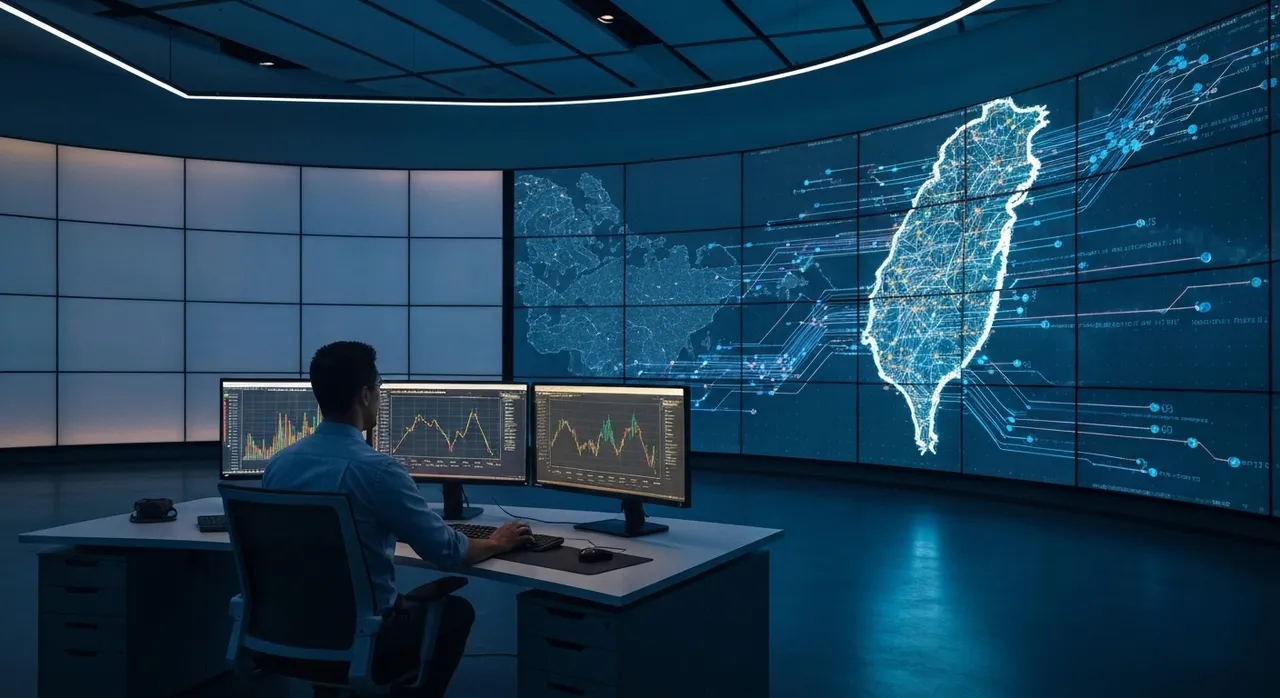
That organization is The National Museum of Computing (TNMoC), located at the legendary Bletchley Park. In a fascinating exercise of digital archaeology, TNMoC has introduced The Million Measure—an ultra-minimalist, cross-era benchmarking project with a wonderfully simple premise: how fast can a computer count to 1,000,000?
The beauty of this project lies in its defiance of modern computing dogma. Today, we are obsessed with instruction-heavy workloads, spec-driven metrics, and synthetic performance curves. By stripping computing back to its most foundational block—sequential arithmetic incrementation—TNMoC has created a universal computer benchmark that can run on virtually anything ever constructed by human hands that qualifies as a computing machine. This includes everything from wartime vacuum-tube state machines to the latest microcontrollers and single-board systems.
Why an Ultra-Simple Computer Benchmark Matters for Digital Archaeology
Modern benchmarks like Cinebench or Geekbench are designed to push contemporary architectures to their absolute limits, stressing multi-core scalability, memory subsystems, and specialized vector instructions. However, these complex software suites are entirely useless when looking backward. They rely on modern operating system APIs, gigabytes of RAM, and highly advanced optimizing compilers. You cannot compile a modern floating-point rendering test for an 8-bit home computer from 1981, let alone a custom codebreaking machine from 1944.
The Universal Equalizer of Sequenced Increments
The Million Measure circumvents the architectural incompatibility barrier by presenting a task that every generation of computer understands. Counting to one million requires only three basic logical constructs:
- An initialization phase to set a register or memory location to zero.
- An incrementation phase to add one to that value.
- A comparison and branch phase to determine if the target of 1,000,000 has been reached, looping back if it has not.
Because this sequence requires no floating-point units, no complex mathematical algorithms, and no high-level memory virtualization, it can be hand-coded or compiled on any machine with ease. Whether written in raw machine code, Assembly, BASIC, C, or even implemented physically via mechanical gears or electrical patch panels, the logic remains identical. It exposes the raw speed of a processor’s clock cycle and its instruction execution pathway without the masking effects of modern software abstraction layers.
The Genesis of the Project: Practical Diagnostics for Historical Hardware
While retrocomputing enthusiasts view The Million Measure as an entertaining intellectual exercise, the project was born out of a very practical operational challenge at TNMoC. Curating and maintaining a vast physical collection of working historic computers is a highly demanding task. The museum houses massive, delicate machines containing thousands of volatile components, including thermionic valves (vacuum tubes), discrete Germanium transistors, delay line memories, and early magnetic core storage arrays.
On any given day, museum engineers must verify which of these legacy systems are functioning correctly before visitors arrive. Traditional diagnostic programs are often complex to load, machine-specific, and time-consuming to execute. The Million Measure solves this by acting as an ultra-fast, universal check. By observing whether a vintage machine can successfully execute the count and deliver the correct final tally, engineers receive immediate verification that the system’s ALU (Arithmetic Logic Unit), clock generators, registers, and basic memory pathways are in perfect working order. It is a diagnostic tool masquerading as a historical curiosity.
The Colossus vs. BBC Micro Paradox
When TNMoC began compiling data for The Million Measure, the initial results yielded remarkable insights into the history of digital evolution. The most startling revelation emerged from the comparison between two British computing icons: the WWII codebreaker Colossus Mark 2 and the 1980s BBC Micro home computer.
Deconstructing the 42-Fold Speed Gap
The benchmark revealed that the BBC Micro, powered by its 8-bit MOS Technology 6502 processor, is only about 42 times faster at counting to a million than Bletchley Park’s wartime giant, Colossus. To the casual observer, a 42x performance gap between a room-sized 1944 machine and a consumer microcomputer from 1981 seems incredibly narrow. One would naturally assume that nearly forty years of semiconductor development would result in a speed difference of several orders of magnitude.
The explanation lies in the specialized, highly parallel design of Colossus. Engineered by the brilliant Tommy Flowers, Colossus was not a general-purpose, stored-program computer. Instead, it was an electronic state machine built to solve a highly specific mathematical problem: finding the wheel settings of the Lorenz SZ40/42 cipher machine. To achieve this, Colossus read punched paper tape at an astonishing rate of 5,000 characters per second, performing logic calculations in parallel across 2,500 vacuum tubes.
However, because Colossus lacked a general-purpose instruction set and a modern register-based ALU, executing a sequential loop like counting to one million is an unnatural, highly unoptimized task for its hardware. In contrast, the BBC Micro’s 6502 CPU operates at a clock speed of 1 MHz or 2 MHz. Though it handles sequential instructions with elegant simplicity, a single loop in BASIC or even native machine assembly still requires multiple clock cycles to load, increment, compare, and branch. While the BBC Micro finishes the count in approximately 10 to 20 seconds, the mighty Colossus completes it in several minutes—rendering a legendary milestone of parallel processing surprisingly competitive with early home computing when forced onto sequential terms.
From Minutes to Milliseconds: Legacy Performance Visualized
As the benchmark moves forward through the decades, the execution times drop dramatically, tracing the steep curve of Moore’s Law. Mid-20th-century systems, dominated by vacuum tubes and early transistors, measured their results in minutes or even hours. By the 1970s and 1980s, the microcomputer revolution brought these times down to the scale of seconds.
The fastest legacy system tested under the project so far is the iconic 1995 BeBox. Built by Be Inc. and powered by dual PowerPC 603 RISC processors, the BeBox was an advanced workstation optimized for rich media and multi-threaded processing. Under the Million Measure, the BeBox blazed through the count to one million in a mere 0.004 seconds (4 milliseconds). This represents an incredible leap of hundreds of thousands of times faster than the early mainframe systems.
The following data illustrates the evolutionary trajectory of processing speed through the lens of this minimalist test:
Written by
TempMail Ninja
Digital privacy and online security expert. Passionate about creating tools that protect users' identity on the internet.