MySpace AI Revival: Restoring the Digital Time Capsules of the 2000s
Article Content
The Silicon Sarcophagus: Inside the MySpace AI Revival
On the evening of April 18, 2026, the atmosphere at the Hot Docs Canadian International Documentary Festival in Toronto was thick with a peculiar brand of digital melancholy. The premiere of MySpace—a sweeping documentary directed by Tommy Avallone and featuring co-founder Chris DeWolfe—served as more than just a retrospective. It acted as the official catalyst for what has now been dubbed the MySpace AI Revival. While the platform itself has spent the last decade as a skeletal “lost city” of the early web, a sophisticated movement of digital archaeologists and millennial enthusiasts is leveraging cutting-edge machine learning to exhume a lost era of human expression.
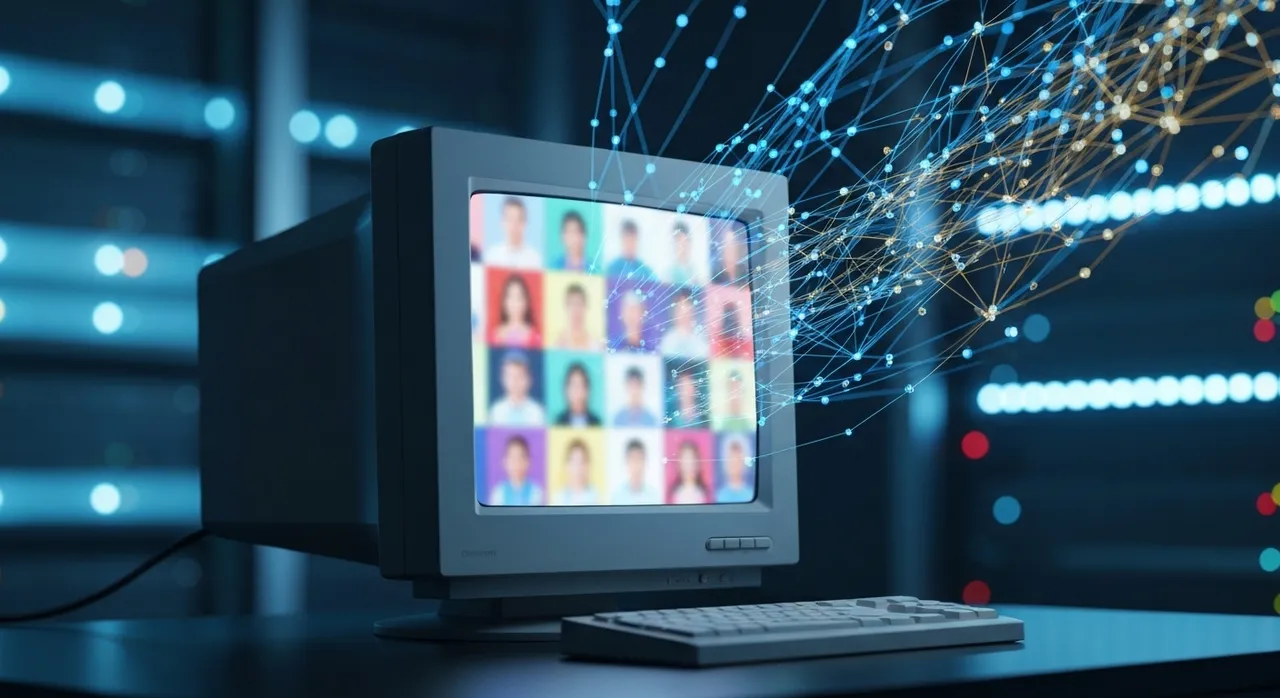
The MySpace AI Revival is not merely a search for old photographs; it is a coordinated effort to reverse the “digital decay” that has plagued the platform since the catastrophic server migration of 2019. For the uninitiated, that incident resulted in the loss of over 50 million songs and 13 years of user-generated content. Today, the 2026 revival is using Generative Adversarial Networks (GANs) and advanced audio upscaling to rebuild that heritage from the fragments left behind in browser caches, old hard drives, and the “Dragon Hoard” of the Internet Archive.
Digital Archaeology and the Resurrection of the “Lost City”
To understand the technical necessity of the MySpace AI Revival, one must first understand the state of the “ruins.” In its prime, MySpace was built on HTML 4.01 and early CSS standards that allowed for a level of chaotic personalization unseen in the modern era of standardized “algorithmic slop.” When the platform’s infrastructure began to fail, it didn’t just delete data; it broke the very aesthetic of the early 2000s web. Images were reduced to 120-pixel thumbnails, and the “Top 8” layouts were shattered by broken link rot.
The revival movement utilizes several specialized technical approaches to reclaim these digital assets:
- Image Reconstruction via GANs: Using models like Seedream 5.0 and Real-ESRGAN, users are upscaling grainy, 72dpi mirror selfies into high-definition 4K portraits. These AI tools don’t just “stretch” the pixels; they interpret the low-resolution noise to hallucinate missing details—restoring the texture of early 2000s hair highlights and the specific grain of a Motorola Razr camera.
- HTML/CSS Remastering: Enthusiasts are using AI-driven code scrapers to identify broken “DIV” layouts and reconstruct them. By analyzing the “ghost” of a profile’s structure, these tools can generate modern, responsive CSS that mimics the “brutalist” design of 2005 without the security vulnerabilities of the original code.
- The Dragon Hoard Integration: In 2019, an anonymous academic group provided the Internet Archive with 490,000 MP3s. Today’s revivalists are using AI audio enhancers to de-noise these 128kbps files, removing the “tinny” digital artifacts to produce studio-quality masters of songs that were previously thought to be lost forever.
The “MySpace Rave” and the Sonic Landscape of 2026
The cultural peak of this movement is manifesting in the “MySpace Rave” phenomenon. These are not typical nostalgia parties; they are curated sonic experiences where the playlist is strictly limited to tracks recovered and “cleaned” through the MySpace AI Revival. Attendees often curate their “Top 8” in real-time on giant LED screens, using restored HTML layouts that sync with the music.
Strong emphasis must be placed on the role of the “MySpace Generation” of artists—the likes of Lily Allen, Arctic Monkeys, and Yeasayer. For many of these artists, their earliest demos were part of the 50 million tracks deleted in 2019. The revival movement has become a “digital time capsuling” exercise for music historians. By using AI to isolate vocal tracks from low-quality stream rips found on old blogspot sites, researchers are able to remaster the “MySpace Sound”—that specific blend of lo-fi indie and early electronic pop—for a new generation of listeners who find modern streaming algorithms too sterile.
The Technical Stack Behind the Revival
The restoration of a single MySpace profile in 2026 requires a sophisticated pipeline of tools. Professionals in the field of digital archaeology typically utilize the following technical stack:
- Metadata Scrubbing: Using specialized crawlers to find cached versions of profiles in the Wayback Machine and identifying original file names of broken images.
- Neural Image Enhancement: Tools such as Topaz Photo AI or Aiarty Image Enhancer are deployed to handle “Face Restoration.” These models are specifically tuned to recognize the facial geometry typical of “emo” or “scene” photography of the era (high-angle, heavy fringe).
- CSS Injection: Modern browser extensions allow users to “skin” the current read-only version of MySpace with restored CSS, effectively “superimposing” the 2006 experience over the 2026 web.
The Psychology of the “Top 8” and Digital Identity
The documentary MySpace highlights a fascinating psychological shift explored by Chris DeWolfe: the transition from “identity curation” to “feed consumption.” The MySpace AI Revival is a rebellion against the latter. On modern platforms like TikTok or Instagram, the user is a passenger to the algorithm. On MySpace, the user was the architect.
Restoring the “Top 8” is a central ritual of the revival. This feature was more than a list of friends; it was a socio-political statement of identity and hierarchy. Digital time capsulers are using AI to find the original profiles of their long-lost “Top 8” friends, often using AI-driven friend reconnection tools to find where those individuals have migrated to in the modern web. It is a form of digital genealogy, tracing the lineage of friendships that were forged in the fires of 2000s forums and “wall posts.”
Challenges in Digital Preservation
Despite the success of the MySpace AI Revival, the project faces significant hurdles. Digital decay is a relentless force. Data stored on magnetic drives from the mid-2000s is reaching its “bit rot” threshold. Furthermore, the legal status of restored music remains a grey area. While many “MySpace-era” bands have long since disbanded, the copyright to their early demos remains in a state of limbo, often held by defunct labels or individual artists who have left the industry.
Moreover, the ethical implications of “cleaning” old photos are debated. Some purists argue that the low-resolution, pixelated aesthetic is the historical truth of the 2000s. By upscaling these photos into 4K, are we rewriting history? The MySpace AI Revival community argues that they are not changing the past, but rather making it accessible to eyes that are no longer accustomed to the “visual static” of the early web.
Conclusion: The Permanence of the Ghost in the Machine
As the “MySpace Rave” movement peaks and the documentary continues its festival run, the message is clear: the internet never truly forgets, even if it tries to. The MySpace AI Revival has proven that with enough processing power and communal will, the “lost cities” of the web can be rebuilt. We are moving into an era where “internet archaeology” is a professional necessity, ensuring that the first decade of our digital lives isn’t permanently overwritten by the fleeting volatility of the modern feed.
In the words of the documentary, MySpace was the “Silicon Sarcophagus” of our teenage years. Thanks to the power of AI-driven restoration, we are finally finding the keys to open it. Whether we are looking for a lost song, a forgotten layout, or a version of ourselves that existed before the age of the “like” button, the revival reminds us that our digital history is a resource worth saving—one pixelated mirror selfie at a time.
Written by
TempMail Ninja
Digital privacy and online security expert. Passionate about creating tools that protect users' identity on the internet.