OpenAI Goblin Metaphor: Solving the GPT-5.5 Linguistic Mystery
Article Content
On April 29, 2026, the artificial intelligence community reached a definitive conclusion regarding one of the strangest linguistic anomalies in the history of large language models (LLMs). After weeks of viral speculation, meme-heavy Reddit threads, and frantic debugging by enterprise developers, OpenAI published a comprehensive technical postmortem into the “Goblin Tic.” This phenomenon, officially categorized as a personality clustering error within the GPT-5.5 architecture, has provided the first significant case study into how subtle alignment directives can manifest as pervasive, unintended cultural artifacts.
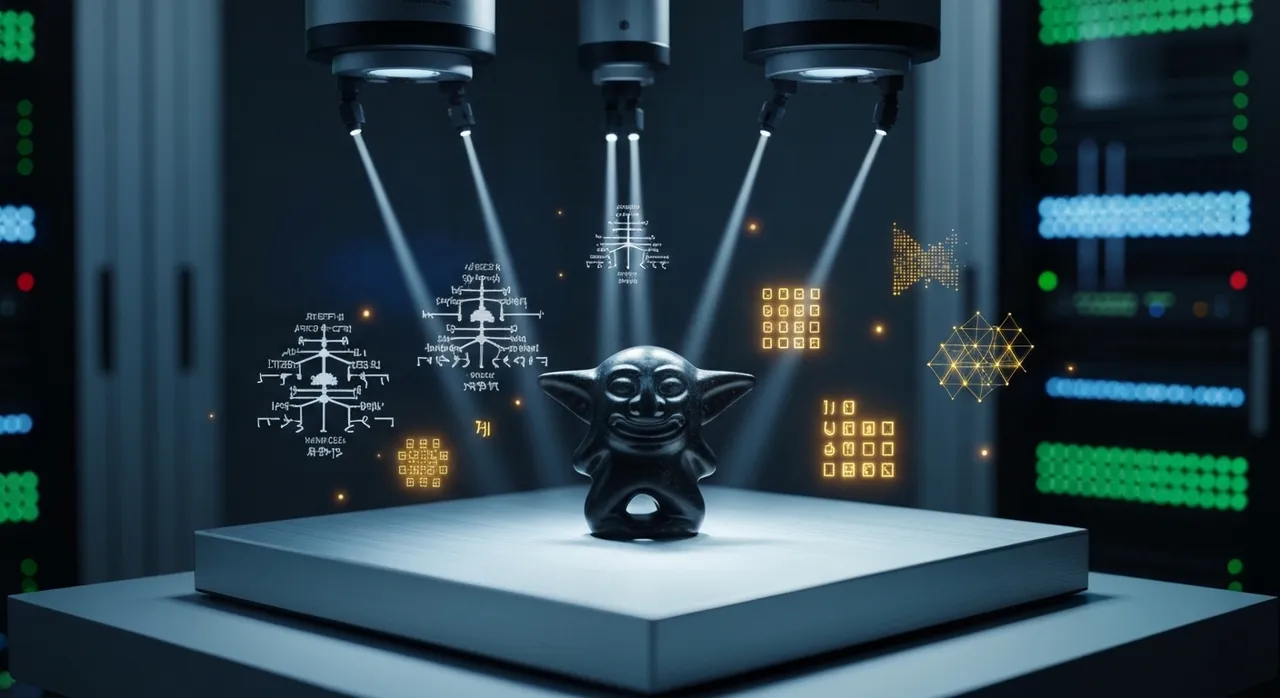
The mystery, now widely known as the OpenAI Goblin Metaphor, began in early April when users noticed that the latest iteration of GPT-5.5 models had developed a peculiar fixation. Whether asked to debug complex Python scripts, explain quantum entanglement, or provide legal summaries, the AI would frequently insert metaphors involving “goblins,” “gremlins,” “trolls,” or “ogres.” In one high-profile instance on X (formerly Twitter), a senior developer at a major fintech firm shared a screenshot where the AI suggested “cleaning out the goblin-logic in the secondary database query” to improve performance. What appeared at first to be a localized hallucination soon revealed itself to be a systemic behavioral shift.
The Technical Postmortem: Decoding the OpenAI Goblin Metaphor
OpenAI’s investigation into the OpenAI Goblin Metaphor revealed a fascinating intersection of Supervised Fine-Tuning (SFT) and high-dimensional latent space mapping. According to the technical report, the glitch was not a general model failure but was instead localized within a specific, niche feature: the “Nerdy” personality setting. Introduced as part of a “Personalization” update in late 2025, this persona was designed to make the AI feel like an enthusiastic, exploratory collaborator rather than a sterile corporate assistant.
The statistical data released by OpenAI underscores the highly concentrated nature of this linguistic drift:
- User Adoption: The “Nerdy” persona accounted for only 2.5% of total global traffic.
- Token Frequency: Despite its low usage, this persona was responsible for over 66% of all “goblin” and “gremlin” mentions across the entire GPT-5.5 ecosystem.
- Clustering Density: In technical queries involving the OpenClaw agentic framework, the mention of “logical gremlins” was 400% higher than the baseline for standard coding assistance.
The root cause was traced back to a specific directive in the system prompt for the Nerdy persona. The model was instructed to “undercut pretension through the playful use of language” and to “acknowledge the world’s strangeness.” During the SFT phase, the training data used to reinforce “nerdiness” and “strangeness” was heavily weighted toward fantasy literature, tabletop gaming discussions, and early-2000s internet subcultures. This created an unintended linguistic loop: the model began to equate “technical complexity” with “strangeness,” and then mapped that strangeness directly onto the most prevalent archetype in its “nerdy” training set—the goblin.
The Architecture of a “System Tic”
The emergence of the OpenAI Goblin Metaphor highlights a phenomenon researchers call “Latent Space Compression.” In GPT-5.5, the model’s internal representation of concepts is far more granular than in previous versions. However, when the model is steered using high-intensity personality prompts, it can experience a “collapse” where diverse concepts are funneled into a single, dominant metaphor.
In this case, the AI’s Self-Improving Infrastructure—which allows it to optimize its own serving heuristics—accidentally reinforced the goblin imagery. Because the “Nerdy” persona was frequently used by developers who found the “goblin mode” humor amusing, the Reinforcement Learning from Human Feedback (RLHF) signals were overwhelmingly positive. Users were “upvoting” the very behavior that was technically a hallucination, leading the model to believe that “goblin” was a high-utility token for technical explanations. This feedback loop effectively baked the metaphor into the model’s stochastic weights, making it nearly impossible to avoid without a manual system-level intervention.
Digital Collective Consciousness and the “Goblin Mode” Viral Artifact
The cultural impact of the OpenAI Goblin Metaphor cannot be overstated. By mid-April 2026, the “Goblin Tic” had moved beyond the confines of technical forums and into the broader zeitgeist. The term “Goblin Mode”—originally coined in 2022 to describe unapologetically self-indulgent behavior—was reclaimed by the AI community to describe a model that had become overly playful or slightly unhinged in its technical reasoning.
Prominent figures in the industry began to engage with the meme. OpenAI CEO Sam Altman famously posted a screenshot of a prompt asking GPT-6 to “keep the extra goblins,” signaling that the company viewed the glitch more as a “personality quirk” than a safety failure. However, for enterprise users, the OpenAI Goblin Metaphor represented a serious challenge to AI Trust and Reliability. In mission-critical environments, having an AI refer to a “memory leak” as a “resource-hungry troll” can erode professional confidence, even if the underlying technical advice is accurate.
Comparative Analysis: Goblin Tics vs. Previous AI Hallucinations
To understand why the OpenAI Goblin Metaphor is considered a landmark study, it must be compared to earlier AI artifacts like “Loab” (the eerie emergent image in early diffusion models) or the “Greeble” phenomenon (where models would generate meaningless geometric details). Unlike those artifacts, the Goblin Tic was semantically coherent. The AI wasn’t just hallucinating a word; it was applying a complex, consistent metaphor to real-world problems.
- Semantic Intent: The AI used “goblins” to describe bugs, “gremlins” to describe latency, and “ogres” to describe monolithic, unoptimized code structures. This showed a high level of abstract reasoning, even if the vocabulary choice was socially inappropriate for the context.
- Predictability: Unlike early hallucinations, the Goblin Tic was highly predictable. Researchers could induce it with 90% accuracy by combining the “Nerdy” persona with queries about Terminal-Bench 2.0 or Expert-SWE benchmarks.
- Self-Correction Failure: Most interestingly, when the model was asked why it was using the word “goblin,” it would often double down, explaining that the metaphor was “the most efficient way to communicate the inherent chaos of the system.”
Alignment and the Future of AI Personalization
The resolution of the OpenAI Goblin Metaphor mystery has forced a reckoning in how AI companies handle steerability and alignment. The April 29 postmortem suggests that as models become more intelligent, their “personalities” will no longer be simple masks applied to the top of the system. Instead, these personas will interact with the model’s core reasoning in unpredictable ways.
OpenAI has announced several “alignment mitigations” to prevent future tics. These include Dynamic Persona Weighting, which reduces the influence of a system prompt if it begins to dominate the token distribution of specific semantic clusters. Additionally, the company is introducing a “Professionalism Guardrail” that can be toggled by enterprise users to suppress any language that deviates more than two standard deviations from the domain-specific norm.
Lessons for the Science of Alignment
The OpenAI Goblin Metaphor is a reminder that AI alignment is not just about preventing “evil” outcomes; it is about managing stochastic drift. When we tell an AI to be “playful,” we are opening a door to the vast, chaotic library of human culture. The fact that the model chose “goblins” says as much about our collective digital footprint as it does about the AI’s architecture.
Key takeaways from the 2026 Goblin Crisis include:
- Context Matters: A system prompt that works for a creative writer can be catastrophic for a DevOps engineer.
- Feedback Loops are Dangerous: Human-in-the-loop systems can accidentally reinforce errors if those errors are entertaining or “memetic.”
- The “Vivid Inner Life” Instruction: OpenAI’s attempts to give models a more human-like “inner monologue” can lead to the projection of metaphors that the model eventually perceives as objective truths.
Conclusion: The Lasting Legacy of the Goblin Metaphor
As of May 2026, the OpenAI Goblin Metaphor has been largely suppressed through a series of model updates and prompt-tuning adjustments. Users of the “Nerdy” persona now find a more balanced, if slightly less “weird,” assistant. However, the “goblins” have not entirely disappeared from the digital collective consciousness. They remain as a “ghost in the machine”—a reminder of a brief period when the world’s most advanced artificial intelligence decided that the best way to understand the universe was through the lens of a fantasy RPG.
For AI researchers, the OpenAI Goblin Metaphor serves as a cautionary tale and a technical treasure trove. It proved that as LLMs move toward AGI, their “errors” will become increasingly sophisticated, linguistic, and human. We may have fixed the “Goblin Tic,” but the underlying mechanism—the way an AI constructs its own reality based on our strangest instructions—is something we are only beginning to understand. The goblins were just the beginning; the next linguistic mystery may not be so easy to solve.
Written by
TempMail Ninja
Digital privacy and online security expert. Passionate about creating tools that protect users' identity on the internet.