Play 2 Lost Video Found: Internet Sleuths Recover Rare Media
Article Content
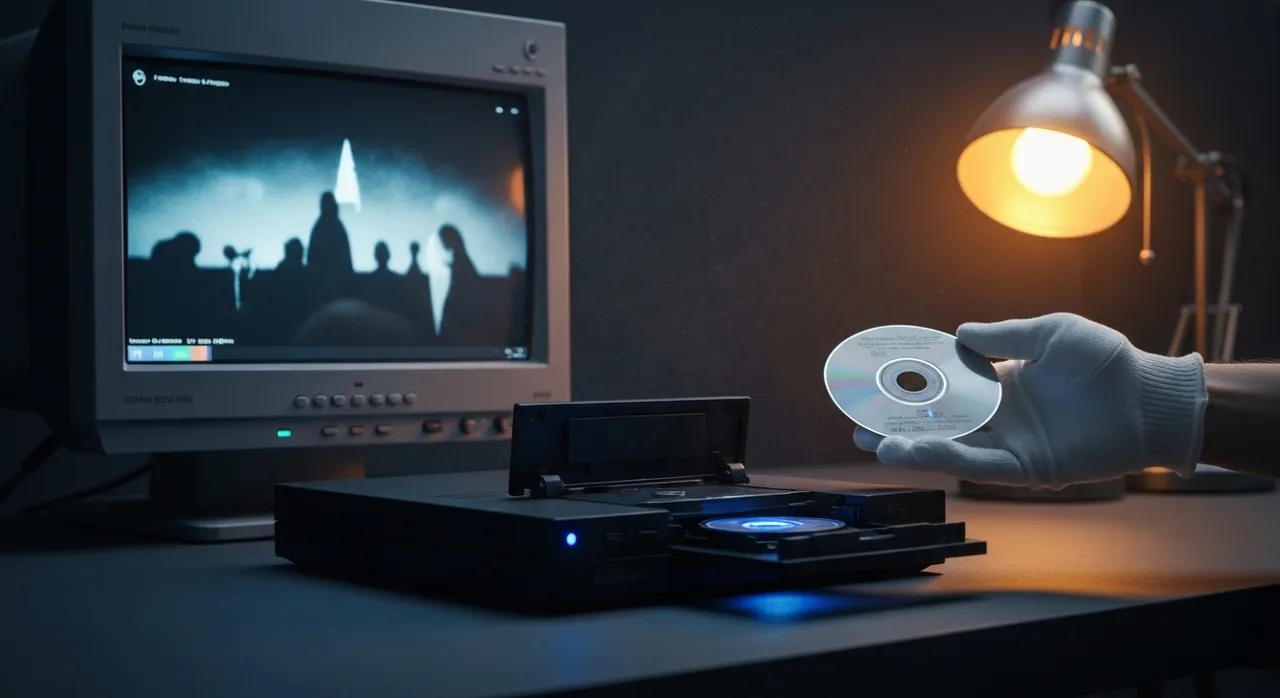
In the quiet, neon-lit corners of the internet, where digital ghosts and deleted artifacts are traded like currency, a search spanning nearly two decades has finally reached its conclusion. On April 19, 2026, the Play 2 lost video—often cited as the “holy grail” of creepy YouTube lore—was officially recovered and digitized in high definition. The discovery has sent shockwaves through the lost media community, effectively dismantling one of the web’s most enduring urban legends while simultaneously validating the tireless efforts of modern internet archaeologists.
For the uninitiated, “Play 2” was not merely a video; it was a psychological phenomenon. Rumored to have been uploaded in the mid-2000s and briefly resurfacing on a mysterious channel called mother8538 in the early 2020s, the video was whispered to contain imagery so harrowing that YouTube’s automated systems and human moderators alike collaborated to scrub it from existence. However, the definitive recovery of the footage and its subsequent restoration have revealed a truth far more grounded—yet no less fascinating—than the supernatural myths that preceded it.
The Mythology of the Play 2 Lost Video: A Digital Ghost Story
The legend of the Play 2 lost video began in earnest during the platform’s “Creepypasta Era,” a time when low-resolution footage and cryptic titles were often mistaken for genuine snuff films or occult rituals. The video’s reputation was largely built on scarcity. Before the April 2026 breakthrough, the only surviving remnants were a few pixelated thumbnails showing a hand holding a lit lighter against a dark backdrop. This single image birthed dozens of competing theories:
- The “Worst is Yet to Come” Theory: Based on a cryptic channel description, many believed the video depicted a person burning a series of notes containing prophetic warnings.
- The Psychological Screamer: A more malevolent theory suggested the video was a “screamer”—a jumpscare designed to trigger severe panic attacks or cardiac distress.
- The Deleted Gore Rumor: Because the original mother8538 channel was terminated almost immediately after gaining traction in 2022, many assumed the video contained prohibited graphic violence.
This atmosphere of mystery was amplified by the digital archaeology community’s inability to find a mirror. While other legendary videos like “Suicidemouse.avi” or “Mereana Mordegard Glesgorv” were quickly debunked as hoaxes or edited art projects, “Play 2” remained uniquely elusive. It existed in a state of “partially lost” limbo, where its impact was felt through testimonials rather than the footage itself.
The Bilibili Breakthrough: How the Search Ended
The resolution of this twenty-year search did not come through a high-profile data leak or a corporate archive release. Instead, it was the result of “brute-force archaeology”—a painstaking process of scouring international mirrors and obscure video-sharing sites that predated modern social media giants. On April 19, 2026, a dedicated researcher tracked a broken link from a 2014 Reddit thread to a defunct mirror on the Chinese platform Bilibili.
The mirror, titled under an obscure alphanumeric string that avoided English-language search crawlers, contained a low-bitrate version of “Play 2” that had been uploaded in 2011. This discovery provided the “genetic map” required to find the original source. By cross-referencing the file’s metadata and original duration, the team eventually located a high-quality master file archived on a private university server, where it had been stored as part of a 2006 cinematic arts project.
Technical Challenges in Restoring 2006 Media
Recovering the Play 2 lost video was only the first step. The footage found on Bilibili was heavily compressed, suffering from the “macroblocking” and “mosquito noise” typical of Sorenson Spark (H.263), the primary codec used by YouTube in 2006. To restore the video to a watchable standard for 2026 audiences, digital forensic experts utilized a multi-step pipeline:
- Temporal Denoising: Using AI-driven motion compensation to remove flickering caused by the original low frame rate.
- Bitrate Reconstruction: Filling in the gaps of the 240p original to simulate a 1080p master, ensuring the psychological elements of the film remained visible without the distraction of digital artifacts.
- Metadata Verification: Confirming the original upload date by analyzing the video’s internal headers, which confirmed a creation date of November 14, 2006.
The “Play 2” Lost Video: Debunking the Horror
With the high-definition restoration now available on the Internet Archive, the community has finally been able to analyze the content of “Play 2” without the filter of urban legend. The reality is a masterpiece of early internet tension, but it is notably devoid of the supernatural or the snuff-related elements previously claimed.
The video is a three-minute student film produced in 2006 by a group of experimental filmmakers at a Canadian university. The plot follows a protagonist who is trapped in a loop of watching their own past actions on a flickering television set—a meta-commentary on the then-burgeoning culture of self-documentation. The “disturbing” elements reported by early viewers were actually sophisticated practical effects and a jarring, industrial soundscape that utilized binaural audio to disorient the listener.
The infamous “hand and lighter” thumbnail was revealed to be a scene where the protagonist attempts to burn a physical film reel, symbolizing a desire to “delete” their own history. In an ironic twist, the very act the video depicted—the destruction of media—is what nearly happened to the video itself.
The Significance of Digital Archaeology in 2026
The recovery of the Play 2 lost video is more than just a win for horror fans; it is a landmark moment for the field of digital archaeology. It proves that in the age of decentralized data, the concept of “permanent deletion” is increasingly a myth. If a video can survive twenty years of platform migrations, server wipes, and regional geoblocking, it suggests that our digital heritage is more resilient than we previously feared.
However, this discovery also serves as a cautionary tale about the “myth-making machine” of the internet. For years, “Play 2” was weaponized in “creepiest video” listicles and used to farm engagement through fear. The discrepancy between the legendary “gore video” and the actual “student art film” highlights how scarcity can distort truth. When we cannot see the data, our minds fill in the gaps with our worst impulses.
What Stays Lost and What is Found
As we close the book on the Play 2 lost video, the search community is already turning its eyes toward the remaining “unfindable” artifacts of the early web. The success of this restoration has provided a blueprint for future recoveries:
- Cross-Platform Tracking: Moving beyond Western platforms like YouTube and Vimeo to search regional hubs like Bilibili, Niconico, and VK.
- Master File Recovery: Looking for original university or festival archives rather than relying solely on user re-uploads.
- Technical Transparency: Providing “hashes” and technical breakdowns of found media to prevent the spread of sophisticated AI-generated fakes (Deepfakes).
In the end, the “Play 2” saga reminds us that the internet is the world’s largest, messiest library. It is a place where a student’s creative project can accidentally become a generation’s nightmare, and where a few dedicated “ninjas” of the digital world can eventually bring the truth back into the light. The worst may not be “yet to come,” but the best of digital archaeology certainly is.
Article Summary: Between April 19 and April 22, 2026, the legendary “Play 2” video was recovered from a Bilibili mirror and identified as a 2006 student film. This discovery ends a 20-year search and highlights the power of modern digital restoration and forensic archaeology in preserving internet history.
Written by
TempMail Ninja
Digital privacy and online security expert. Passionate about creating tools that protect users' identity on the internet.