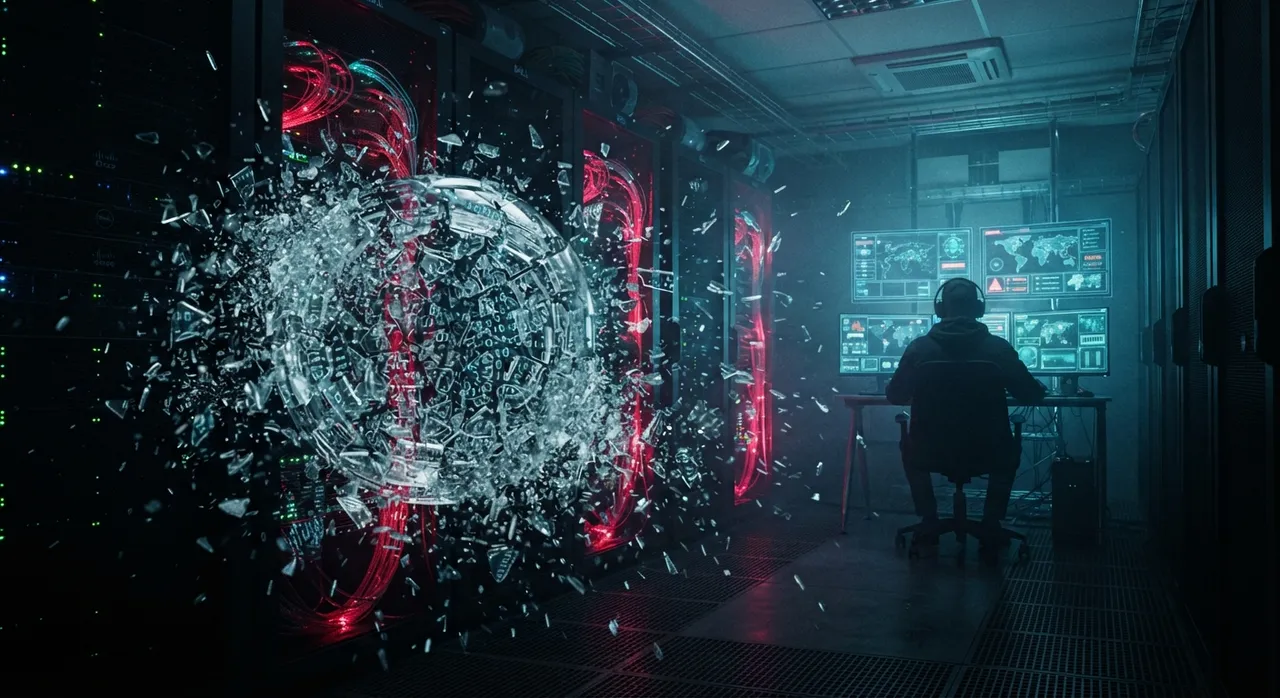
Rockstar Games Breach Confirmed: ShinyHunters Threaten GTA VI Data

Article Content
In an era defined by hyper-connectivity, the digital perimeter has become increasingly elusive. On April 13, 2026, the gaming industry witnessed a sobering reminder of this reality when Rockstar Games, the powerhouse developer behind the *Grand Theft Auto* franchise, confirmed a security intrusion. The breach, orchestrated by the notorious threat collective ShinyHunters, has ignited a fierce standoff, pitting corporate reputation against the threat of massive data leakage.
While Rockstar Games has moved swiftly to characterize the event as “non-material,” the situation highlights a critical, often-overlooked vulnerability in modern enterprise architecture: the fragility of third-party SaaS integrations. As the deadline for the hackers’ ultimatum arrived on April 14, 2026, the incident serves as a stark case study on the risks posed by supply-chain dependencies in cloud-native environments.
The Anatomy of the Rockstar Games Breach
The Rockstar Games breach did not begin with a frontal assault on the developer’s robust infrastructure. Instead, it followed a sophisticated path of least resistance through the software supply chain. Investigations indicate that the intrusion was facilitated by the compromise of Anodot, an AI-powered, cloud-based analytics platform utilized by numerous organizations to monitor infrastructure costs and detect operational anomalies.
The technical ingenuity—and subsequent risk—of this attack lies in the exploitation of trust. Anodot’s services require deep integration with cloud data warehouses like Snowflake to function effectively. To automate this process, these platforms utilize persistent authentication tokens. These tokens act as digital keys, granting the integration service the authority to query and analyze data without requiring manual, multi-factor authentication (MFA) for every request.
ShinyHunters reportedly accessed Anodot’s internal systems, from which they were able to siphon these high-privilege authentication tokens. Because these tokens functioned as trusted credentials between services, the attackers were able to navigate directly into connected Snowflake environments. To the system, the unauthorized activity appeared as legitimate, authorized requests from the Anodot platform, allowing the actors to perform standard database queries and exfiltrate information without triggering typical security alerts.
Technical Implications of Token Misuse
The reliance on persistent tokens creates a significant, enduring security vulnerability. Unlike session-based credentials that expire frequently, these integration tokens are often configured for long-term use to ensure uninterrupted service connectivity. When such a token is compromised, the access it provides remains valid until it is manually rotated or revoked. In this incident, the attackers possessed the “keys to the kingdom,” enabling them to traverse data environments as if they were an authorized internal tool.
This method of “credential piggybacking” underscores why traditional perimeter defenses are becoming less effective against modern threat actors. Once the barrier is crossed at the third-party provider level, the subsequent lateral movement into the target’s data warehouse is nearly seamless, bypassing the conventional layers of protection that companies like Rockstar Games have put in place.
The Extortion Playbook: Pay or Leak
Following the successful exfiltration of data, the ShinyHunters collective—a group with a history of high-profile data theft and extortion—publicly escalated the situation. On April 11, 2026, the group published a ultimatum on its dark-web leak site, explicitly mentioning Rockstar Games and setting a ransom deadline of April 14, 2026. The message was clear: payment was the only condition to prevent the public release of the stolen assets.
The threat carries significant weight given the nature of the data involved. With *Grand Theft Auto VI* currently in the final stages of its development cycle, any information related to game assets, marketing strategies, or internal development schedules represents immense value to the gaming community and, by extension, substantial leverage for the hackers. While Rockstar has downplayed the incident, insisting that the stolen data is “non-material” and does not impact players or internal development, the aggressive stance taken by ShinyHunters suggests they believe the compromised information holds significant leverageable value.
Supply-Chain Vulnerabilities in the Cloud Era
The Rockstar Games breach is emblematic of a broader, systemic risk impacting organizations globally. Security analysts are increasingly sounding the alarm regarding the dangers of “integration bloat,” where the desire for operational efficiency through automation creates an expansive and brittle network of third-party trust.
Organizations often focus their security budgets on securing their own cloud instances, mistakenly assuming that the software they integrate is inherently secure. However, as demonstrated by the Anodot incident, a single compromised link in the supply chain can invalidate the security of dozens of downstream customers. This incident has, in fact, been part of a wider campaign that has impacted at least a dozen other organizations using similar integrations.
Lessons for Enterprise Security
This incident provides a roadmap for the necessary evolution of corporate cybersecurity strategies. To mitigate similar future threats, organizations must consider the following pillars of defense:
- Automated Token Rotation: Moving away from long-lived, static authentication tokens is critical. Automated systems that expire and rotate credentials frequently ensure that a stolen token becomes useless shortly after acquisition, significantly reducing the dwell time for any attacker.
- Least Privilege Access: SaaS integrations should be restricted to the absolute minimum permissions required for their specific function. Broad administrative access for monitoring tools provides an unnecessarily large attack surface.
- Continuous Monitoring of Service-to-Service Traffic: Simply relying on perimeter defenses is insufficient. Organizations must implement sophisticated monitoring to detect anomalous query patterns or unusual outbound data flows occurring *between* authorized services.
- Rigorous Third-Party Audits: The security posture of a third-party vendor must be treated with the same scrutiny as internal systems. Companies must demand transparency regarding how their data is accessed, managed, and, most importantly, how credentials and tokens are secured by these external partners.
Conclusion
As of this writing, the Rockstar Games breach remains a focal point of discussion within the cybersecurity community, highlighting the persistent cat-and-mouse game between elite threat actors and global enterprises. Rockstar Games’ decision to downplay the impact of the breach is a strategic move to manage reputation and investor confidence, yet it serves to underscore the difficulty in quantifying the “materiality” of leaked corporate intellectual property.
The ShinyHunters incident is not merely an isolated case of a video game developer being targeted; it is a manifestation of the inherent risks built into our modern, integrated technological ecosystem. As organizations continue to prioritize the efficiency gains of cloud-native automation, they must simultaneously adopt a “zero-trust” mentality—not just toward users, but toward every single integration and tool within their digital environment. The security of the future relies on the understanding that in a hyper-connected world, every service is a potential point of entry, and every connection requires rigorous verification.
Written by
TempMail Ninja
Digital privacy and online security expert. Passionate about creating tools that protect users' identity on the internet.