Russian Cyber Espionage: German Government Signal Accounts Targeted
Article Content
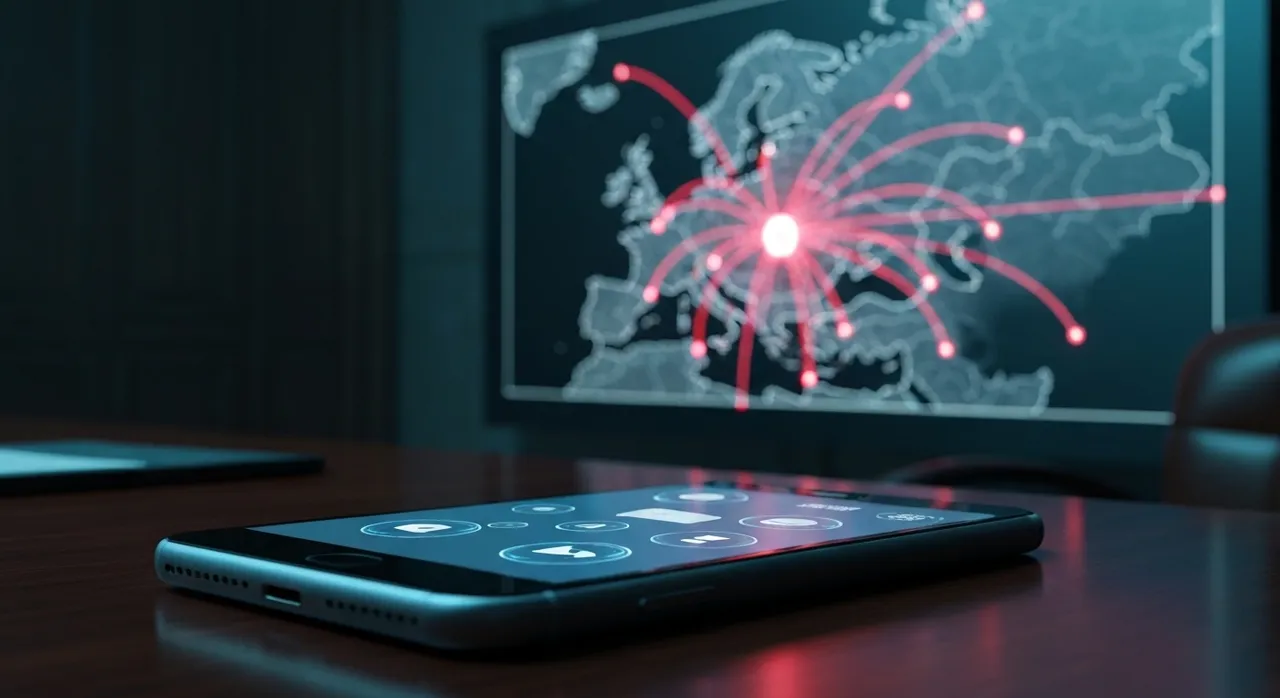
The digital fortress of European diplomacy has been breached not through a flaw in its code, but through the exploitation of human trust. In a revelation that has sent shockwaves through the Chancellery and the Bundestag, German federal authorities have confirmed a massive campaign of Russian cyber espionage targeting the private communications of the nation’s political elite. Published on April 25, 2026, the joint report from the Federal Prosecutor’s Office, the Federal Office for the Protection of the Constitution (BfV), and the Federal Office for Information Security (BSI) paints a chilling picture of a coordinated effort to dismantle the perceived security of the Signal messaging platform.
The investigation reveals that over 100 high-ranking officials, including federal ministers and senior parliamentary leaders, fell victim to a sophisticated social engineering scheme. Among the most prominent targets were Minister of Education Karin Prien and Minister of Construction Verena Hubertz, whose private deliberations and contact networks were potentially laid bare to Kremlin-aligned actors. This breach represents one of the most significant intelligence failures in recent German history, highlighting a critical vulnerability in the “Bring Your Own Device” (BYOD) culture that has permeated the highest levels of government.
The Berlin Breach: A Strategic Harvest of Intelligence
The scope of the Russian cyber espionage campaign is unprecedented in its direct focus on individual ministers. While past attacks, such as the 2015 Bundestag hack, focused on server-level intrusions and email harvesting, the 2026 Signal campaign targeted the most intimate layer of political communication: the instant message. In the modern administrative landscape, Signal has become the de facto standard for “off-the-record” discussions, strategic planning, and rapid-response coordination among the German political class.
According to the BfV, the attackers were not interested in chaotic disruption or public leaks. Instead, they sought “high-fidelity intelligence”—the type of raw, unvarnished information found in secure group chats. By compromising the accounts of figures like Prien and Hubertz, the actors gained a front-row seat to sensitive discussions regarding NATO-related activities, internal cabinet friction, and Germany’s long-term defense posture. The breach of Bundestag President Julia Klöckner further underscores the attackers’ intent to map the entire leadership hierarchy of the German state.
The “Signal Support” Phishing Mechanism
The technical brilliance of this Russian cyber espionage operation lies in its simplicity. The attackers did not attempt to “break” Signal’s industry-leading end-to-end encryption (E2EE), which remains mathematically sound. Instead, they bypassed the encryption entirely by hijacking the account endpoints. The campaign utilized two primary technical vectors:
- The Registration Takeover: Officials received a message from a fraudulent account masquerading as “Signal Support” or a “Signal Security ChatBot.” These messages used high-pressure language, warning the user of an “unauthorized login attempt” and claiming that their account would be “deactivated for safety” unless a verification code was provided. Simultaneously, the attacker would initiate a fresh Signal registration on their own device using the official’s phone number. When the official received the legitimate SMS verification code from Signal, they were tricked into forwarding it to the fake support bot. Once the attacker entered this code, they took full control of the account, locking the official out.
- The Linked Device Eavesdropper: In a more insidious variant, attackers sent QR codes under the guise of “security updates.” When an official scanned the code using the Signal “Link Device” feature, they unknowingly authorized the attacker’s desktop computer as a “trusted secondary device.” This allowed the spies to mirror the official’s communications in real-time. Crucially, unlike the registration takeover, this method does not lock the victim out, allowing the espionage to continue undetected for weeks or months.
Technical Deep Dive: Why E2EE Failed to Protect the State
To understand the severity of this Russian cyber espionage campaign, one must distinguish between data-at-rest and data-in-transit. Signal’s protocol ensures that no one—not even Signal itself—can read a message as it travels between devices. However, the protocol assumes that the person holding the device is the authorized user. By tricking ministers into sharing registration codes, the attackers effectively became the “authorized user” in the eyes of the Signal server.
The Role of the Registration Lock: Signal offers a “Registration Lock” feature, which requires a user-defined PIN to register the account on a new device. German intelligence noted that in several cases, the attackers specifically phished for this PIN as well, using secondary prompts that appeared as “mandatory security confirmations.” For those who had not enabled a PIN, the takeover was instantaneous. For those who had, the psychological manipulation of the “Signal Support” persona proved successful in convincing them to surrender the final layer of defense.
Furthermore, the “Linked Device” exploit reveals a specific vulnerability in how consumer apps manage sessions. Because Signal allows for a primary mobile device to link with multiple “Signal Desktop” instances, an attacker with a linked session can download the last 45 days of message history (in some configurations) and receive all future messages simultaneously. To the victim, the app appears to function normally, making this the preferred method for long-term intelligence gathering.
Attribution: The Shadow of the GRU and APT28
While the Kremlin has issued its standard denials, the German security services—the BSI and BfV—have expressed “high confidence” that state-sponsored actors from Russia orchestrated the breach. Analysts point toward APT28 (also known as Fancy Bear), a unit of the Russian military intelligence agency (GRU), which has a long history of targeting the German political apparatus. The tactics observed in this campaign—smishing (SMS phishing), social engineering, and the targeting of high-value political individuals—align perfectly with the GRU’s operational manual.
The timing of the revelation is also telling. As Germany increasingly takes a leading role in European defense and the continued support of Ukraine, the need for Moscow to gain “strategic foresight” into Berlin’s decision-making process has never been higher. By targeting the Ministry of Education and the Ministry of Construction, the attackers may have been looking for non-traditional avenues into state secrets, such as infrastructure vulnerabilities or future-tech research initiatives that fall under these portfolios.
The Geopolitical Fallout
This incident has forced a reckoning within the “Berlin Bubble.” For years, German politicians have favored Signal as a way to avoid the perceived “clunkiness” of official, government-issued secure communication systems. These official devices, often part of the “SINA” (Secure Inter-Network Architecture) ecosystem, are highly secure but lack the intuitive user interface and group-chat capabilities of consumer apps. The Russian cyber espionage campaign exploited this friction, targeting the private devices of public officials where they are most vulnerable.
- Diplomatic Protests: The German Foreign Office is expected to summon the Russian ambassador, though past precedents suggest this will yield little in the way of accountability.
- Legislative Reform: There are now urgent calls in the Bundestag to mandate the use of government-hardened messaging platforms for all official business, effectively banning the use of personal Signal or WhatsApp accounts for state affairs.
- NATO Security Review: Given that the compromised officials were involved in NATO-related discussions, the alliance has reportedly launched its own “damage assessment” to determine if operational secrets regarding troop movements or defense procurement were leaked.
Mitigation: Hardening the Human Firewall
The BSI has issued an emergency directive to all federal employees, outlining immediate steps to secure their communications. The “Ninja” level of cybersecurity awareness is no longer optional for those in power. To counter Russian cyber espionage, the following protocols are being implemented:
- Strict Verification: Under no circumstances will a legitimate service provider (Signal, WhatsApp, or Microsoft) ask for a verification code via a chat message.
- Mandatory Registration Lock: All government-affiliated accounts must have a Registration Lock PIN enabled, with the PIN stored in a separate, secure physical location.
- Session Audits: Officials are now required to weekly check their “Linked Devices” settings within the Signal app to ensure no unauthorized desktop sessions are active.
- Transition to Secure Enclaves: A rapid push is underway to move communications to platforms like BwMessenger (used by the Bundeswehr) or other sovereign European solutions that offer E2EE combined with state-managed identity verification.
Conclusion: The End of Digital Innocence
The 2026 Signal breach marks a turning point in the silent war between Berlin and Moscow. It serves as a stark reminder that even the most advanced encryption cannot save a user who willingly hands over the keys to the kingdom. Russian cyber espionage has evolved; it no longer needs to find a “zero-day” vulnerability in the software when it can find a “zero-day” vulnerability in the user’s psyche.
As Karin Prien, Verena Hubertz, and dozens of other officials navigate the aftermath of this intrusion, the German state must decide how to balance the agility of modern communication with the absolute necessity of national security. The era of the “private” ministerial chat is over. In its place, a new, more rigid digital architecture must rise—one where the convenience of the app is never again allowed to compromise the safety of the republic.
Written by
TempMail Ninja
Digital privacy and online security expert. Passionate about creating tools that protect users' identity on the internet.