TanStack Supply Chain Attack Impacts OpenAI and Mistral AI

Article Content
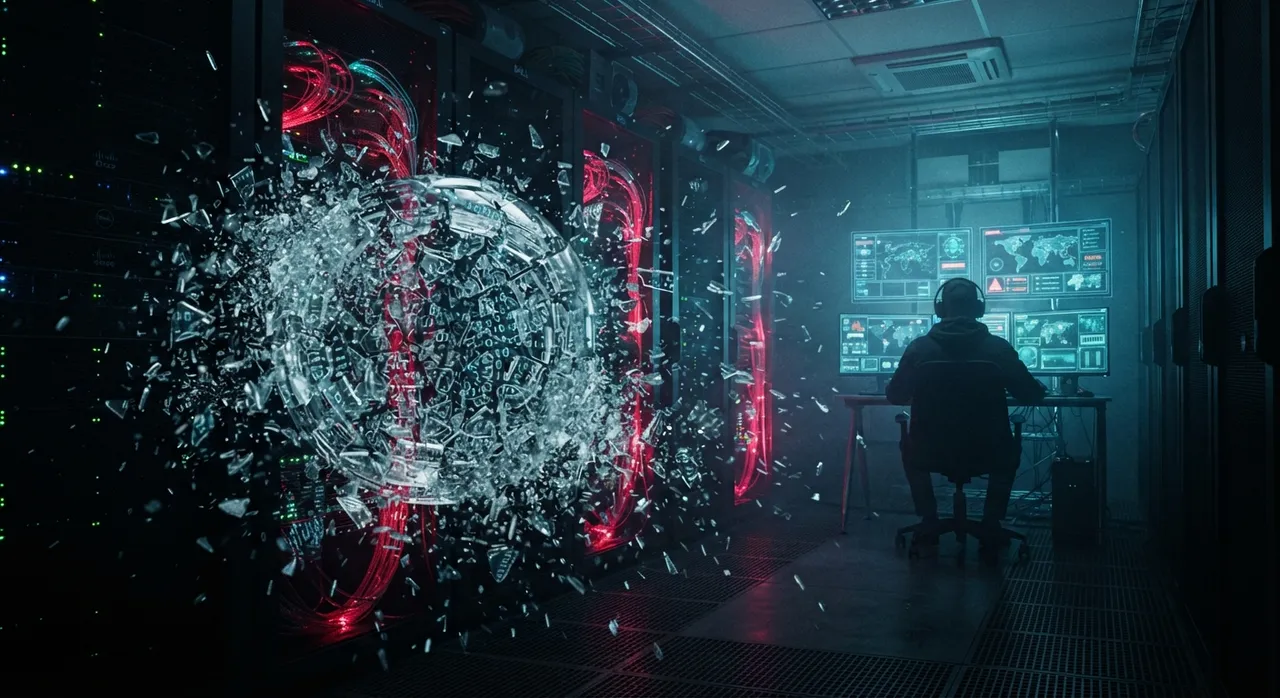
On May 15, 2026, the global developer community faced a structural reckoning. What began as a routine Monday for the maintainers of TanStack—the ubiquitous open-source suite powering millions of React and TypeScript applications—morphed into the most sophisticated software supply chain breach of the decade. Dubbed the “Mini Shai-Hulud” attack, this incident did more than just infect packages; it shattered the industry’s most cherished security assumption: that SLSA (Supply-chain Levels for Software Artifacts) provenance provides an immutable guarantee of trust.
The Day the Mirage Faded: Anatomy of the TanStack Supply Chain Attack
The TanStack supply chain attack represents a pivotal escalation in cyberwarfare, orchestrated by the threat group TeamPCP (also known as PCPcat or ShellForce). Unlike previous attacks that relied on stolen static credentials or social engineering, Mini Shai-Hulud targeted the ephemeral trust of the CI/CD pipeline itself. By the time the breach was contained, 84 malicious artifacts across 42 packages in the @tanstack namespace had been published to the npm registry, carrying the digital signatures of legitimate, verified builds.
The technical elegance of the attack lies in its “triple-threat” chain. Security researchers at StepSecurity and OpenAI’s internal red teams have identified the following stages of the compromise:
- The “Pwn Request” Entry: Attackers leveraged a misconfiguration in the
pull_request_targetworkflow of the TanStack Router repository. By submitting a PR from a throwaway fork, they forced the build environment to execute unreviewed code with elevated permissions. - Cross-Boundary Cache Poisoning: The malicious code did not immediately publish a package. Instead, it poisoned the GitHub Actions shared cache. Because the fork and the base repository shared a cache namespace for certain tasks, the attacker’s payload lay dormant until a legitimate maintainer merged an unrelated, benign PR.
- OIDC Memory Extraction: During the subsequent “official” release build, the poisoned cache was restored. The malware then performed a runtime memory dump of the GitHub Actions Runner process (specifically
/proc/pid/mem), exfiltrating the short-lived OpenID Connect (OIDC) token. This token was then used to authenticate directly to the npm registry as a “Trusted Publisher,” bypassing 2FA and manual approval gates.
The SLSA Paradox: Why Valid Provenance Failed
The most chilling aspect of the TanStack supply chain attack is that every malicious package carried a valid SLSA Build Level 3 provenance attestation. For years, the security industry has championed SLSA as the gold standard, promising that a signed attestation proves an artifact was built on a hardened, isolated platform from a specific source.
Mini Shai-Hulud proved that provenance attests to the origin of the build, not the integrity of the process. Because the malware hijacked the legitimate pipeline mid-workflow, the “trusted” signing infrastructure (Sigstore and Fulcio) dutifully signed the poisoned artifacts. To the downstream developer, the package appeared cryptographically identical to a safe release. This revelation has sent shockwaves through the industry, forcing a re-evaluation of automated “trust-but-verify” models.
Shai-Hulud: A Modular Worm for the AI Era
The payload itself, a modular worm named Shai-Hulud, was specifically engineered to exploit the high-value environments of AI researchers and cloud engineers. Weighing in at 2.3 MB of heavily obfuscated JavaScript, the worm was not a simple infostealer; it was a self-propagating organism with a specialized focus on AI development tools.
Once executed via an npm preinstall hook, the worm performed a deep-tissue scan of the host environment. It specifically targeted credentials for AWS (via IMDSv2), GCP, HashiCorp Vault, and Kubernetes service accounts. However, its most unique feature was its “AI-Hunter” module. Shai-Hulud was programmed to locate and exfiltrate configurations for AI agents, including .claude.json, Cursor, and Model Context Protocol (MCP) server authentication tokens. By stealing these tokens, TeamPCP gained the ability to impersonate AI agents, potentially giving them read/write access to internal codebases through the very tools meant to increase developer productivity.
Persistence and the “Deadly Rebirth” Logic
Removal of the infected node_modules folder was insufficient for remediation. Shai-Hulud installed persistent backdoors in Claude Code settings and VS Code tasks, ensuring that the malware would re-execute every time a developer opened a project. Furthermore, the worm established a macOS LaunchAgent and a Linux systemd daemon. In a final act of malice, researchers found that the worm contained a “destructive wiper” trigger: if it detected that its OIDC tokens were revoked before the host was isolated, it would attempt to wipe the user’s home directory to hinder forensic analysis.
Industry Fallout: OpenAI and Mistral AI on the Frontlines
The impact of the TanStack supply chain attack was felt most acutely at OpenAI and Mistral AI. Both organizations are heavy users of the TanStack ecosystem for their internal tooling and public-facing SDKs.
OpenAI confirmed that two employee devices were infected after a developer inadvertently pulled a compromised version of @tanstack/react-query during a routine dependency update. While production clusters remained isolated, the attackers successfully exfiltrated credential material from internal source code repositories. The severity of the breach forced OpenAI into a massive infrastructure reset. The company has revoked its primary code-signing certificates for macOS, iOS, Windows, and Android.
For millions of ChatGPT users, this means a mandatory update. OpenAI has set a hard deadline of June 12, 2026, after which all older versions of its desktop and mobile applications will be blocked by system-level security protections (Gatekeeper and SmartScreen). This move is unprecedented in its scale and highlights the “nuclear option” companies must take when their signing identity is potentially compromised by a supply chain vector.
Mistral AI suffered a different, but equally damaging, impact. The worm managed to jump from a developer’s workstation into the release pipeline for Mistral’s official Python and npm SDKs. For a three-hour window on May 15, the official mistralai package on PyPI was trojanized. Though the impact was limited to a “lone developer device,” the reputational damage and the need for a full audit of every downstream user have created a logistical nightmare for the French AI pioneer.
The Gamification of Cybercrime: TeamPCP’s “Supply Chain Contest”
Adding insult to injury, TeamPCP has taken to underground forums to announce a “supply chain attack contest.” Encouraged by their success with the TanStack supply chain attack, the group is offering rewards in Monero to any threat actor who can successfully poison a package with over 1 million weekly downloads using a verified SLSA provenance bypass. This “gamification” indicates that TeamPCP views the current state of open-source security not as a wall to be breached, but as a series of solvable puzzles with high-yield financial rewards.
Data exfiltration for these attacks has also evolved. Instead of traditional Command and Control (C2) servers, Shai-Hulud uses the Session Network—a decentralized, onion-routing infrastructure—and the GitHub GraphQL API to “dead-drop” stolen credentials into temporary, Dependabot-disguised repositories. This makes the traffic nearly impossible to distinguish from legitimate developer activity, rendering many traditional EDR (Endpoint Detection and Response) tools blind.
Beyond the Signature: The Future of Pipeline Security
The TanStack supply chain attack is a wake-up call that cryptographic signatures are only as good as the environment that generates them. If the build environment is compromised, the signature becomes a tool for the attacker, not the defender. Moving forward, the industry must shift from static provenance to behavioral attestation.
Security architects are now calling for “Hermetic CI,” where build runners have zero network access except to a private, audited package mirror. Furthermore, there is a push for runtime monitoring of build runners—using tools like Falco or Tetragon to detect unauthorized memory reads (like the /proc/pid/mem dump used by Shai-Hulud) in real-time.
As we approach the June 12 deadline for the OpenAI certificate transition, one thing is certain: the era of “blind trust” in the npm registry is over. The TanStack supply chain attack has proven that in the world of modern software development, the “worm” is already in the apple—and it’s carrying a valid ID.
Written by
TempMail Ninja
Digital privacy and online security expert. Passionate about creating tools that protect users' identity on the internet.