Verizon Network Outage: Widespread Connectivity Issues Reported Across U.S.
Article Content
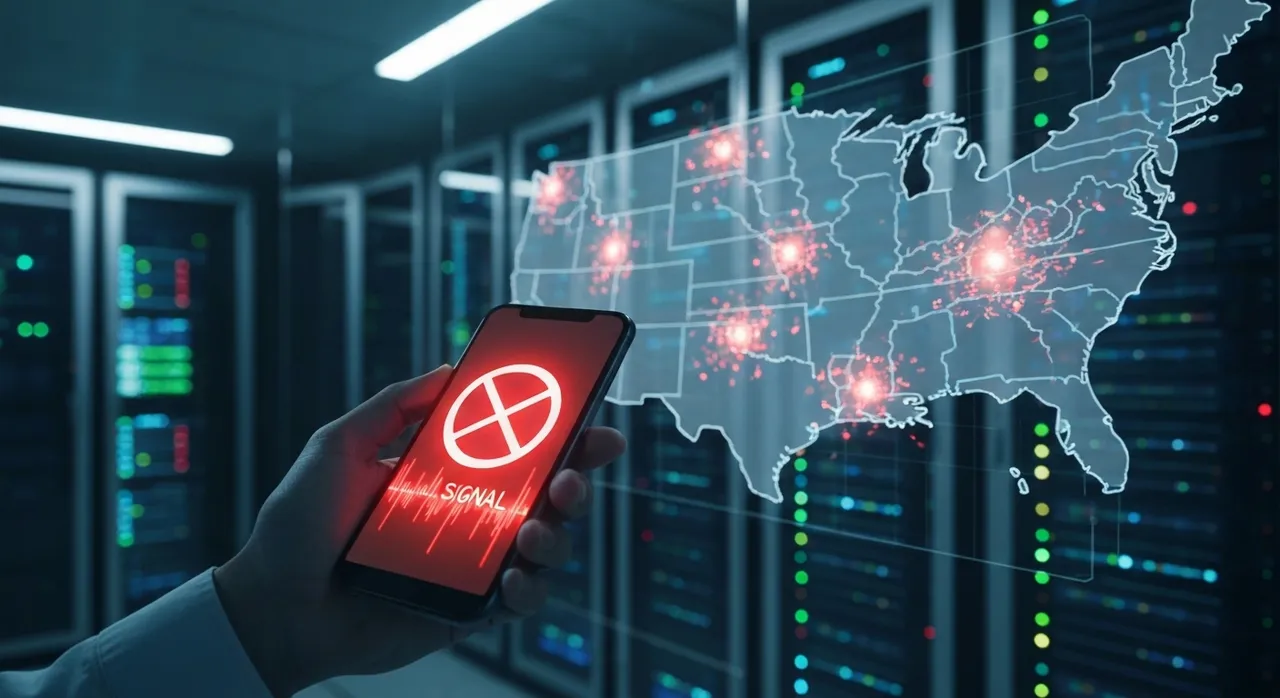
In the silence of the early hours on April 15, 2026, a significant portion of the United States experienced a digital blackout that underscored the fragile state of modern connectivity. At approximately 12:40 AM Eastern Time, the heartbeat of the nation’s largest wireless provider faltered. What began as a scattered series of complaints on social media quickly coalesced into a confirmed Verizon network outage, leaving millions of subscribers in a state of disconnected limbo. From the high-density corridors of the East Coast to the sprawling urban centers of the Midwest, devices that were once portals to the world’s information were suddenly reduced to glowing rectangles displaying the dreaded “SOS mode” notification.
The Anatomy of the April 15 Verizon Network Outage
The disruption was not a slow decay but a sudden, sharp spike in service failures. Real-time telemetry from network monitors and outage tracking services indicated a massive surge in report volumes within minutes of the initial 12:40 AM timestamp. For many, the experience was jarring: a seamless streaming session or a late-night call simply evaporated, replaced by a total loss of bars. This specific Verizon network outage was characterized by its totalizing nature, affecting both voice and data services simultaneously. Unlike localized disruptions caused by weather or physical line cuts, this event bore the hallmarks of a systemic core failure.
Preliminary reports and internal whispers from infrastructure monitors point toward a recurring culprit in the 2026 telecommunications landscape: centralized node maintenance. While Verizon has historically performed its most intrusive network upgrades during the “maintenance window” of 12:00 AM to 4:00 AM to minimize impact, the complexity of the current 5G Standalone (5G SA) architecture has made these updates increasingly perilous. This incident appears to be linked to ongoing maintenance on critical nodes located within central network hubs—the “brain” of the cellular organism—where a single misconfiguration can cascade through the system with ruthless efficiency.
The “SOS Mode” Phenomenon: Why Your Phone Failed
One of the most distressing aspects for users during the outage was the appearance of “SOS mode” on their iPhones and Android devices. This is not merely a signal loss; it is a specific state of the device’s radio environment. When a phone displays SOS, it means the device has failed to authenticate with its home network (Verizon) but can still see other carriers’ towers. Under FCC regulations, these “guest” towers must still permit emergency 911 calls. However, the inability to authenticate with the Verizon network outage meant that standard IP Multimedia Subsystem (IMS) services—including voice over LTE (VoLTE), SMS, and data routing—were completely severed.
- Authentication Failures: The device sends a request to the Home Subscriber Server (HSS), but the server, likely caught in a maintenance loop, fails to respond.
- IMS Registration: Without a valid handshake, the phone cannot register for voice or messaging services, leading to the “SOS Only” status.
- Roaming Constraints: While the hardware is capable of emergency roaming, standard data and voice roaming agreements do not typically kick in for domestic outages, leaving users stranded.
The Growing Instability of the U.S. ISP Landscape
The events of April 15 do not exist in a vacuum. Industry analysts have noted a disturbing trend: a 27% increase in U.S. ISP outages over the preceding week alone. This surge in network instability suggests a broader infrastructure crisis that transcends any single carrier. As the industry migrates toward fully software-defined networks (SDN), the margin for error has narrowed. In the legacy era, a hardware failure was local and predictable. In 2026, a software bug in a Virtual Network Function (VNF) can disable an entire region in milliseconds.
Infrastructure monitors like ThousandEyes and Downdetector have highlighted that the current telecommunications grid is under unprecedented strain. Several factors contribute to this volatility:
- Complexity of 5G Standalone Cores: The transition from 4G-reliant 5G to “true” 5G (Standalone) requires a complete overhaul of the core network. This migration is proving to be a minefield for engineers.
- AI-Driven Traffic Orchestration: While AI helps balance loads, “autonomous agents” tasked with network self-healing can sometimes enter feedback loops, shutting down healthy nodes in a misguided attempt to contain a minor error.
- The Engineering Brain Drain: Following the massive industry layoffs of late 2025, many carriers are operating with leaner technical teams. The loss of “institutional knowledge” regarding legacy systems and their interaction with new cloud-native stacks has left the grid vulnerable to “fat-finger” errors during routine maintenance.
Central Hub Nodes: The Critical Failure Point
The April 15 outage is believed to have originated in the central network hubs that aggregate traffic from thousands of individual cell sites. When maintenance is performed on these hubs, engineers are essentially performing open-heart surgery on the network. If a node fails to reboot correctly or if a routing table update is not synchronized across the fabric, the result is a “routing black hole.” In this scenario, the network believes the path to the user is valid, but the packets are discarded at the hub, resulting in the intermittent signal loss reported by many users during the early hours of the disruption.
Public Safety and Economic Implications
When a Verizon network outage of this scale occurs, the impact extends far beyond the inability to browse social media. In major metropolitan areas, the disruption of the cellular grid is a public safety emergency. While SOS mode theoretically allows for 911 calls, historical data from similar outages in early 2026 suggests that “cascading failures” can sometimes prevent even these emergency handshakes from completing. Residents in cities like New York and Chicago were once again reminded of the need for “analog” backups, such as landlines or satellite-enabled devices (like the iPhone 15 and later models), which utilize non-terrestrial networks to bypass ground-based failures.
From an economic perspective, the frequent outages of 2026 are eroding consumer trust. Verizon, once the gold standard for reliability, has faced increasing scrutiny from the FCC and consumer advocacy groups. The cost of these disruptions is staggering:
- Business Continuity: Small businesses relying on cellular backups for point-of-sale systems face immediate revenue loss.
- Remote Work: With millions of professionals using 5G home internet, a midnight outage can disrupt international teams and late-shift operations.
- Compensatory Credits: Following the January 2026 incident, Verizon issued $20 credits to millions of customers. A repeat of that financial hit on April 15 would significantly impact the company’s quarterly earnings.
The Ninja Editor’s Verdict: A Wake-Up Call for Redundancy
As we analyze the fallout of the April 15 Verizon network outage, the editorial conclusion is clear: the era of “set it and forget it” connectivity is over. The 27% rise in national outages is a flashing red light on the dashboard of our digital economy. We are building a high-speed future on a foundation that is currently undergoing a painful, and often unstable, transformation.
For the consumer, the strategy must shift toward multi-carrier redundancy. Relying on a single provider for home internet, mobile voice, and data is a single point of failure that is no longer acceptable in a professional context. Whether through the use of dual-SIM devices with a secondary “pay-as-you-go” carrier or by maintaining a dedicated satellite messaging device, the burden of connectivity is shifting from the provider to the user.
Moving Toward Network Resilience
Verizon’s engineering teams will likely spend the coming days performing a post-mortem on the failed node maintenance. They must answer why the automated failover protocols—designed specifically to prevent a Verizon network outage of this magnitude—did not trigger. The industry as a whole must also address the “complexity tax” of 5G. As we move deeper into 2026, the promise of 10-gigabit speeds is meaningless if the network cannot maintain a basic “heartbeat” during a routine Tuesday night update.
Ultimately, the April 15 outage serves as a stark reminder that our digital lives are tethered to a physical and software-based reality that is far from invincible. As we wait for Verizon’s full root-cause analysis, one thing remains certain: the “Ninja Editor” will be watching, and the demand for a more resilient, transparent, and stable American internet has never been louder.
Written by
TempMail Ninja
Digital privacy and online security expert. Passionate about creating tools that protect users' identity on the internet.