Apple CEO Transition: John Ternus to Succeed Tim Cook in 2026
Article Content
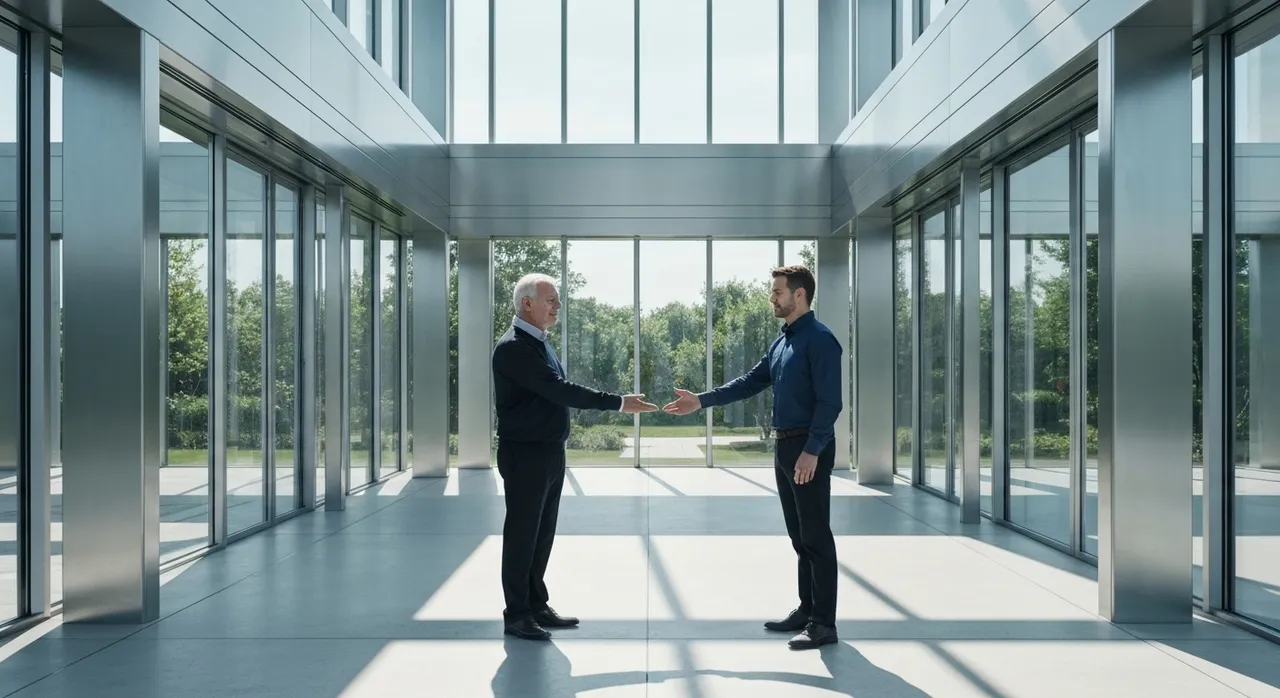
On April 26, 2026, the tech industry witnessed what analysts are calling the “greatest choreographed succession in corporate history.” After a fifteen-year tenure that transformed Apple Inc. from a dominant consumer electronics player into a $4.1 trillion global superpower, Tim Cook has officially announced his departure from the role of Chief Executive Officer. Effective September 1, 2026, the reins of the world’s most valuable company will pass to John Ternus, the current Senior Vice President of Hardware Engineering and a 25-year veteran of the Cupertino giant.
The Apple CEO Transition marks more than just a change in leadership; it signals a fundamental pivot in the company’s strategic identity. While Tim Cook—the undisputed “King of Operations”—built a legacy on supply chain mastery, margin expansion, and the explosive growth of the Services division, John Ternus inherits a company that must now win the “AI Arms Race” and successfully launch its most ambitious hardware since the original iPhone: the foldable iPhone Ultra. As Cook transitions to the role of Executive Chairman of the Board, his focus will shift toward the high-stakes world of global diplomacy and regulation, leaving Ternus to navigate the technical complexities of a post-silicon world.
The Cook Era: A Legacy of the $4 Trillion Man
To understand the weight of the Apple CEO Transition, one must look at the “video game numbers” produced during the Cook era. When Tim Cook took over from Steve Jobs on August 24, 2011, Apple’s market capitalization sat at approximately $350 billion. Today, as he prepares to step down, that figure has surged by over 1,000%, briefly touching the $4.1 trillion mark in late 2025. This growth was not fueled by a single “moonshot” product, but by a relentless refinement of the ecosystem.
- Revenue Growth: Annual revenue climbed from $108 billion in 2011 to a staggering $416 billion in fiscal 2025.
- Services Dominance: Under Cook, the Services segment (App Store, iCloud, Apple Music, Apple Pay) grew into a $109 billion annual business, effectively a Fortune 50 company on its own.
- Device Footprint: The active installed base of Apple devices reached a record 2.5 billion in early 2026, providing the company with a massive moat against competitors.
- Capital Returns: Cook oversaw the return of over $800 billion to shareholders through buybacks and dividends, a move that stabilized the stock during periods of hardware saturation.
Cook’s greatest achievement, however, may be the Apple Silicon transition. By ditching Intel in 2020 and moving the entire Mac lineup to proprietary M-series chips, Apple gained total control over its hardware-software integration. This move not only boosted performance but significantly improved profit margins, setting the stage for the era of “Edge AI” that John Ternus is now tasked with leading.
Who is John Ternus? The Architect of the Silicon Era
The Rise of a Hardware Purist
John Ternus, 50, is often described by colleagues as the “engineer’s engineer.” Joining Apple in 2001—the same year the original iPod launched—Ternus has spent his entire career within the product design and hardware engineering teams. Unlike Cook, whose background was in logistics and operations, Ternus is deeply rooted in the physical creation of devices. He was a central figure in the development of every generation of the iPad, the transition to 5G iPhones, and the recent “renaissance” of the Mac.
Investors have responded with cautious optimism to Ternus’s appointment. His leadership during the Apple Silicon era proved he could manage high-stakes technical migrations without the “execution gaps” that often plague large tech firms. Most recently, Ternus was credited with the development of the MacBook Neo, an entry-level laptop launched in March 2026 that disrupted the budget market. Starting at just $599, the Neo utilizes the A18 Pro chip (borrowed from the iPhone 16 Pro architecture) and features a 13-inch Liquid Retina display, bringing high-end “Apple Intelligence” features to a mass-market price point for the first time.
Management Style: Calm, Charismatic, and Product-Focused
While Steve Jobs was volatile and Tim Cook is famously stoic, Ternus is reported to be “affable and well-liked” across Apple’s vast campus. Bloomberg’s Mark Gurman has described him as a leader who avoids the limelight but possesses a deep, intuitive understanding of the Apple Walled Garden. His age—the same age Cook was when he took the helm in 2011—suggests that the Board is looking for another long-term, decade-plus leader to steer the company through the volatile 2030s.
The Technical Challenges: AI and the iPhone Ultra
The Apple CEO Transition comes at a moment of immense technological pressure. For the first time in a decade, Apple has been perceived as “trailing” in a major tech cycle: Generative AI. While competitors like Google and Meta invested hundreds of billions in massive data centers, Apple took a more restrained, “privacy-first” approach. Ternus’s primary mission will be to prove that this “Edge AI” strategy is the correct one.
Siri’s LLM Overhaul and “Apple Intelligence”
In mid-2026, Apple is expected to launch a completely overhauled version of Siri, powered by a hybrid Large Language Model (LLM) architecture. Unlike previous versions, this Siri will process sensitive, personal tasks on-device using the A19 and A20 Neural Engines, while selectively “bursting” to the cloud for complex queries via partnerships with Google Gemini and OpenAI. This shift toward “Intelligence as a Service” is expected to be a core pillar of Ternus’s first 100 days, as Apple seeks to monetize AI features through bundled iCloud+ subscriptions.
The 2026 Foldable: The iPhone Ultra
The most anticipated hardware under Ternus’s new reign is the first-ever foldable iPhone, rumored to be named the iPhone Ultra. Slated for a late 2026 release, the device represents a massive engineering gamble. Technical leaks suggest a 7.8-inch internal display with a book-style fold and a 4:3 aspect ratio. To solve the industry-wide “crease” problem, Ternus’s team has reportedly developed a proprietary Liquid Metal hinge and a “self-healing” polymer layer. The device is expected to start at an ultra-premium $1,999, aiming to reinvigorate the iPhone’s growth in the luxury segment.
Tim Cook’s New Frontier: The Diplomatic Executive Chairman
The decision to keep Tim Cook as Executive Chairman of the Board is a strategic masterstroke designed to de-risk the Apple CEO Transition. In his new role, Cook will move away from the day-to-day minutiae of product shipping and instead focus on the “External Triad”: Policy, Regulation, and Geopolitics.
- The China-US Tightrope: With nearly 20% of revenue coming from Greater China and a significant portion of manufacturing still based there, Apple needs Cook’s “soft power” to navigate ongoing trade tensions and the migration of supply chains to India and Vietnam.
- The Regulatory Onslaught: Apple is currently battling a US Department of Justice antitrust lawsuit and stringent new Digital Markets Act (DMA) regulations in the EU. Cook’s deep relationships in Washington and Brussels are seen as vital to protecting the App Store’s ecosystem.
- Capital Allocation: Cook will remain the final arbiter of Apple’s massive $130 billion cash pile, overseeing stock buybacks and potential acquisitions in the AI and health-tech sectors.
Market Reaction: Navigating the $4 Trillion Question
Wall Street’s reaction to the news was a blend of stability and scrutiny. On the day of the announcement, AAPL shares saw a slight 2.5% dip as traders priced in the uncertainty of a new leader. However, the long-term sentiment remains bullish. Seeking Alpha analysts point out that Ternus’s deep familiarity with Apple Silicon ensures that the hardware roadmap—planned through 2030—will remain on track.
The “Choreographed Transition” reflects Apple’s commitment to internal continuity. By choosing Ternus over an external candidate, the Board has sent a clear message: the strategy of incremental hardware excellence paired with high-margin services is here to stay. However, the pressure on Ternus is immense. He must successfully transition Apple from a “phone company” to an “AI company” while maintaining the 30% net profit margins that investors have come to expect.
Conclusion: A New Chapter for the Walled Garden
The Apple CEO Transition of 2026 marks the end of a golden era and the beginning of a high-stakes experiment. Tim Cook leaves behind a company that is more efficient, more profitable, and more influential than even Steve Jobs could have imagined. He has successfully “milked the iPhone” to its maximum potential, creating a services-and-wearables moat that is currently the envy of the corporate world.
Now, the stage belongs to John Ternus. As he prepares to take the CEO seat on September 1, he carries the burden of proving that Apple can still innovate at the “bleeding edge” of hardware. From the crease-free screens of the iPhone Ultra to the local-first privacy of Apple Intelligence, Ternus’s Apple will be defined by its ability to turn complex engineering into seamless consumer experiences. For the 2.5 billion users within the walled garden, the leader has changed, but the mission remains: to build the products that define the next decade of human interaction.
Written by
TempMail Ninja
Digital privacy and online security expert. Passionate about creating tools that protect users' identity on the internet.