Atari ST Video Codec Developed to Stream 1990s Cutscenes on Vintage Hardware
Article Content
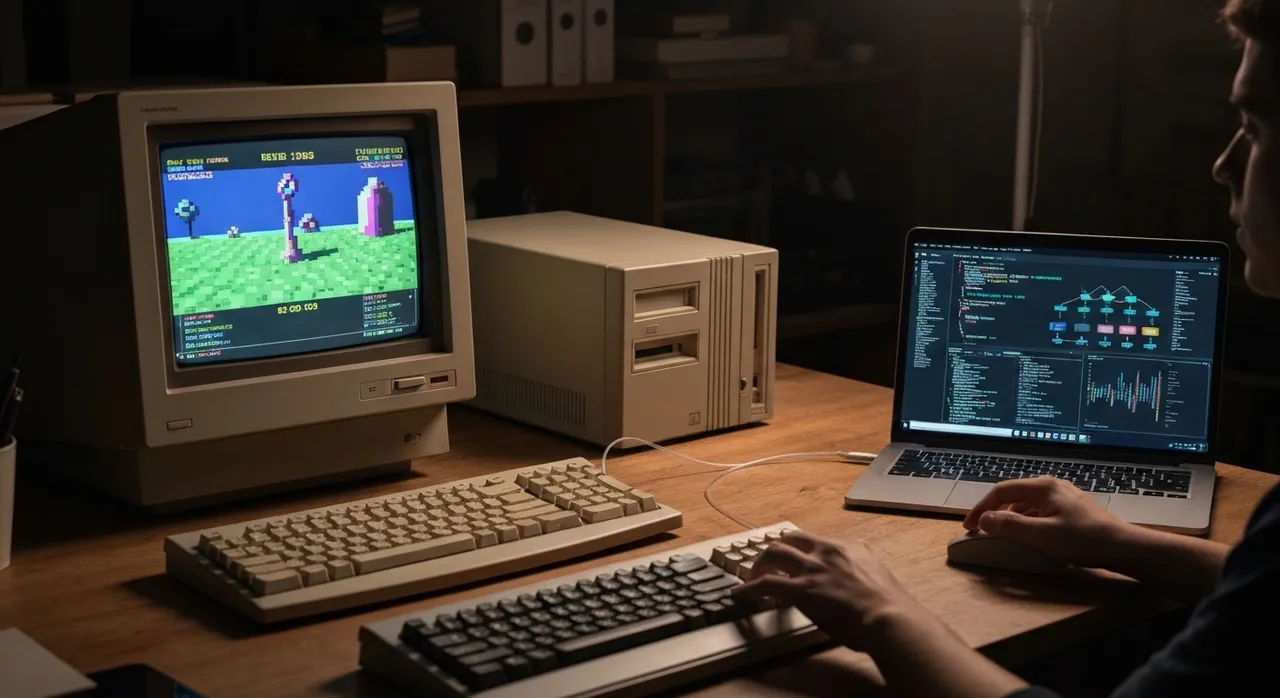
When Westwood Studios released Command & Conquer in 1995, it redefined real-time strategy gaming with its tense gameplay, energetic industrial soundtrack, and iconic full-motion video (FMV) briefings featuring live-action actors. At the time, playing back fluid 320×200 256-color video required a high-end Intel 486 or Pentium PC equipped with VGA graphics, 8 megabytes of RAM, and a high-speed CD-ROM drive. To suggest that a home computer launched a decade earlier in 1985 could stream those same cinematic cutscenes would have been dismissed as pure hardware fantasy. Yet, software developer and retrocomputing pioneer Jonas Eschenburg has achieved precisely that by developing a ground-breaking, bespoke Atari ST video codec known as STV.
By engineering STV specifically to exploit the structural quirks of the 16-bit Atari ST, Eschenburg has managed to stream full-screen FMV sequences natively on an unaccelerated 8 MHz machine. This accomplishment represents far more than a clever technical trick; it is a masterclass in digital archaeology and modern algorithmic engineering applied to vintage systems. By abandoning conventional PC video decoding methods and rethinking how video data flows through legacy architecture, the STV project breathes new life into 40-year-old silicon, proving that software ingenuity can bridge an immense ten-year generational hardware gap.
The 16-Bit Architecture Challenge: Why Conventional Video Decoders Fail
To appreciate the technical wizardry behind the STV project, one must first understand the severe architectural limitations of the original 1985 Atari ST. Powered by a Motorola 68000 CPU running at a modest clock speed of 8 MHz, standard Atari ST models lack hardware graphics acceleration, dedicated raster coprocessors, or video scalers. Every single pixel rendered on screen must be calculated, transformed, and written directly by the central processor. In contrast, the DOS PC architecture of the mid-1990s relied on 33 MHz or 66 MHz 32-bit processors, specialized VGA chips, and high-throughput local buses capable of pushing megabytes of video data every second.
The primary technical bottleneck lies in how video memory is structured on the Atari ST compared to IBM-compatible PCs:
- VGA Chunky Graphics Architecture: Mid-1990s DOS games like Command & Conquer utilized VGA Mode 13h, an 8-bit “chunky” memory layout. In a chunky frame buffer, each byte in system RAM directly corresponds to a single pixel on screen holding one of 256 colors. Writing pixels to screen is a straightforward sequential memory write operation.
- Atari ST Planar Graphics Architecture: The Atari ST organizes its 16-color display (chosen from a 512-color system palette) into four interleaved bitplanes. In this planar layout, the color value of an individual pixel is distributed across four separate 16-bit words spread across memory. Modifying a single pixel requires complex bitwise masking and shifting operations across all four bitplanes simultaneously.
For a vintage machine attempting to render standard PC video streams, the processor would need to perform a computationally brutal runtime translation known as Chunky-to-Planar (C2P) conversion. On an 8 MHz 68000 CPU, performing C2P conversion for a 320×200 video stream at 15 frames per second would completely exhaust the CPU’s cycles, leaving zero processing headroom for audio playback, disk I/O, or software decompression. Standard PC video formats—including Westwood’s original VQA (Vector Quantized Animation) format—were fundamentally unplayable on 16-bit Atari hardware without a total algorithmic rethink.
Anatomy of STV: Engineering a Custom Atari ST Video Codec
Faced with these strict physical limitations, Eschenburg recognized that porting Westwood’s cutscenes required a radically specialized Atari ST video codec designed from the ground up to match the machine’s native planar geometry. Instead of attempting brute-force C2P conversions during video playback, the STV codec bakes the planar memory structure directly into the compressed video stream.
Eschenburg drew conceptual inspiration from Westwood’s original VQA format, which relied on Vector Quantization (VQ). Vector quantization is a lossy compression technique that divides image frames into small blocks and replaces them with lookup indices pointing to a precomputed “codebook” or dictionary of common visual patterns. However, while Westwood’s VQA format used tiny 4×2 pixel tiles optimized for VGA chunky memory, STV shifts to an 8×8 pixel block structure.
Exploiting the Motorola 68000 Instruction Set
The choice of an 8×8 block geometry is a brilliant optimization tailored directly to the Motorola 68000 CPU architecture. In the Atari ST’s 4-bitplane mode, an 8-pixel horizontal span corresponds exactly to 1 byte per bitplane, or a total of 4 contiguous bytes across the interleaved video memory. By organizing codebook entries into pre-formatted 8×8 planar tiles, the decoder can copy pixel data directly into screen RAM using ultra-efficient assembly instructions.
Specifically, the STV decoder takes advantage of the 68000’s native movep (Move Peripheral) instruction. Originally designed to move byte sequences to and from alternate memory locations on 8-bit peripheral buses, movep allows the processor to write alternating bytes directly into interleaved bitplane memory addresses in a single instruction. By pre-formatting the codebook dictionary during offline pre-processing, Eschenburg eliminated runtime C2P conversion overhead entirely. The 8 MHz CPU simply reads codebook indices from the incoming video stream and blits pre-converted planar 8×8 blocks directly onto the CRT display.
Dynamic Codebook Updates and Real-Time Color Management
Compressing 256-color VGA video down to a strict 16-color palette usually results in severe color banding, posterization, and high-contrast visual noise. To preserve visual fidelity and keep blocky compression artifacts to an absolute minimum, the STV codec implements a dynamic, dual-updating pipeline:
- Continuous Dynamic Palette Swapping: Rather than forcing an entire video file to use a single fixed 16-color palette, STV dynamically updates color palette registers frame by frame. During scene transitions or dramatic lighting changes, the codec pushes updated RGB color values to the Atari ST’s hardware palette registers during vertical blank intervals, keeping color selection optimized for local frame contrast.
- Real-Time Codebook Dictionary Streaming: The codebook dictionary is not static. As the video progresses, STV streams small incremental codebook updates alongside frame indexes. Unused 8×8 tiles are purged from RAM, while new visual patterns are preloaded into CPU cache and memory buffers in advance of upcoming scenes.
- Bandwidth-Aware Inter-Frame Updates: In frames with minimal motion, STV reuses existing on-screen tiles and updates only modified screen regions. The spare memory bandwidth is dynamically allocated to stream incoming codebook blocks for future high-action scenes.
Offline Feature Matching via Discrete Cosine Transform
To achieve high compression ratios without creating visually distracting block boundaries, the offline encoding pipeline employs sophisticated mathematical analysis. During encoding on modern development workstations, each 8×8 block from the source video is transformed into a short Discrete Cosine Transform (DCT) feature vector. Instead of relying on raw RGB pixel distance metrics—which often select poor matches in low-color environments—the encoder calculates mathematical similarity in the frequency domain. This DCT-based pattern matching ensures that critical structural edges, gradients, and fine details are preserved when mapping complex 256-color source material to the Atari ST’s 16-color codebook.
Technical Comparison: DOS VQA vs. Atari ST STV Codec
The engineering accomplishments of the STV codec become clear when comparing the raw technical demands of the original 1995 PC cutscenes against the optimized Atari ST performance specifications:
| Specification / Feature | Original MS-DOS VQA (1995) | Atari ST STV Codec (2026) |
|---|---|---|
| Target Hardware CPU | Intel 80486 / Pentium (33–66+ MHz) | Motorola 68000 (8 MHz) |
| Color Depth & Format | 256 Colors (8-bit Linear Chunky) | 16 Colors (4-bit Interleaved Planar) |
| Codebook Tile Geometry | 4×2 Pixel Tiles | 8×8 Pixel Blocks |
| Display Resolution | 320×200 Pixels | 320×200 Pixels (Full-Screen) |
| Decoding Architecture | CPU Chunky Blitting | Direct Planar Assembly (`movep` Instructions) |
| Palette Management | Global / Per-Scene 256-Color VGA Palette | Dynamic Frame-by-Frame 16-Color Palette Swaps |
| Dictionary Streaming | Variable Chunk VQ Streaming | DCT-Driven Dynamic Inter-Frame Codebook Streaming |
The Legacy of STV in Digital Culture Archaeology
Jonas Eschenburg’s development of the STV codec is part of a broader renaissance in retrocomputing homebrew software development. Having previously made waves in the vintage computing scene by porting id Software’s Doom to the Atari ST line, Eschenburg’s work on Command & Conquer pushes the boundaries of what vintage 16-bit hardware was ever thought capable of achieving.
Historically, full-motion video was considered the exclusive domain of CD-ROM platforms equipped with specialized video decompression chips, such as the Sega CD, 3DO, or Philips CD-i. The STV codec proves that through clever algorithmic optimization, bit-level memory manipulation, and offline vector quantization, even an unassisted 1985 home computer can stream fluid, cinematic video directly from modern storage interfaces or hard drives.
Projects like STV bridge the gap between historical software preservation and modern computer science. By publishing complete technical breakdowns and opening up new possibilities for legacy hardware, Eschenburg has provided a valuable blueprint for software engineers seeking to squeeze maximum performance out of resource-constrained environments
Written by
TempMail Ninja
Digital privacy and online security expert. Passionate about creating tools that protect users' identity on the internet.