Mobile Internet Throttled to 256 Kbps in Taiwan Resilience Drill
Article Content
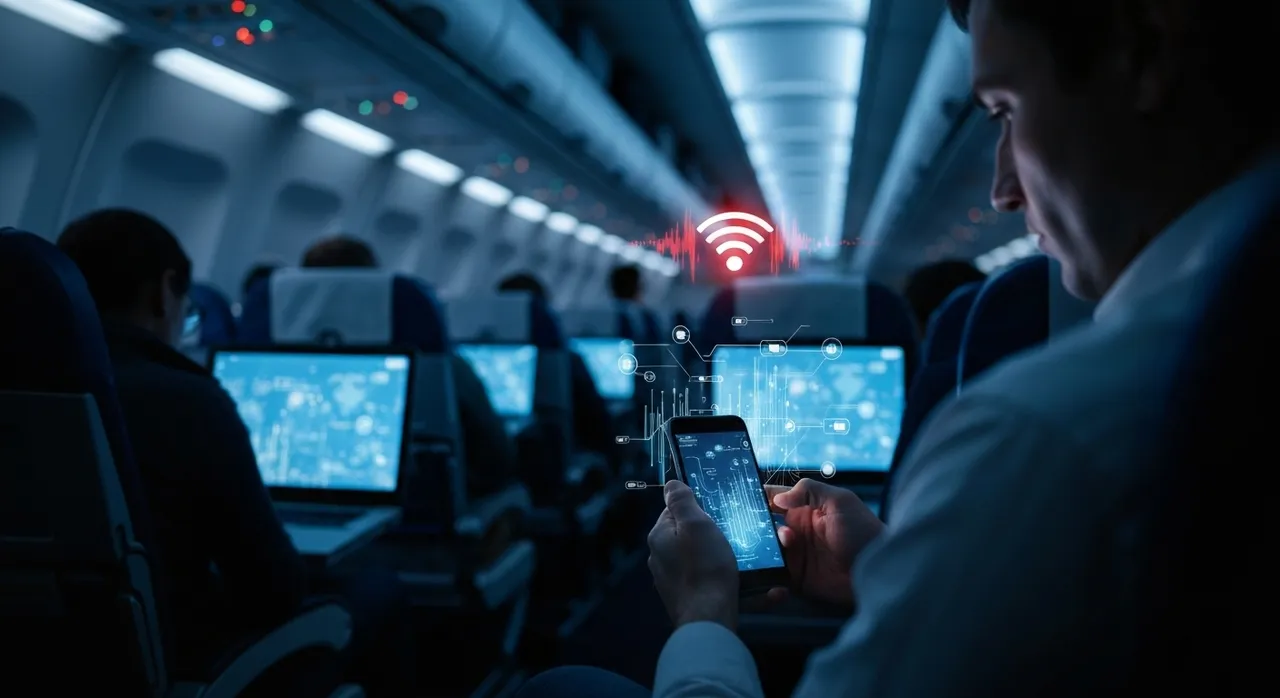
At precisely 2:30 p.m. on August 13, 2026, millions of smartphone screens across Taipei and six surrounding northern municipalities flickered into a state of artificial technological regression. High-definition video streams froze, social media feeds ceased refreshing, and encrypted messaging applications stalled behind perpetual loading spinners. Across the island nation, mobile internet throttled down to an excruciating 256 kilobits per second (Kbps) in an unprecedented, government-mandated urban resilience drill conducted under the umbrella of the annual Han Kuang civil defense exercises.
The 30-minute nationwide exercise—orchestrated jointly by Taiwan’s National Communications Commission (NCC), the Ministry of Digital Affairs (MODA), and the island’s primary telecommunications carriers—represented one of the most audacious live-network stress tests ever attempted by a advanced digital economy. By intentionally degrading high-speed 5G and 4G Long-Term Evolution (LTE) pipes to early-2000s 2.5G/EDGE bitrates, authorities simulated the brutal communications reality of a full-scale kinetic blockade, cyber sabotage, and simultaneous undersea fiber severances.
The Mechanics of Bandwidth Starvation: Engineering the 256 Kbps Floor
Modern telecommunications networks are engineered to optimize throughput, dynamically allocating spectrum and multiplexing channels to sustain multi-gigabit user experiences. Executing a controlled downgrade required Taiwan’s major mobile network operators (MNOs)—Chunghwa Telecom, Taiwan Mobile, and Far EasTone—to implement strict core-network traffic policing and Quality of Service (QoS) rate limiting at the Packet Data Network Gateway (PGW) and User Plane Function (UPF) levels.
Instead of executing an outright blackout, which would simply sever radio access network (RAN) signaling and create instant blind panic, telecom engineers clamped maximum downstream and upstream per-subscriber data rates to 256 Kbps. This deliberate rate-shaping established a precise physiological threshold for digital systems:
- Total Application Breakdown: Hypertext Transfer Protocol Secure (HTTPS) sessions with multi-megabyte payloads, WebRTC video calling protocols, content delivery network (CDN) dynamic media fetching, and modern JavaScript-heavy Single Page Applications (SPAs) immediately timed out or broke entirely.
- Survival of Text-Only Protocols: Short Message Service (SMS), Unstructured Supplementary Service Data (USSD), basic lightweight text-based Internet Protocol messaging (such as low-payload Signal or Line text transmissions), and emergency Cell Broadcast Service (CBS) alerts continued to traverse the airwaves.
- Voice and Circuit-Switched Priority: Standard Voice over LTE (VoLTE) and legacy voice channels were decoupled from commercial data rate limits, maintaining prioritized 110, 119, and essential governance calling routes without degradation.
The result was a deliberate collapse of consumer digital comfort that preserved the skeletal framework of command-and-control operations. Through this mechanism, the exercise illustrated that the vulnerability of modern societies lies not solely in absolute disconnection, but in the brittle assumption that infinite bandwidth will always be available.
Why Mobile Internet Throttled Under Wartime Scenarios
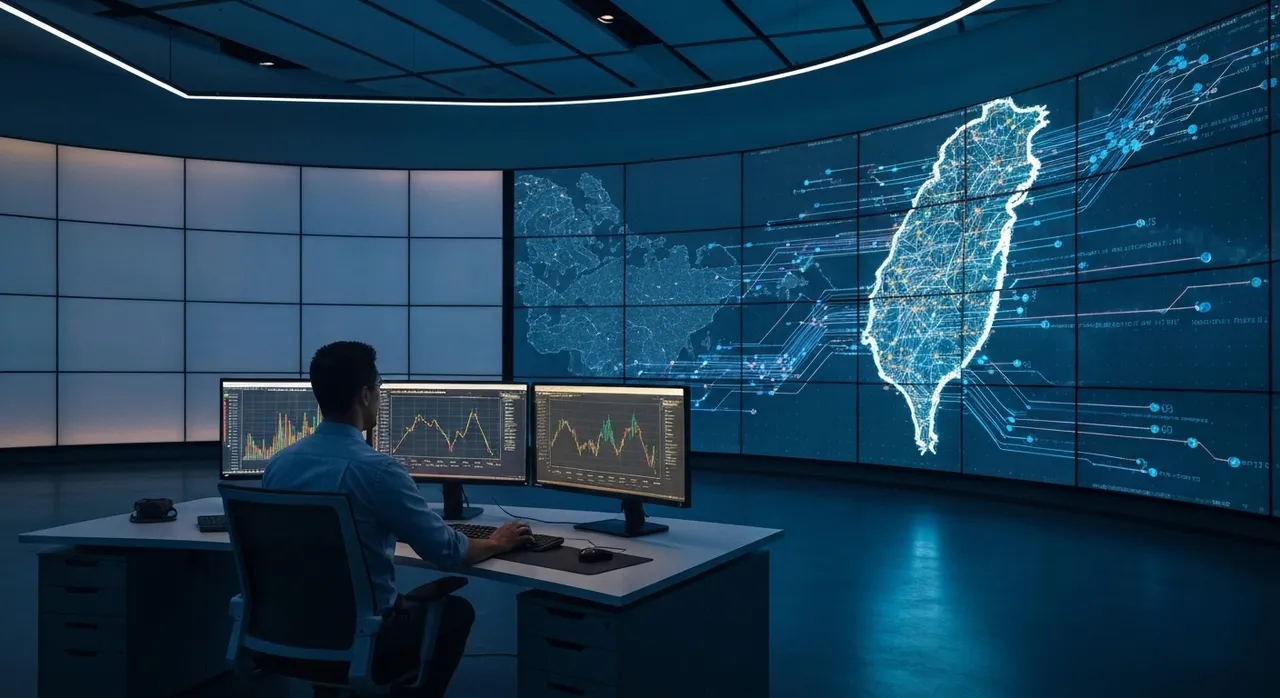
To understand why the Taiwanese government subjected its population to this controlled digital starvation, one must look below the surface of the Taiwan Strait. Taiwan connects to the global internet through roughly 14 international submarine communications cables landing at four primary stations: Toucheng, Tamsui, Fangshan, and Bali. These glass threads carry more than 95 percent of the nation’s international data traffic.
In recent years, these maritime lifelines have faced increasing non-kinetic and “grey-zone” harassment. Cargo vessels and sand dredgers flying flags of convenience have repeatedly severed crucial domestic and international undersea links with dragged anchors. A notable disruption isolated the outlying Matsu Islands for weeks in early 2023, while subsequent incidents near Penghu and Keelung demonstrated how easily undersea infrastructure can be compromised without firing a single missile.
In the event of an amphibious invasion or total naval blockade, strategic planners assume that physical sabotage of undersea fiber optic cables, targeted missile strikes against coastal landing terminals, and pervasive electronic warfare (EW) jamming will instantly vaporize hundreds of terabits of transoceanic capacity. When these massive international pipes go dark, the remaining domestic backhaul must transition immediately to severe triage mode.
Layered Survivability: Satellites, Micro-Nets, and Disaster Roaming
When the macro-network collapses, digital resilience shifts from consumer luxury to existential national survival. The 256 Kbps drill was not conducted in isolation; it served as the baseline layer for a comprehensive, multi-tiered communications continuity doctrine pioneered by Taiwan’s defense establishment and digital administrators.
- Low-Earth Orbit (LEO) Satellite Backhaul: Taiwan has actively deployed non-geostationary satellite orbit (NGSO) terminals nationwide. Partnering with European satellite operator Eutelsat OneWeb and regional medium-Earth orbit (MEO) constellations like SES O3b mPOWER, Taiwan is deploying over 700 emergency satellite transceivers across critical government and military sites. However, because aggregate satellite constellation bandwidth is finite—measured in gigabits rather than terabits—consumer mobile networks must be throttled to prevent civilians from overwhelming satellite uplinks.
- Inter-Carrier Emergency Roaming: Under the Ministry of Digital Affairs’ NT$6 billion disaster roaming initiative, if one carrier’s base stations are destroyed or severed from terrestrial fiber backhaul, affected mobile subscribers automatically roam onto surviving domestic carrier networks. Throttling data traffic to 256 Kbps prevents remaining towers from collapsing under sudden demand surges.
- Terrestrial Microwave Relays and Underground Hardening: Backbone terrestrial routes across Taiwan’s Central Mountain Range rely on hardened microwave line-of-sight hops capable of bridging damaged fiber trunks, providing dedicated data channels to local command bunkers and field hospitals.
During the exercise, President Lai Ching-te inspected municipal emergency facilities and underground disaster operations centers. Addressing the public directly, Lai characterized the deliberate bandwidth starvation not as an administrative nuisance, but as an indispensable vaccine against strategic paralysis. “We ask for your understanding and support, as this is a necessary drill,” Lai emphasized, reiterating that psychological readiness under information deprivation is as vital as military armaments.
The Human Factor: The Psychological Friction of Digital Scarcity
The 30-minute exercise exposed the profound cognitive dependencies embedded within high-density urban populations. In bustling hubs like Taipei Main Station and underground transit corridors where air raid sirens sounded simultaneously, citizens reached instinctively for their mobile devices, only to be confronted by non-responsive apps and bare-bones system notifications.
Peacetime assumptions fell apart within minutes. Cloud-based mapping tools failed to render navigation tiles, electronic payment systems relying on dynamic multi-tiered API authorization stalled, and collaborative cloud document platforms timed out. Commuters were forced to rely on fixed-line broadband, local Wi-Fi hotspots maintained by critical infrastructure operators, or fallback SMS messaging protocols.
Societal resilience experts note that information scarcity is the primary catalyst for mass panic and disinformation during wartime. In a conflict environment, adversary cognitive warfare exploits communication voids. By systematically exposing the public to low-bandwidth operating environments, civil defense authorities train citizens to adapt before a real crisis strikes: encouraging the pre-downloading of offline maps, establishing family analog muster points, and instilling communication discipline across the broader populace.
A Strategic Paradigm for Modern Democratic Resilience
The August 2026 exercise marks an evolutionary milestone in global defense architecture. For decades, civil defense simulations focused strictly on physical kinetic scenarios: clearing streets, donning gas masks, and evacuating to subterranean shelters. Taiwan has redefined the discipline by demonstrating that cyber-physical and information environments must be rehearsed with equal severity.
As autocratic states develop sophisticated capabilities in deep-sea cable cutting, satellite anti-radiation jamming, and coordinated distributed denial-of-service (DDoS) infrastructure attacks, democratic nations worldwide must confront an unavoidable reality: peacetime bandwidth is an unsustainable luxury during asymmetric warfare. High-speed throughput will be the first casualty of modern great-power confrontation.
By demonstrating the resolve to deliberately throttle its own commercial network down to 256 Kbps, Taiwan has sent a clear message to adversaries and allies alike. Technological resilience is not measured by the maximum speed of a 5G connection during peacetime, but by how effectively a society can organize, communicate, and defend itself when forced back into the dial-up era.
Written by
TempMail Ninja
Digital privacy and online security expert. Passionate about creating tools that protect users' identity on the internet.