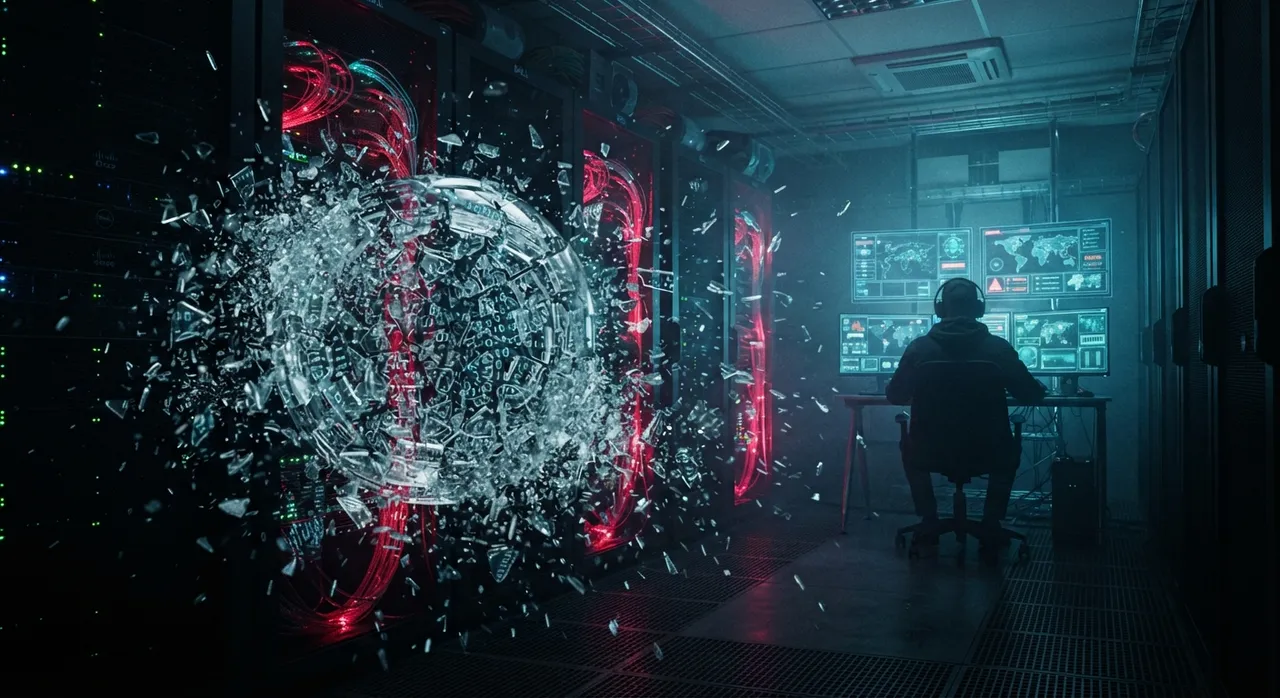
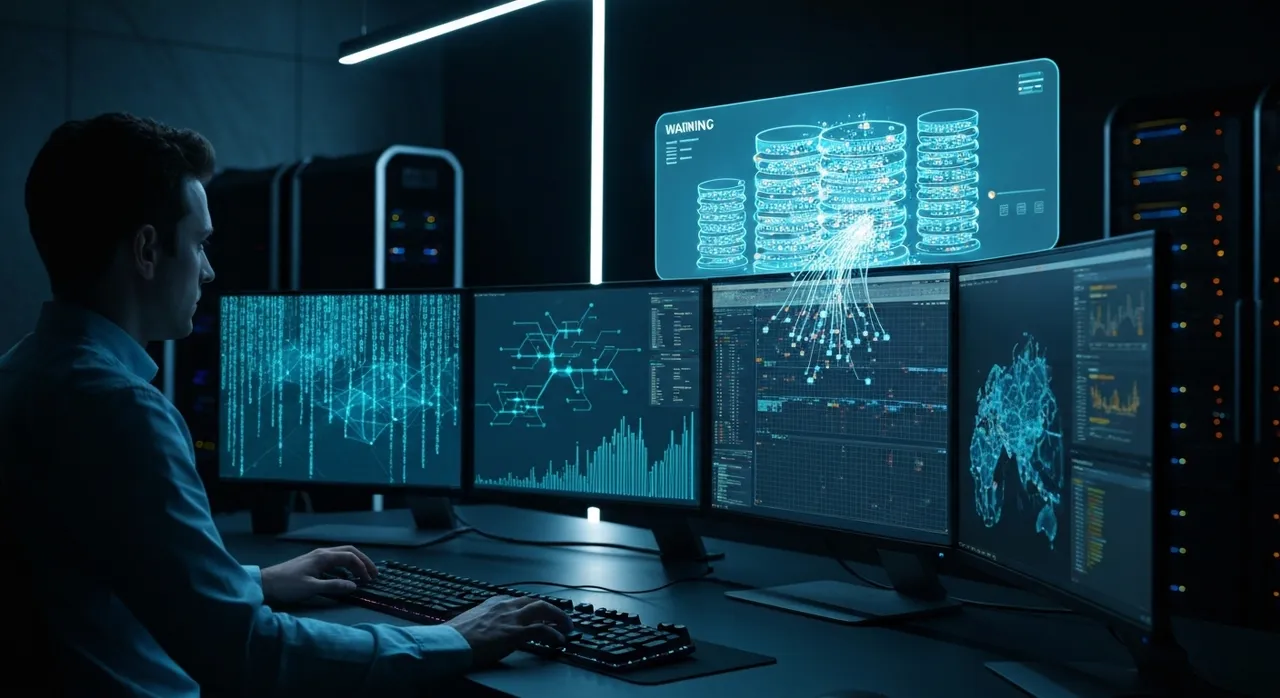
AWS US-East-1 Outage Caused by Data Center Thermal Event
Article Content
The digital economy often feels ethereal, existing in a world of code and signals that transcend the physical. However, the AWS US-East-1 outage of May 2026 served as a visceral reminder that the global cloud is tethered to reality by copper, concrete, and cooling fans. On May 9, 2026, Amazon Web Services (AWS) pulled back the curtain on a disruption that had paralyzed some of the world’s most high-traffic platforms, identifying a “thermal event” as the root cause of a failure that began two days earlier. This was not a software bug or a configuration error; it was a physical breakdown of the infrastructure itself, proving that even the most advanced digital ecosystems are vulnerable to the laws of thermodynamics.
The Anatomy of a Thermal Event: When Hardware Hits the Limit
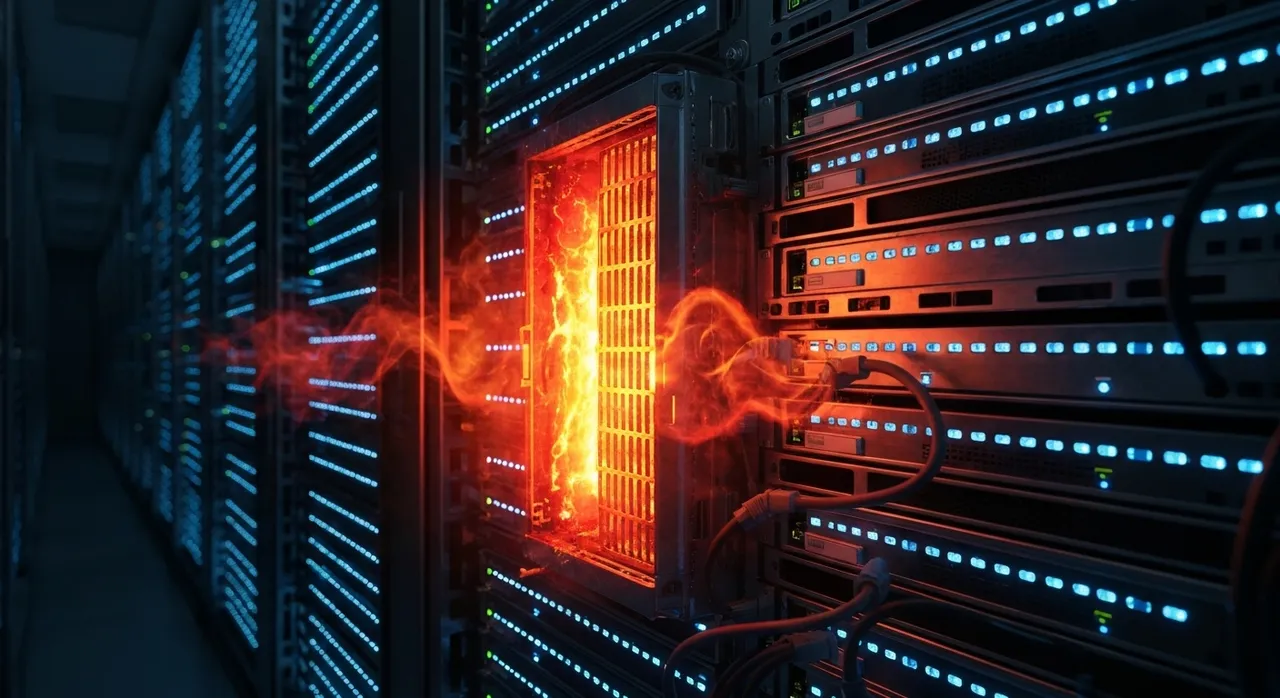
The disruption officially began late on May 7, 2026, when monitoring systems in the US-East-1 region—specifically within the use1-az4 Availability Zone—flagged a rapid rise in ambient temperatures. In the sterilized, high-precision environment of a Northern Virginia data center, temperature fluctuations are usually managed with surgical efficiency. However, in this instance, a failure in the facility’s primary cooling capacity led to what AWS termed a “thermal event.”
In technical terms, a thermal event in a data center is the point at which cooling systems (chillers, pumps, or air handlers) fail to remove the heat generated by tens of thousands of high-density server racks. As the temperature rises, the firmware on individual servers is programmed to execute an emergency shutdown to prevent permanent physical damage—or worse, a localized fire. At 5:25 PM PDT on May 7, the AWS US-East-1 outage crystallized as power was cut to affected hardware to mitigate the heat, immediately taking down Elastic Compute Cloud (EC2) instances and Elastic Block Store (EBS) volumes.
Unlike software-based outages, such as the DynamoDB DNS race condition that plagued the same region in October 2025, a thermal failure cannot be resolved with a code rollback. It requires the physical stabilization of the environment. AWS engineers reported that restoring cooling capacity was “slower than originally anticipated,” as the heat soak within the server halls necessitated a controlled, phased approach to re-energizing the hardware. It wasn’t until the afternoon of May 8 that cooling was fully restored to pre-event levels, leaving a trail of “stuck” EBS volumes and impaired instances that persisted into the weekend.
High-Stakes Impact: The Case of Coinbase and FanDuel
The blast radius of the AWS US-East-1 outage was particularly severe for industries where real-time connectivity is synonymous with revenue. Two major players, the cryptocurrency exchange Coinbase and the sports betting giant FanDuel, bore the brunt of the downtime, illustrating the extreme sensitivity of financial and gaming platforms to cloud infrastructure stability.
- Coinbase: The exchange reportedly went dark for over seven hours on May 8. Core functions, including trading, transfers, and wallet access, were suspended. For a platform that recently underwent significant job cuts to pivot toward “AI-native” operations, the timing was catastrophic. Users reported delayed transactions on the Solana network and ALEO, highlighting how a regional failure in Virginia can disrupt global decentralized finance (DeFi) ecosystems.
- FanDuel: The sports-wagering platform faced simultaneous technical difficulties, prohibiting users from logging in or, crucially, cashing out of live bets. During high-traffic sporting events, even a few minutes of downtime can result in massive financial discrepancies for both the house and the bettors. FanDuel confirmed that the “technical difficulties” were a direct result of the AWS disruption, reigniting debates over whether such critical gambling infrastructure should have more robust multi-region failovers.
The common denominator for these companies is their reliance on the US-East-1 region for its low latency and extensive suite of services. However, this outage demonstrated that when the “default” region fails, the cascading effects can overwhelm even the most sophisticated internal resilience mechanisms.
The Technical Recovery Struggle: EBS Impairments and “Stuck” Volumes
One of the most persistent issues during the AWS US-East-1 outage was the impairment of Elastic Block Store (EBS) volumes. When a server rack loses power abruptly due to a thermal event, the EBS volumes—the virtual hard drives attached to EC2 instances—can enter a “stuck” state. In an orderly shutdown, data in transit is flushed to disk. In a hard power cut, the metadata that coordinates the storage can become inconsistent.
AWS’s post-mortem on May 9 highlighted that while cooling and power were restored within 24 hours, the recovery of a “small number” of EBS volumes was still ongoing. For enterprise customers, this is the most dangerous phase of an outage. A “stuck” volume often requires manual intervention from AWS engineers or forces the customer to restore from a previous snapshot. If a business has not rigorously tested its Disaster Recovery (DR) protocols, or if its snapshots are stale, the “thermal event” transforms from a temporary inconvenience into a permanent data loss scenario.
Chronology of the May 2026 Disruption
- May 7, 00:25 UTC: Initial detection of temperature spikes in the use1-az4 zone. Hardware begins emergency power-down.
- May 7, 02:47 UTC: AWS issues a formal warning that dependent services (Redshift, ElastiCache, SageMaker) are showing elevated error rates.
- May 8, 01:11 UTC: AWS reports “incremental progress” but admits that bringing cooling capacity back online is a manual, safe-start process.
- May 8, 12:29 PM PT: Cooling systems return to normal operating parameters. The process of re-energizing server racks begins.
- May 9, 2026: Formal post-mortem confirms the “thermal event” and provides details on the recovery of the final impaired volumes.
The Resilience Paradox: Why US-East-1 Remains a Risk
Industry analysts have long dubbed US-East-1 as the “notorious” region of the AWS empire. Launched in 2006, it is the oldest, largest, and most densely populated of all AWS regions. Many of Amazon’s global control planes—the “brains” that manage Identity and Access Management (IAM) and Route 53—have historical dependencies on this Northern Virginia hub. This means that a physical failure in one Virginia data center can, in rare cases, degrade services in regions as far away as Tokyo or Dublin.
The AWS US-East-1 outage of 2026 highlights a structural problem: the “resilience paradox.” As companies push for higher performance and lower latency, they concentrate their workloads in the most established regions. However, these older regions often operate on legacy cooling designs that were not originally built to handle the staggering thermal density of modern Generative AI and high-performance computing (HPC) clusters. As AI workloads consume more kilowatts per rack, the “headroom” for cooling systems shrinks. A failure that might have been a minor blip ten years ago now triggers a catastrophic “thermal event” because the margins for error have vanished.
Concentration risk is no longer just a buzzword for CISOs; it is a board-level liability. The fact that a single cooling failure could simultaneously halt cryptocurrency trading on Coinbase and sports betting on FanDuel suggests that the industry’s approach to geographic redundancy is still far from mature. While AWS encourages “Multi-AZ” and “Multi-Region” architectures, the cost and complexity of such setups often lead companies to accept the “good enough” reliability of a single region—until that region gets too hot to handle.
Future-Proofing the Cloud: Beyond Software Resilience
As we move deeper into the 2020s, the lessons of the AWS US-East-1 outage will likely drive a shift in how data centers are engineered. We are reaching the limits of traditional air-cooling. The industry is already seeing a move toward liquid cooling and “immersion” technologies to manage the heat generated by the next generation of silicon. However, retrofitting older facilities like those in Northern Virginia is a multi-year, multi-billion dollar endeavor.
For the end-user and the enterprise customer, the takeaway is clear: the cloud is not a magical, indestructible entity. It is a series of buildings filled with machines that need to breathe. To survive the next major AWS US-East-1 outage, businesses must prioritize physical-layer risk assessment. This includes:
- Cross-Region Failover: Ensuring that critical state data is replicated outside of the US-East-1 footprint.
- EBS Snapshot Rigor: Automating frequent, cross-region snapshots to mitigate “stuck volume” scenarios.
- Graceful Degradation: Designing applications that can still provide core functionality (e.g., allowing users to view funds or bets) even if the transactional backend is impaired.
The May 2026 “thermal event” was a wake-up call. In a world where every second of uptime is measured in millions of dollars, we can no longer afford to ignore the thermometer. The cloud is burning hot, and the infrastructure’s ability to keep its cool is now the most critical metric in the digital age.
Written by
TempMail Ninja
Digital privacy and online security expert. Passionate about creating tools that protect users' identity on the internet.