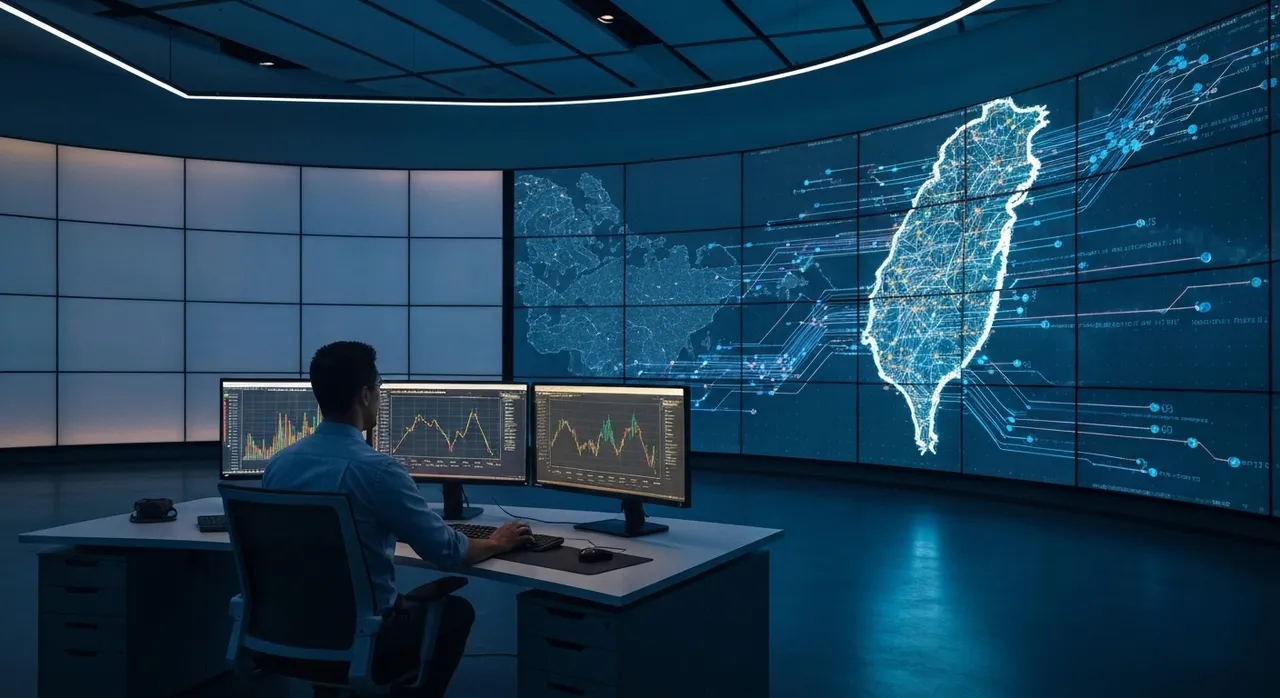
Calcumator 2000: Michał Zalewski Unveils Analog Calculator and UI Complexity
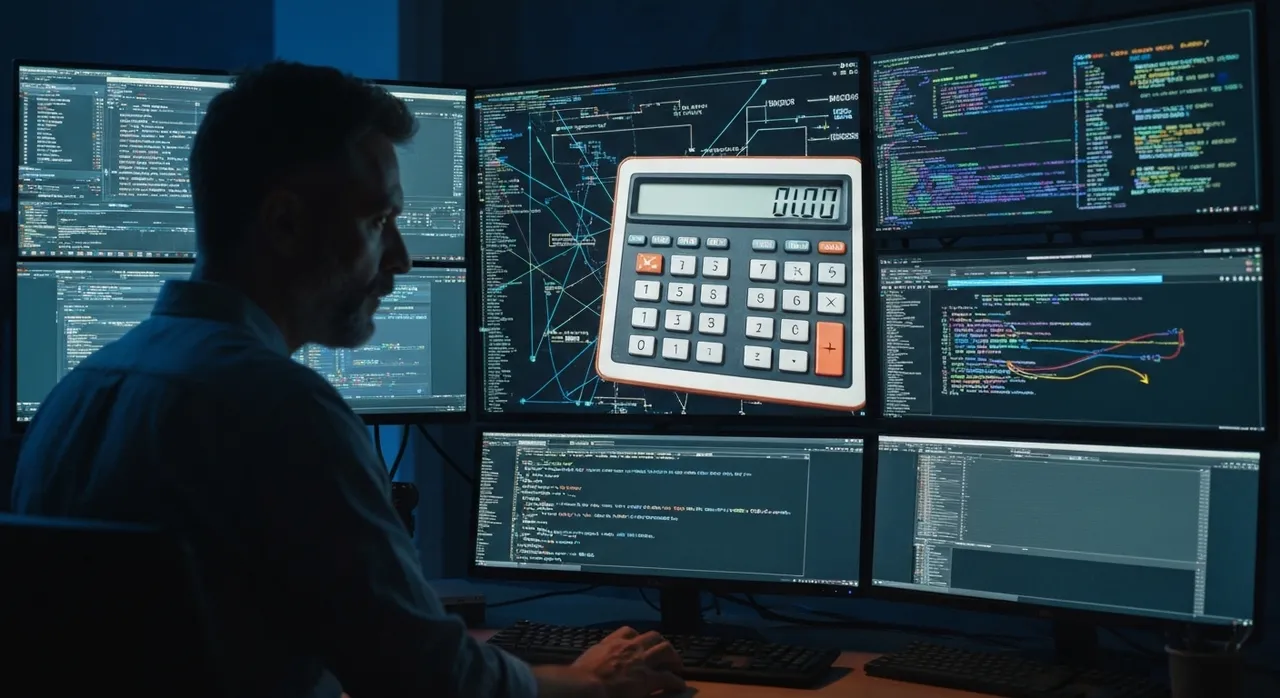
Article Content
When veteran cybersecurity researcher and old-school hacker Michał Zalewski—universally known across the security landscape as lcamtuf—turns his attention to a new hardware build, the tech community takes notice. Renowned for authoring seminal security volumes such as The Tangled Web and Silence on the Wire, as well as inventing game-changing software security tools like American Fuzzy Lop (AFL) and p0f, Zalewski has spent decades uncovering subtle logical flaws inside complex systems. Recently, Zalewski captivated hardware enthusiasts, retro-computing fans, and software architects alike by unveiling an extraordinary hardware creation alongside an exhaustive technical essay on user interface design. His latest project, known as the Calcumator 2000, bridges physical vintage engineering with the surprisingly labyrinthine state-machine logic of basic arithmetic calculators.
The project consists of two tightly integrated elements: a custom electromechanical floating-point calculator that replaces modern LCDs or Nixie tubes with needle-swinging analog panel voltmeters, and an in-depth technical analysis deconstructing why designing a simple four-function calculator interface is one of the most deceptively complex state-machine problems in software engineering. What begins as a quirky hardware homage to early computing eras rapidly evolves into a masterclass on input parsing, state resets, edge-case handling, and human UX expectations. In an era where modern software development often obscures low-level mechanics behind heavy abstractions, Zalewski’s build serves as a compelling reminder that even the most ubiquitous interfaces require profound architectural rigor.
Inside the Hardware: Engineering the Calcumator 2000
At first glance, the Calcumator 2000 looks like a forgotten relic from a 1960s research laboratory. Rather than relying on standard seven-segment LED modules, vacuum fluorescent displays, or liquid-crystal screens, the device utilizes seven distinct analog voltmeters to communicate numerical outputs. Six generic “SO-45” analog panel meters are arranged horizontally across the faceplate to display numerical digits from 0 through 9, while an edge-wise meter positioned alongside them dynamically indicates the placement of the decimal point for floating-point calculations.
Translating digital floating-point math into physical needle deflection required precise hardware integration and meticulous signal control. To drive the electromechanical display, Zalewski designed the system around specific embedded components and custom fabrication techniques:
- Microcontroller Core: Powered by an 8-bit Microchip AVR128DA28 microcontroller, providing pulse-width modulation (PWM) outputs and analog control channels necessary to drive the meters simultaneously.
- Analog Meter Calibration: Six primary SO-45 analog panel voltmeters calibrated to sweep across a 0V to 5V control signal, physically swinging needles over custom-printed scale markings from digit 0 to 9.
- Decimal Point Indicator: A seventh specialized edge-wise panel voltmeter dedicated exclusively to signaling floating-point decimal placement across six available digit positions.
- Precision Acrylic Faceplate: A striking deep-blue acrylic front panel created by painting the reverse side of transparent acrylic, CNC-milling lettering and decorative line-art into the material, and back-filling the cuts with bright white paint for a multi-layered aesthetic.
- Switch Debouncing & Power Distribution: Custom printed circuit board (PCB) routing combined with debounced tactile key switches, ensuring clean digital signals free from mechanical bounce during user input.
The physical build builds directly upon design patterns Zalewski refined in a previous project—a custom analog voltmeter clock. However, converting a timekeeping display into an interactive floating-point calculator demanded far greater dynamic voltage control. Each voltmeter needle must jump instantly and stabilize accurately at a designated voltage level when a calculation finishes, balancing physical needle damping with legible numeric readout.
The State Machine Paradox: Why Simple Calculators Are Software Nightmares
While the physical construction of the Calcumator 2000 is a triumph of retro-futuristic fabrication, Zalewski’s accompanying essay tackles a fascinating software question: why is the user interface of a basic desktop calculator so astonishingly hard to program correctly? To non-specialists, building a basic calculator seems like a trivial homework assignment. Mathematical logic itself is straightforward: 1 + 2 = 3. However, creating the interface bridge between unpredictable human button presses and deterministic math engines requires a dense, highly intricate finite state machine.
In standard programming language development, input parsing follows structured context-free grammars. A user types a complete expression, presses enter, and an interpreter builds an abstract syntax tree (AST) to evaluate the result. A classic four-function calculator, however, operates under immediate-mode execution with no visual syntax buffer and restricted display real estate. Every keystroke instantly mutates internal memory registers, updates the display buffer, and alters how subsequent inputs will be processed.
To maintain predictable operation, a calculator’s internal state machine must continuously track several key variables simultaneously:
- Accum
Written by
TempMail Ninja
Digital privacy and online security expert. Passionate about creating tools that protect users' identity on the internet.