Data Center Revolt Spreads: Maine Leads New State-Level Bans
Article Content
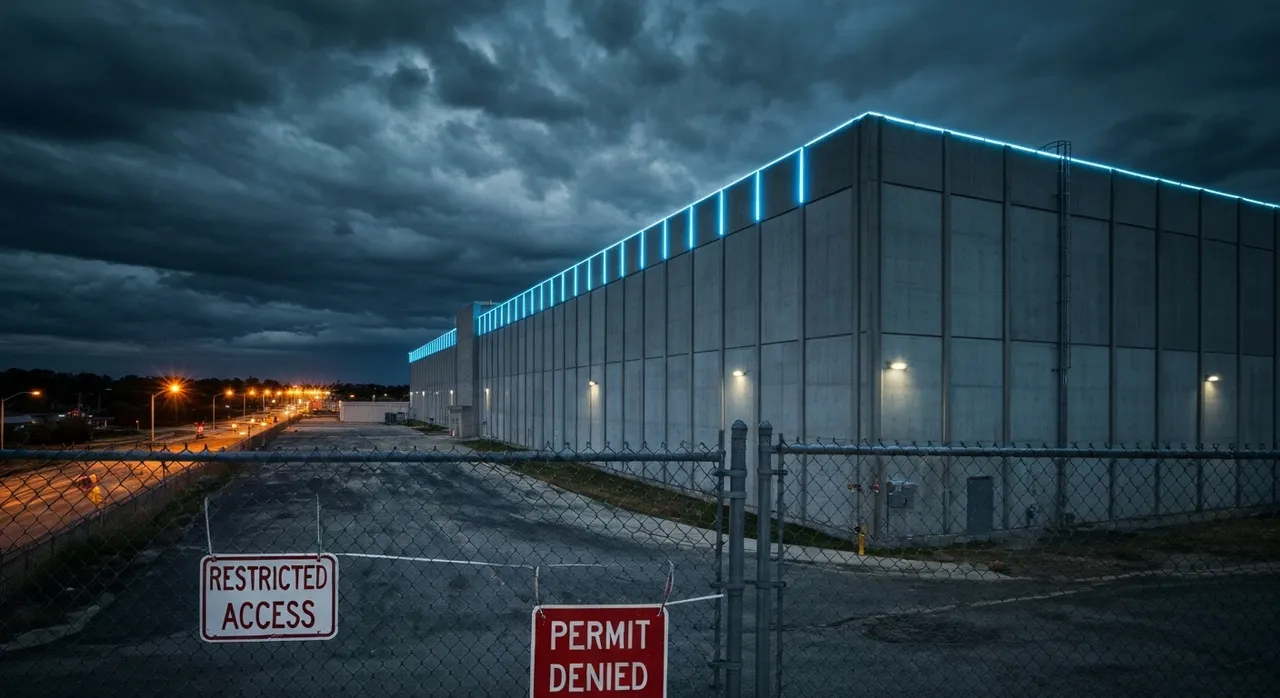
The era of frictionless expansion for Big Tech’s physical footprint has officially come to a grinding halt. Across the United States, a seismic shift in public and political sentiment is taking root, transforming what was once seen as an economic boon into a site of intense local and state-level friction. This phenomenon, widely characterized as the data center revolt, is no longer a localized nuisance; it has become a systemic, multi-front challenge to the unchecked proliferation of hyperscale computing infrastructure.
As of April 2026, over 70 U.S. communities have formally rejected or imposed stringent new restrictions on data center developments. This is not merely NIMBYism (Not In My Backyard) in the traditional sense. It is a calculated, evidence-based reaction to the existential strain that modern, AI-driven computation places on regional power grids, water resources, and local quality of life. The latest development—a legislative push in the Maine House of Representatives to enact a statewide moratorium on new, large-scale data centers until November 2027—signals that the data center revolt has graduated from town hall disputes to the hallowed halls of state government.
The Anatomy of the Revolt: Power and Perplexity
For years, the formula for data center development was simple: secure land, negotiate tax incentives, and ensure fiber connectivity. Electricity was a given. Today, electricity is the primary bottleneck. The surge in demand from generative AI, machine learning training, and high-performance computing (HPC) has created a paradigm shift. Unlike the steady, predictable load growth of the past, AI compute clusters are demanding, intense, and often, geographically concentrated.
The technical reality driving this tension is stark:
- Workload Intensity: Advanced AI training requires gigawatt-hours of electricity, running continuously for weeks or months.
- Grid Concentration: A single AI-ready data center can demand power equivalent to tens of thousands of households, placing immediate, localized stress on distribution networks.
- Infrastructure Lag: Transmission and distribution upgrades take years, whereas hyperscale data centers can be deployed at breakneck speeds, creating a dangerous mismatch between supply and demand.
In states like Maine, where energy costs are already among the highest in the nation, the prospect of further grid strain and the subsequent potential for price hikes has galvanized public opposition. The Maine bill, which seeks a temporary pause on projects with a load of 20 megawatts or more, is a precautionary measure designed to provide lawmakers with the breathing room to study the long-term impact on ratepayers and grid reliability.
From Economic Darling to Political Lightning Rod
The shifting narrative around data centers is underscored by the changing relationship between these facilities and the communities they occupy. Historically, data centers were welcomed for their ability to contribute to the tax base with minimal demand for municipal services—no new schools were needed for these warehouses full of servers. However, the perception has soured.
Public resistance is no longer driven by single-issue complaints; it is a convergence of concerns that blend economic, environmental, and infrastructure anxieties:
- Utility Cost Allocation: Residents are questioning why, in many cases, ratepayer-funded infrastructure upgrades are effectively subsidizing the expansion of private, profit-driven tech giants.
- Environmental Externalities: Beyond electricity, data centers consume staggering amounts of water for cooling—a vital commodity in increasingly drought-prone regions. Furthermore, the reliance on backup generators, often diesel-fueled, has raised legitimate air quality concerns in nearby residential areas.
- The “False Promise” of Jobs: As AI infrastructure automates more, the operational labor requirements of these facilities have shrunk. Communities are finding that the initial construction jobs are temporary, and the long-term, high-tech employment opportunities are rarely as abundant or accessible to locals as initially promised.
This is why the data center revolt is spreading so rapidly. It is a rebellion against corporate impositions that bring material, long-term costs to local populations while providing concentrated, often intangible, benefits to multinational firms.
The Regulatory Response and Its Uncertain Future
The legislative landscape in 2026 reflects a profound state of flux. While Maine leads the way with its proposed moratorium, the trend is echoed across the nation. States like Georgia, New York, Michigan, and others have seen similar legislative attempts to pause or regulate data center development. These efforts are not aimed at stopping digital progress, but at forcing accountability into a sector that has operated with significant autonomy.
For companies like Amazon, Google, and Microsoft, the “Data Center Revolt” poses a material risk. It threatens the “speed to power” that defines their competitive advantage in the AI race. If they cannot secure energy, they cannot deploy chips. This has forced these giants into an aggressive, new strategy: moving from passive utility customers to active participants in energy generation. Many are now engaging in direct energy procurement, investing in new fossil fuel generation, or pushing for the development of small modular reactors (SMRs) and other advanced, localized energy solutions to bypass the limitations of traditional, congested utility grids.
However, this “chip-to-grid” strategy is itself proving to be a flashpoint. Using on-site fossil fuel plants to power data centers has drawn sharp criticism from environmental researchers, who argue that the added pollution creates a new set of health and economic damages for the surrounding communities—effectively shifting the burden of the digital age onto the very people living near these installations.
The Road Ahead: Navigating the Bottleneck
As we move through 2026, the data center revolt will continue to serve as a critical check on the pace of AI expansion. The industry is reaching a point where its physical requirements are fundamentally colliding with the finite limits of the physical world. The era of assuming that unlimited power, water, and land will always be available is over.
The solution, if one exists, lies in a fundamental re-evaluation of how digital infrastructure is integrated into the social and environmental fabric of the nation. Transparency is the bare minimum. Future development must include:
- Meaningful Community Engagement: Developers can no longer afford to bypass public dialogue. Early, transparent engagement is now a prerequisite for project viability.
- Integrated Energy Planning: Data centers must be part of a broader, regional energy strategy that prioritizes grid stability and prevents cost-shifting to residential ratepayers.
- Resource Stewardship: Innovation in closed-loop cooling and energy efficiency must move from “nice-to-have” to “must-have” metrics for new developments.
Ultimately, the data center revolt is not an anti-tech movement; it is a demand for a more responsible, sustainable, and equitable model of infrastructure growth. For the titans of Silicon Valley, the lesson of 2026 is clear: the physical world is not just a platform for software—it is a partner that must be treated with respect, or the entire AI-driven future risks being stalled by the very infrastructure it relies upon.
The Maine bill and the broader wave of local opposition are not just roadblocks; they are the early indicators of a maturing industry. How developers respond to these challenges—whether through genuine collaboration, technological innovation, or continued legal and political maneuvering—will define the landscape of the digital economy for the next decade. The bottleneck is real, the pressure is building, and the era of the data center revolt has only just begun.
Written by
TempMail Ninja
Digital privacy and online security expert. Passionate about creating tools that protect users' identity on the internet.