FIRESTARTER Backdoor: CISA Issues Critical Federal Malware Alert
Article Content
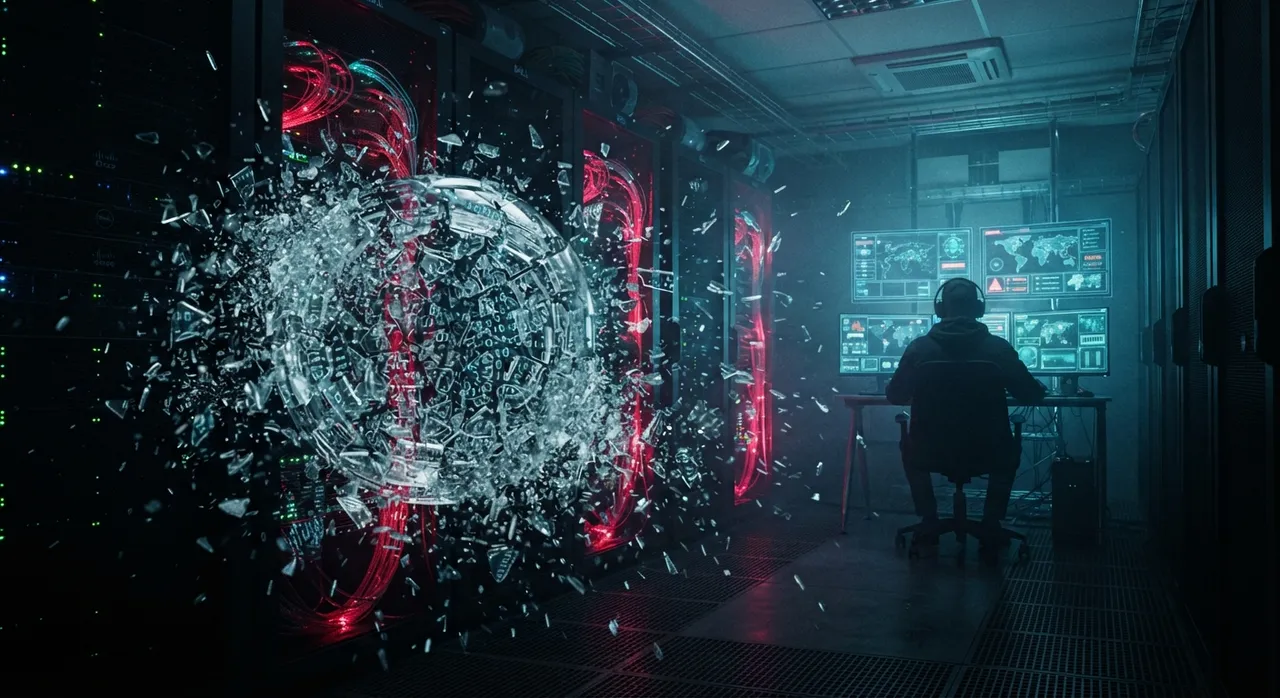
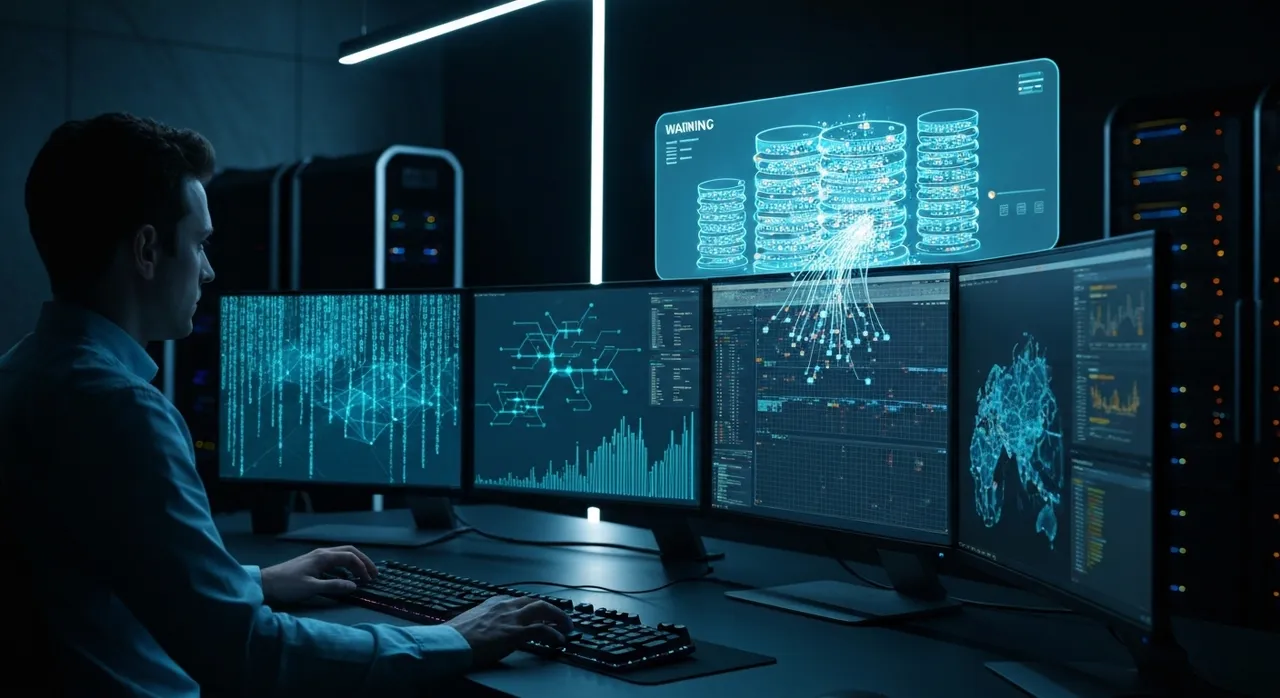
The landscape of global cyber espionage reached a fever pitch on April 24, 2026, as the U.S. Cybersecurity and Infrastructure Security Agency (CISA) and the United Kingdom’s National Cyber Security Centre (NCSC) issued a joint emergency advisory (Alert AR26-113A). The primary focus of this alert is the FIRESTARTER backdoor, a sophisticated piece of malware discovered embedded within the Cisco Firepower infrastructure of a prominent federal civilian agency. This is not merely another zero-day exploit; it represents a fundamental shift in the “persistence” paradigm, as the malware has demonstrated an unprecedented ability to survive standard security patches, system reboots, and even complete firmware upgrades.
The discovery of the FIRESTARTER backdoor is intrinsically linked to a broader, more ominous strategy orchestrated by the Chinese state-sponsored threat actor known as Volt Typhoon (tracked by Cisco Talos as UAT-4356). While the backdoor provides the “hands-on-keyboard” access required for deep-tissue espionage, its operations are masked by a massive covert network dubbed the “Raptor Train.” This botnet, consisting of hundreds of thousands of end-of-life (EoL) SOHO routers and IoT devices, effectively anonymizes malicious traffic, rendering traditional IP-based defenses and perimeter-focused security models largely obsolete. For federal agencies and critical infrastructure providers, the message from CISA is clear: the defense-in-depth strategies of the past decade are being systematically dismantled by an adversary that prioritizes stealth and long-term pre-positioning over immediate disruption.
Technical Anatomy of the FIRESTARTER Backdoor
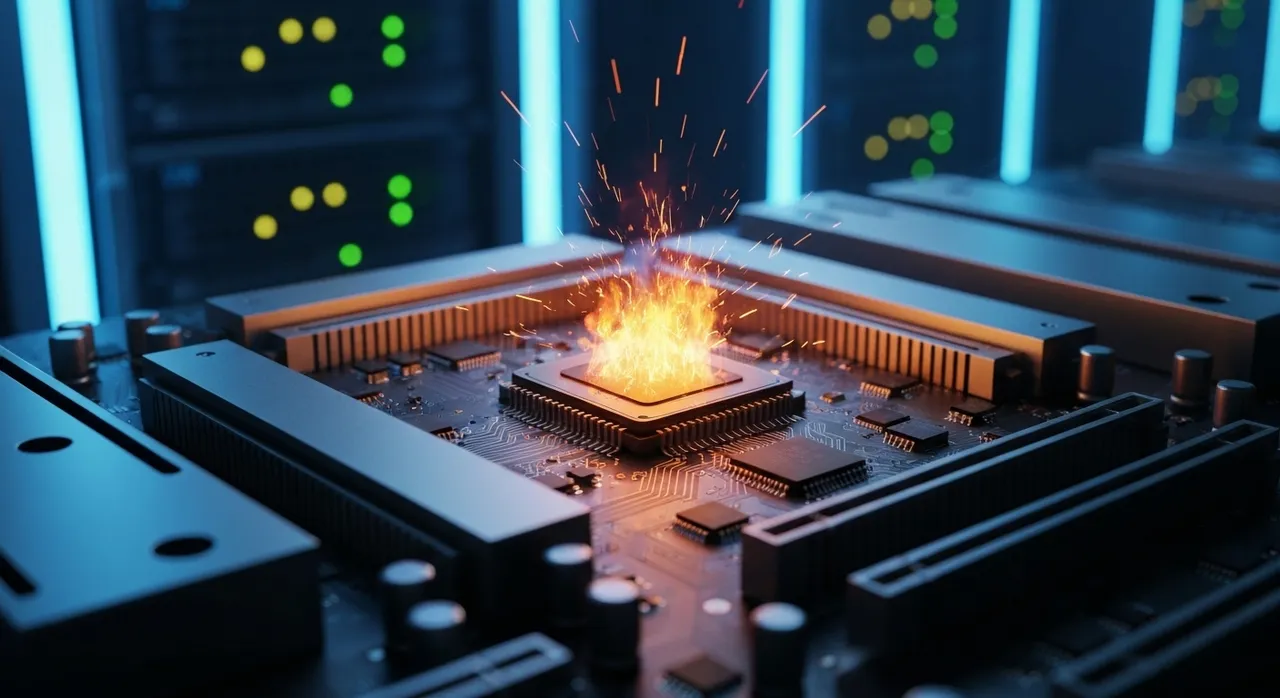
The FIRESTARTER backdoor is a highly optimized Linux Executable and Linkable File (ELF) binary specifically engineered to inhabit the proprietary environments of Cisco Adaptive Security Appliances (ASA) and Firepower Threat Defense (FTD) software. Unlike typical malware that resides in volatile memory or temporary directories, FIRESTARTER targets the core architectural components of the network security appliance. Its primary objective is to hook into the LINA process—the engine responsible for all core network processing and security functions within Cisco’s firewall ecosystem.
Forensic analysis reveals that the malware achieves this by leveraging the mprotect system call to modify memory page permissions. By changing these permissions from read-only to execute-enabled, the FIRESTARTER backdoor can inject arbitrary shellcode directly into the LINA process. This allows the attacker to execute commands with root-level privileges, effectively turning the security device meant to protect the network into a gateway for the intruder. The backdoor facilitates a range of malicious activities, including:
- Remote Shell Execution: Executing arbitrary commands received via specially crafted WebVPN authentication requests.
- Payload Deployment: Serving as a primary conduit for more advanced post-exploitation toolkits, such as LINE VIPER.
- Traffic Obfuscation: Suppressing syslog messages and hiding the presence of illegitimate VPN sessions from administrators.
The Persistence Mechanism: Defying Firmware Updates
What distinguishes the FIRESTARTER backdoor from its predecessors is its resilience. Traditionally, applying a firmware patch or performing a factory reset would clear a compromised device of its infectious agents. However, FIRESTARTER manipulates the Cisco Service Platform (CSP) mount list (specifically /opt/cisco/config/platform/rmdb/CSP_MOUNT_LIST). This configuration file dictates which programs and file systems are mounted and executed during the device’s boot sequence.
When the system initiates a graceful reboot—such as during a firmware update—the malware detects the termination signal (Runlevel 6). It then copies a backup of itself to a hidden log directory (/opt/cisco/platform/logs/var/log/svc_samcore.log) and updates the mount list to ensure its restoration once the new firmware is loaded. Consequently, even after the underlying vulnerabilities (CVE-2025-20333 and CVE-2025-20362) are patched, the FIRESTARTER backdoor remains active. It effectively “waits” for the update to complete and then re-installs itself, allowing Volt Typhoon operators to regain access without needing to re-exploit the device.
Volt Typhoon and the Raptor Train: The Covert Infrastructure
The tactical success of the FIRESTARTER backdoor is supported by the Raptor Train botnet, a strategic infrastructure managed by the “Integrity Technology Group,” a Chinese firm linked to both Volt Typhoon and Flax Typhoon. This network is reported to have compromised over 200,000 devices globally, ranging from consumer-grade SOHO routers to office IP cameras and Network Attached Storage (NAS) units.
The Raptor Train acts as a massive multi-hop proxy network. By routing Command and Control (C2) traffic through thousands of legitimate consumer IP addresses in the United States and the United Kingdom, Volt Typhoon can mask its origin. When an analyst investigates a suspicious connection coming from a Cisco Firepower device, the IP address traces back to a mundane home router in a residential neighborhood rather than a known malicious data center in East Asia. This “Living off the Land” (LotL) approach at the network layer makes the FIRESTARTER backdoor nearly impossible to detect through standard egress filtering or blocklists.
Exploiting the End-of-Life (EoL) Crisis
CISA’s advisory highlights a critical weakness in the global supply chain: the continued use of legacy, end-of-life hardware. The Raptor Train primarily harvests devices that are no longer supported by their manufacturers. These devices do not receive security updates, making them permanent “zombie” nodes that can be repurposed by state-sponsored actors at will. The inclusion of these devices into a “covert network” provides the adversary with a seemingly infinite supply of disposable infrastructure, allowing them to rebuild the botnet even after law enforcement disruptions.
The Shift Toward Intelligence-Driven OT Security
The persistence of the FIRESTARTER backdoor has forced a re-evaluation of Operational Technology (OT) and infrastructure security. CISA’s Emergency Directive 25-03 mandates that federal agencies move beyond passive patching and embrace “intelligence-driven” defense strategies. This shift is necessitated by the realization that a “clean” status report from a vulnerability scanner no longer guarantees a secure environment.
Intelligence-driven security in this context involves a three-pronged approach:
- Forensic Auditing of State: Instead of trusting the OS reporting of the device, agencies are now required to submit device core dumps and memory snapshots to CISA’s “Malware Next Generation” platform. These snapshots are analyzed for the specific LINA hooks used by FIRESTARTER.
- Hardware Decommissioning: A zero-tolerance policy for EoL devices at the network edge. Any device that cannot be managed with modern, verifiable firmware must be removed to prevent it from becoming a node in a Raptor Train-style botnet.
- Hard Remediation Protocols: Because the FIRESTARTER backdoor survives soft reboots and firmware updates, CISA now mandates a hard power cycle—physically disconnecting the device from power—and a complete reimaging of the device from a verified, trusted source for any suspected compromise.
Strategic Implications for 2026 and Beyond
The timing and nature of the FIRESTARTER backdoor campaign suggest that Volt Typhoon is not merely interested in data theft. The focus on perimeter devices—firewalls, VPN gateways, and routers—points toward a “pre-positioning” strategy. By maintaining a persistent, invisible presence within federal infrastructure, the adversary secures the ability to disrupt critical services during a future geopolitical crisis. The ability to survive patches ensures that even when the U.S. government “cleans house,” the backdoor remains, a dormant spark ready to ignite into a full-scale disruption.
For the private sector, the FIRESTARTER incident serves as a stark warning. The same Cisco Firepower and Secure Firewall devices targeted in the federal civilian agency are the backbone of many Fortune 500 networks. The cross-pollination of tactics between state-sponsored espionage and large-scale botnet orchestration represents a “perfect storm” for network administrators who have historically relied on automated patch management as their primary defense.
Recommended Response Actions for Administrators
To counter the threat of the FIRESTARTER backdoor, CISA and the NCSC recommend the following immediate actions for all organizations utilizing Cisco ASA or FTD infrastructure:
- Implement YARA Scanning: Use the YARA rules provided in the CISA advisory to scan disk images and core dumps for the FIRESTARTER ELF binary and associated shellcode patterns.
- Execute Mandatory Hard Reboots: Perform a physical power cycle on all edge devices. A soft “reload” command is insufficient to clear the transient persistence used by this malware.
- Re-credentialing: If a compromise is suspected, assume all local passwords, certificates, and private keys on the device have been harvested. Replace all administrative credentials and rotate VPN certificates immediately.
- Network Segmentation: Ensure that management interfaces for firewalls are not reachable from the public internet and are restricted to dedicated, isolated management segments.
As we move further into 2026, the discovery of the FIRESTARTER backdoor will likely be remembered as the moment the cybersecurity industry realized that the “patch-and-forget” era was over. The sophistication of Volt Typhoon and the sheer scale of the Raptor Train network demand a more rigorous, forensic-first approach to infrastructure integrity. In the shadow of such resilient threats, the only true security lies in the constant, proactive verification of every bit and byte residing at the network’s edge.
Written by
TempMail Ninja
Digital privacy and online security expert. Passionate about creating tools that protect users' identity on the internet.