Lost Episode Final Fantasy VII Recovered by Preservationist Using 90-GPU Farm
Article Content
In the vast field of video game preservation, mobile titles from the mid-2000s represent an endangered species. Trapped behind carrier-locked ecosystems, proprietary digital rights management (DRM), and long-decommissioned server architecture, hundreds of mobile games have quietly vanished. When Square Enix permanently severed authorization servers in March 2018, Dirge of Cerberus: Lost Episode -Final Fantasy VII- joined those ranks. For years, this obscure mobile spin-off from the broader Compilation of Final Fantasy VII remained one of the most sought-after holy grails of lost media. However, through an extraordinary technical breakthrough by independent hacker and feature-phone preservationist Yuvi, a fully playable build of Lost Episode Final Fantasy VII has finally been recovered, decrypted, and preserved for posterity.
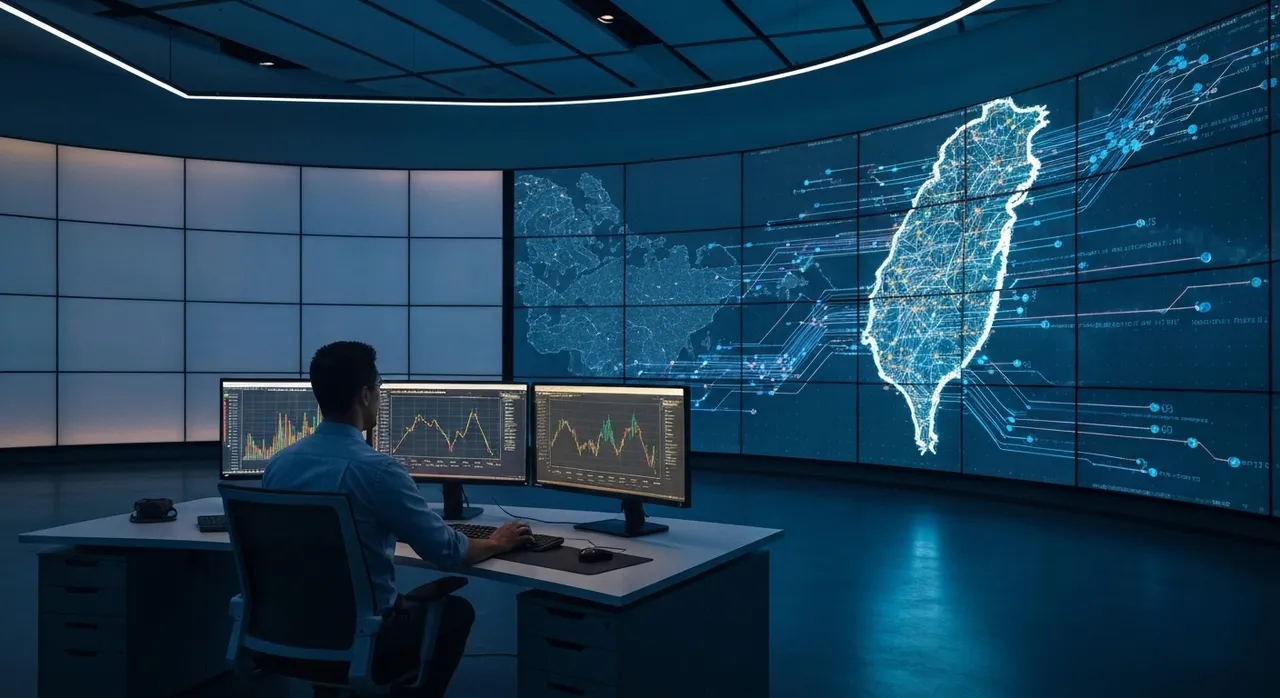
The successful recovery was not merely a matter of discovering forgotten flash memory in a storage bin. It required two years of painstaking research, custom parallelized software engineering, and the deployment of a massive, cloud-based cluster of over 90 enterprise and consumer GPUs. By spending over $900 of personal funds to execute nearly 5.5 trillion cryptographic key checks per second, Yuvi breached decades-old SD card encryption, demonstrating the extreme measures now necessary to rescue interactive history from the brink of total erasure.
The Fragile Legacy of Japanese Keitai Gaming
To understand why rescuing Dirge of Cerberus: Lost Episode required high-performance computing, one must first understand the unique ecosystem of mid-2000s Japanese mobile gaming. Before the dominance of iOS and Android, Japan’s mobile landscape was ruled by feature phones, locally known as Keitai. Operating on proprietary networks such as NTT DoCoMo’s i-mode, these handsets were remarkably advanced for their time, featuring dedicated graphics hardware, high-resolution displays, and sophisticated network integration.
Originally unveiled at E3 2006 and launched later that year on North American carriers like Amp’d Mobile and Verizon’s V CAST before arriving on NTT DoCoMo’s FOMA 903i handset in Japan, Lost Episode served as an official midquel to the PlayStation 2 third-person shooter Dirge of Cerberus: Final Fantasy VII. Starring fan-favorite protagonist Vincent Valentine, the title expanded the narrative context between the main console release and its surrounding lore. On high-end Japanese handsets, it featured impressive 3D graphics, fully voiced cutscenes, and episodic story content.
However, the very infrastructure that enabled these advanced mobile experiences rendered them uniquely fragile:
- Episodic Server Reliance: Games were rarely stored as single standalone applications. Instead, chapters and assets were downloaded sequentially from publisher servers as players progressed.
- Continuous DRM Check-Ins: To prevent piracy and unauthorized distribution, titles required periodic phone-home authentication checks against publisher verification servers.
- Hardware-Tethered Storage: Game files written to removable miniSD or SD cards were encrypted using hardware-specific keys generated by security chips embedded directly on the phone’s motherboard.
When Square Enix shut down the authentication servers for its Keitai catalog on March 31, 2018, Lost Episode became instantly unplayable. Even if a player retained a phone with the game files installed, the handset could no longer authenticate with Square Enix to decrypt and launch the application.
Decrypting Lost Episode Final Fantasy VII: The Cryptographic Roadblock
A major breakthrough occurred in 2024 when the Keitai Archive project, assisted by community member Naoya Shinota, established contact with a volunteer donor who possessed an original SD card containing a complete, fully downloaded dump of Dirge of Cerberus: Lost Episode -Final Fantasy VII-. For digital archaeologists, this was the ultimate jackpot: every single chapter, voice line, and 3D asset resided on the card.
Yet, the team immediately hit a technical wall. The raw data on the card was heavily encrypted. Under standard Keitai security protocols, decrypting data off an SD card requires reading a hidden security partition located on the specific physical handset that originally wrote the files. Because the original phone hardware was no longer available to extract that key partition, the critical security keys were completely missing. For two years, preservationists attempted to find alternative hardware solutions or secondary keys, but every lead ended in a dead end.
Faced with permanent stagnation, Yuvi decided to abandon passive hardware hunting and shift toward pure brute-force cryptographic cracking. As Yuvi noted in a public technical retrospective, the fundamental realization was simple: “We have the data; we just need to unencrypt it.”
Analyzing the Payload and Known-Plaintext Vectors
Before launching a brute-force attack, Yuvi performed deep static analysis on the encrypted file structures. The investigation revealed that Lost Episode stored its downloaded episodic assets inside encrypted ZIP archives. This structural detail provided the critical cryptographic leverage needed for automated validation.
Because ZIP archives adhere to strict file formatting standards—always beginning with predictable header bytes (specifically the standard PK magic bytes)—Yuvi could design an automated decryption pipeline. The brute-forcing software did not need to fully extract the game to verify success; it simply had to apply a candidate key and check whether the output yielded valid ZIP header signatures and consistent structural metadata.
Engineering the 90-GPU Brute-Force Farm
While testing possible keys on a consumer-grade workstation proved that the verification logic worked, the sheer size of the key space presented a severe speed bottleneck. Running the decryption routine on a single high-end consumer GPU—such as an AMD Radeon RX 7900 XTX—yielded processing speeds that would have required months of continuous computation to exhaust the target key range.
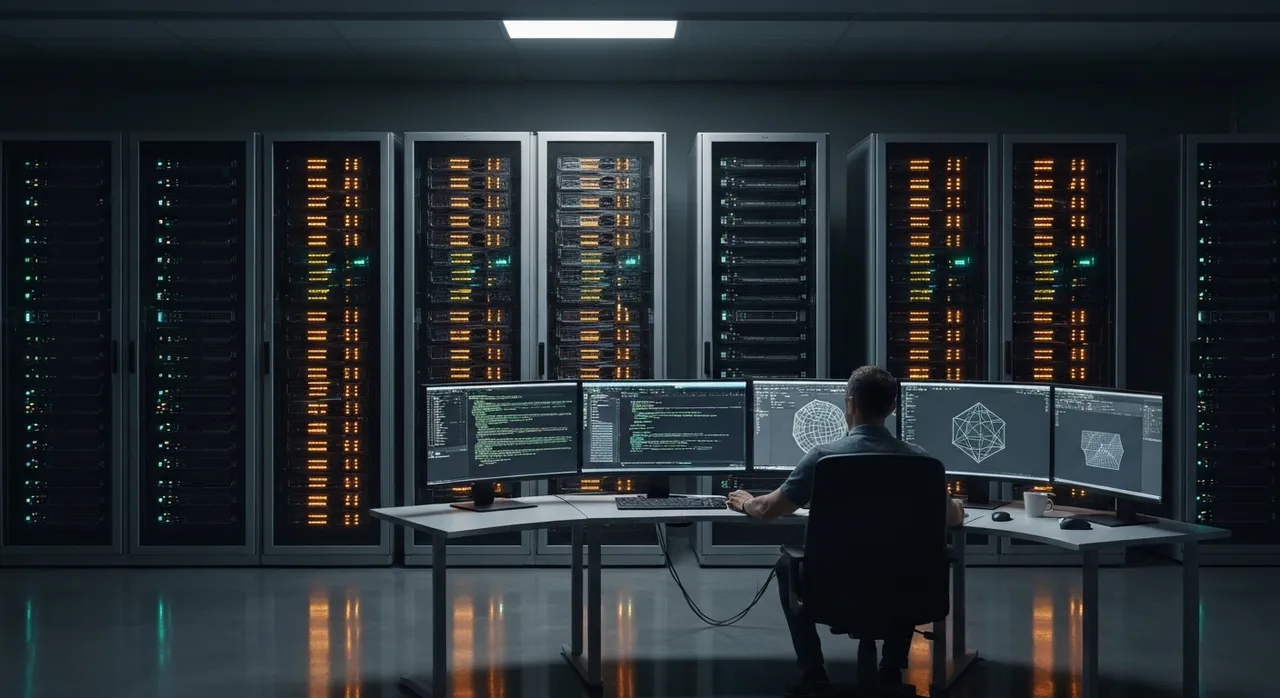
To solve this, Yuvi wrote a custom, highly optimized parallel brute-forcing application using the OpenCL framework. Yuvi then scaled the software across cloud compute networks (utilizing platforms like RunPod), building an enterprise-grade GPU processing cluster.
Infrastructure Breakdown and Compute Metrics
The scale of the compute operation was unprecedented for a fan-led game preservation project. Over the course of the operation, Yuvi orchestrated a massive fleet of high-performance accelerators working in parallel:
- Server Fleet Size: Spun up well over 90 remote GPU-equipped server nodes running across 125 active client instances.
- Hardware Diversity: Distributed workloads across a mixed-architecture grid, including NVIDIA RTX 4090s, A4000s, A4500s, A5000s, workstation RTX 6000s, and enterprise H200 AI accelerators.
- Aggregate Hash Rate: Reached a staggering peak throughput of nearly 5,500 GKeys/second (5.5 trillion key attempts per second)—a compute speed over 70 times faster than a single top-tier desktop graphics card.
- Time and Cost: The brute-force operation cracked the encryption in approximately 72 hours, incurring over $900 in personal out-of-pocket server rental expenses.
The sheer computational power paid off. Within three days of continuous crunching, the distributed network hit the correct key sequence, unlocking all compressed archives and revealing the complete, unencrypted source assets of Dirge of Cerberus: Lost Episode.
Why Preserving Lost Episode Matters for Gaming History
The recovery of Lost Episode is far more than a technical triumph; it restores an important missing link in Square Enix’s historic output. Released during an era when the publisher actively expanded the narrative universe of 1997’s landmark Final Fantasy VII, the title offers unique gameplay and narrative depth that was previously lost to history.
Mechanically, Lost Episode bridged the gap between third-person console action and mobile controls. It retained the third-person over-the-shoulder shooting mechanics, materia customization, and weapon upgrade systems of its PS2 counterpart, translating them into a fluid experience on mid-2000s phone numeric keypads. Narratively, it filled crucial plot gaps between chapters of the main game, providing Vincent Valentine with additional backstory regarding Shinra Electric Power Company, Deepground, and surrounding lore.
Moreover, the recovery proves that feature-phone titles—often dismissed as ephemeral throwaway releases—deserve the same rigorous preservation standards as console or PC releases. Having access to original historical artifacts ensures that developers, historians, and fans can analyze the franchise’s full evolutionary arc.
A Blueprint for the Future of Digital Archaeology
The successful restoration of Lost Episode Final Fantasy VII sets a historic precedent for the digital preservation movement. As cloud authentication, mandatory online check-ins, and server-side assets continue to threaten modern gaming history, traditional ROM dumping methods are increasingly insufficient. Preservationists are now forced to become reverse engineers, cryptanalysts, and cloud infrastructure engineers.
Yuvi’s $900, 90-GPU endeavor demonstrates that when corporate rights holders abandon their digital back catalogs, dedicated community preservationists are willing to harness modern supercomputing power to save interactive culture. Thanks to this extraordinary effort, a forgotten chapter of gaming history has been rescued from total extinction, ensuring that Dirge of Cerberus: Lost Episode -Final Fantasy VII- can be studied, played, and appreciated for generations to come.
Written by
TempMail Ninja
Digital privacy and online security expert. Passionate about creating tools that protect users' identity on the internet.