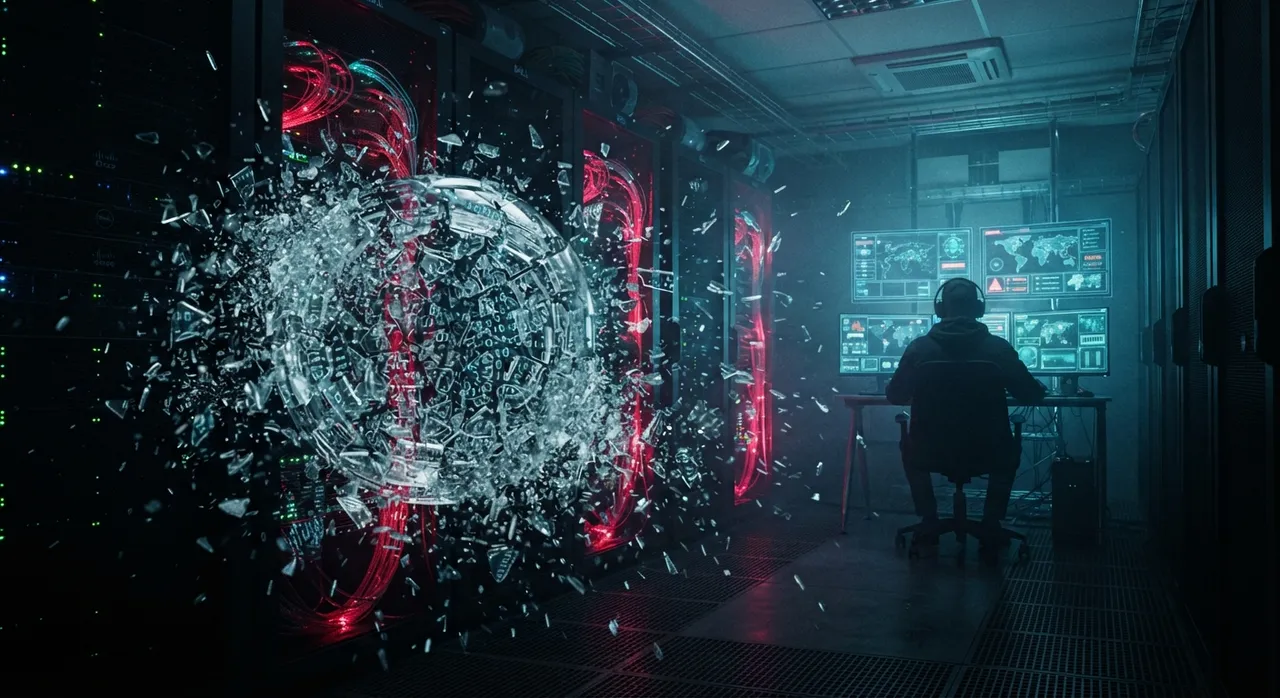
Quantum Innovation and National Security: President Trump Signs Twin Executive Orders

Article Content
On June 22, 2026, the United States embarked on a structural transformation of its national security and technology policy. In a coordinated move at the White House, President Donald J. Trump signed two landmark directives designed to position the nation at the absolute vanguard of the next computational revolution. Together, Executive Order 14411: Ushering in the Next Frontier of Quantum Innovation and Executive Order 14409: Securing the Nation Against Advanced Cryptographic Attacks establish a dual-track national strategy. This approach is engineered to aggressively accelerate domestic quantum innovation while simultaneously hardening the nation’s digital infrastructure against future, quantum-enabled cyber threats.
The signing ceremony, held in the Oval Office and attended by senior Cabinet officials, intelligence directors, and prominent technology executives, underscored the high stakes of this technological pivot. Rather than treating quantum readiness as a distant concern, the administration has framed the emergence of quantum computing as an immediate national security and economic priority. As National Cyber Director Sean Cairncross emphasized during the signing, “Innovation and security have to be balanced”. By pairing aggressive state-backed research with a mandatory transition to post-quantum cryptography, the federal government is attempting to solve a critical puzzle: how to build the world’s most powerful computers while ensuring those same machines cannot be used to dismantle global digital security.
The Looming Cryptographic Collapse: Shor’s Algorithm and “Q-Day”
To understand the urgency behind these twin executive orders, one must understand the mathematical vulnerability at the heart of modern cybersecurity. Today’s global digital economy is secured by public-key cryptography standards, most notably RSA-2048 and Elliptic Curve Cryptography (ECC). These encryption methods rely on “one-way” mathematical problems—such as the extreme difficulty of factoring the product of two massive prime numbers or calculating discrete logarithms—which would take classical supercomputers billions of years to crack.
A sufficiently advanced, fault-tolerant quantum computer changes the equation entirely. Utilizing Shor’s algorithm, a quantum computer can execute these calculations in a matter of seconds. By exploiting the quantum mechanical principles of superposition and entanglement, qubits can process a vast landscape of possibilities simultaneously, reducing classical cryptographic barriers to trivial exercises. The hypothetical moment when a quantum system achieves the scale and stability necessary to break these widely deployed encryption standards is known in the cybersecurity community as “Q-Day”.
While fault-tolerant quantum computers capable of running Shor’s algorithm at scale may still be years away, the intelligence community warns that the threat is already active. Adversarial nation-states are currently executing a highly coordinated “harvest now, decrypt later” (also known as Store Now, Decrypt Later, or SNDL) strategy. In this scheme, hostile intelligence agencies intercept and archive massive quantities of encrypted, highly sensitive U.S. government, military, and corporate data. Although this hoarded data is unreadable today, it is being warehoused in state-run data centers. The moment these adversaries activate a cryptographically relevant quantum computer, they will be able to retroactively decrypt decades of intercepted communications, instantly exposing state secrets, critical infrastructure blueprints, and intellectual property.
Forging the Superpower: Inside Executive Order 14411 and the Future of Quantum Innovation
Recognizing that the best defense is an unmatched offense, President Trump signed Executive Order 14411 to supercharge the American quantum research and development ecosystem. The directive overhauls the National Quantum Strategy, requiring the Assistant to the President for Science and Technology (APST)—coordinated by the White House Office of Science and Technology Policy (OSTP) under Director Michael Kratsios—to deliver a refreshed, modernized strategy within 180 days. This update is designed to lower commercial barriers, protect domestic quantum supply chains, and build a highly trained domestic workforce through new National Quantum Workforce Development Institutes.
At the center of EO 14411 is the establishment of the Quantum Computer for Application Development and Discovery Science (QC-ADDS) Effort. This national initiative mandates a highly focused partnership between the public and private sectors to build and deploy a “scientifically relevant” quantum computer. Specifically, the order directs:
- The Department of Energy (DOE) to identify the precise technical requirements for an advanced quantum computer within 90 days and work to deploy at least one operational, science-enabling system at a federal national laboratory, opening access to the broader scientific community.
- The Department of Commerce to formulate a structured plan, potentially utilizing advance market commitments, to incentivize private-sector quantum computing companies to contribute their proprietary architectures to the QC-ADDS infrastructure.
- The Intelligence Community to expand the Quantum Information Science and Technology Counterintelligence Protection Team, shielding domestic quantum research facilities, supply chains, and silicon manufacturing processes from foreign espionage and industrial sabotage.
Turning Quantum Mechanics into Battlespace Advantage: The 2028 Sensor Mandate
While building a fault-tolerant quantum computer is a long-term endeavor, Executive Order 14411 recognizes that other applications of quantum mechanics are ready for immediate deployment. The directive places a heavy emphasis on quantum sensing, an area of technology that utilizes the hyper-sensitivity of subatomic particles to external environmental factors to make incredibly precise measurements. Because quantum particles react to the slightest shifts in gravity, magnetic fields, and electromagnetic radiation, they can detect physical anomalies that classical sensors entirely miss.
To capitalize on this, the executive order issues a strict, binding directive to the Department of Defense (referred to under its historical statutory name, the “Department of War,” within the executive action) to identify and prioritize at least three distinct next-generation quantum sensor projects within 60 days, with the hard mandate to field these systems to operational military forces by September 30, 2028. This aggressive 27-month deployment window forces the Pentagon to transition quantum sensors out of experimental laboratories and onto active battlefields.
These quantum sensors are poised to revolutionize several critical theater operations:
- GPS-Denied Navigation: Modern military platforms are heavily reliant on GPS satellites, which are highly vulnerable to electronic jamming and spoofing by adversaries. Quantum inertial measurement units (IMUs) and quantum gyroscopes can measure microscopic changes in gravitational fields and acceleration, allowing aircraft, submarines, and land vehicles to navigate autonomously with absolute precision without relying on satellite connectivity.
- Subsurface Anomaly and Submarine Detection: Quantum gravimeters and highly sensitive magnetometers can map minute variations in the Earth’s magnetic and gravitational fields. This allows naval forces to hunt and track silent hostile submarines without active sonar, while also permitting ground forces to map underground tunnels, bunkers, and hidden missile silos from remote distances.
- Space-Based Reconnaissance: Integrating quantum-enabled sensors into low-Earth orbit satellite constellations will allow the military to perform high-resolution underground mapping from space, providing early warnings of subterranean military construction and silo deployments.
Hardening the Fortress: Executive Order 14409 and the Post-Quantum Cryptography Migration
While EO 14411 accelerates offensive capabilities, Executive Order 14409: Securing the Nation Against Advanced Cryptographic Attacks acts as the nation’s shield. The directive overhauls federal cybersecurity standards, ordering an accelerated, mandatory transition of federal systems to Post-Quantum Cryptography (PQC). Coordinated by the Office of Management and Budget (OMB) and National Cyber Director Sean Cairncross, the directive targets the rapid deprecation of encryption algorithms vulnerable to quantum cracking.
The post-quantum algorithms approved under this directive are based on the Federal Information Processing Standards (FIPS) finalized by the National Institute of Standards and Technology (NIST). Unlike classical encryption, which relies on integer factorization, these mathematical systems are constructed on complex geometric lattice problems that are computationally secure against both classical and quantum attacks. The core NIST-approved algorithms guiding the federal migration include:
- ML-KEM (FIPS 203): A module-lattice-based key-encapsulation mechanism used as the primary standard for general encryption, securing data-in-transit and key exchanges.
- ML-DSA (FIPS 204): A module-lattice-based digital signature algorithm designed to serve as the primary standard for identity verification, digital handshakes, and software signing.
- SLH-DSA (FIPS 205): A stateless hash-based digital signature algorithm that serves as a highly robust backup, ensuring cryptographic security even if unexpected mathematical vulnerabilities are discovered in lattice-based systems.
Executive Order 14409 establishes a strict schedule to ensure agencies do not delay their transition. Under the new framework, federal agencies must immediately designate a PQC migration lead and categorize their digital environments. High-value assets (HVAs)—systems containing the government’s most sensitive defense, intelligence, and civilian data—must be fully migrated to quantum-resistant encryption by 2030. All remaining high-impact systems must complete their migration by 2031. Furthermore, to prevent the transition from stalling, the Department of Commerce is directed to launch a PQC migration pilot program, which must be fully executed and completed by December 31, 2027.
Recognizing that the federal government does not operate in a vacuum, the order extends these mandates to the broader commercial supply chain. The Federal Acquisition Regulatory Council is directed to update procurement rules, requiring all covered government contractors to meet these post-quantum security standards and implement comprehensive vulnerability disclosure policies by the end of 2030. Additionally, the State Department and the Department of Homeland Security are tasked with actively assisting critical infrastructure operators, such as energy grids, financial systems, and water networks, in upgrading their defenses to avoid catastrophic systemic failures.
Industry Synergy: Cultivating a Commercial Quantum Ecosystem
The tech industry and cybersecurity advocates have widely praised the administration’s dual-directive strategy, highlighting the balance between forward-looking research and immediate risk mitigation. Trade associations such as the Information Technology Industry Council (ITI) and the Business Software Alliance (BSA) noted that these executive orders establish a much-needed, unified roadmap that prevents a fragmented, agency-by-agency approach.
The inclusion of private-sector leadership at the signing ceremony highlights the critical role commercial enterprises will play in this transition. Matthew Kinsella, CEO of the quantum technology firm Infleqtion, was present in the Oval Office as the orders were signed. Infleqtion, a leader in neutral-atom quantum computing and cold-atom quantum sensing, represents the exact type of commercial innovator the administration seeks to leverage. Kinsella welcomed the directives, noting that “there’s lots of interesting things quantum sensing can bring before quantum computing”. The neutral-atom technology championed by companies like Infleqtion uses lasers to cool and trap individual atoms, creating incredibly stable qubits and sensor arrays that can bypass many of the scalability and temperature limitations of traditional superconducting qubits.
By coordinating federal R&D with commercial efforts, the executive orders build upon the $2 billion in funding previously allocated through initiatives like the CHIPS and Science Act, ensuring that the United States maintains its competitive advantage over global rivals. Through these targeted directives, the administration has signaled that the race to secure the quantum future is not just about writing academic papers—it is about deploying physical systems in the field, securing critical networks, and solidifying American technological sovereignty before “Q-Day” arrives.
Written by
TempMail Ninja
Digital privacy and online security expert. Passionate about creating tools that protect users' identity on the internet.