Rockstar Games Data Breach: ShinyHunters Claims 80 Million Records

Article Content
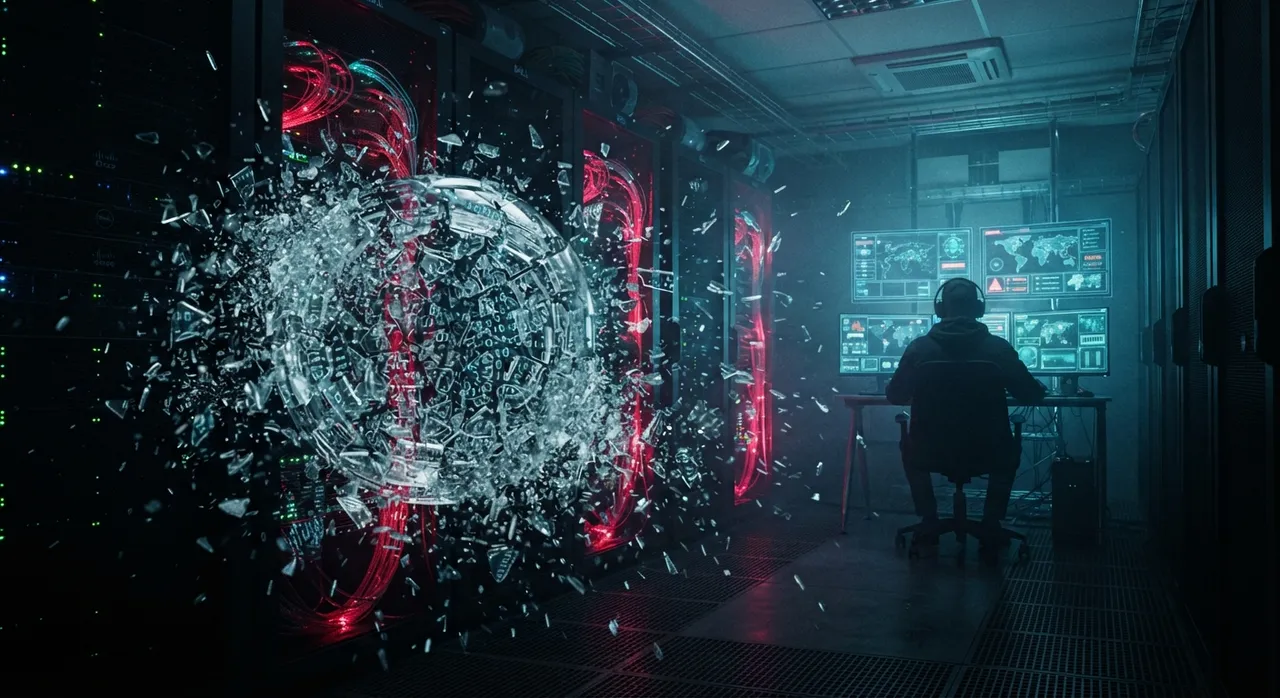
The digital fortress surrounding the world’s most prominent entertainment entities has suffered a catastrophic structural failure. On April 28, 2026, the cybersecurity community was rocked by the confirmation of a Rockstar Games Data Breach of unprecedented proportions. The notorious threat actor group ShinyHunters has claimed responsibility for exfiltrating approximately 80 million business records from the creator of the Grand Theft Auto and Red Dead Redemption franchises. While initial assessments suggest the breach primarily targeted corporate datasets rather than player-facing personal identifiable information (PII), the sheer scale of the theft represents a watershed moment in corporate espionage and supply chain vulnerability.
This incident does not exist in a vacuum. It is the centerpiece of a systemic “token-based” contagion that has swept through the tech sector in April 2026, claiming victims ranging from Amtrak (9.4 million records) to Vercel. The common denominator? A fatal reliance on third-party analytics and AI integration tools that have become the “soft underbelly” of modern enterprise architecture. In the case of Rockstar, the entry point was not a direct exploit of their internal servers, but a compromised authentication token tied to Anodot, a prominent business monitoring and analytics platform.
Deconstructing the Rockstar Games Data Breach: The ShinyHunters Offensive
The Rockstar Games Data Breach is being characterized by security analysts as a surgical strike on the company’s internal operational intelligence. ShinyHunters, a group with a long history of high-profile data heists—including past attacks on Microsoft, GitHub, and Tokopedia—leveraged a sophisticated credential-harvesting technique to bypass traditional perimeter defenses. By securing an active authentication token from the third-party provider Anodot, the attackers were able to masquerade as legitimate automated processes.
The data exfiltrated in this breach is reported to include:
- Internal Business Communications: Thousands of logs containing executive decision-making processes and project timelines.
- Strategic Roadmap Documents: Highly sensitive information regarding future intellectual property development and release windows.
- Financial Forecasting Models: Detailed analytics regarding revenue streams, microtransaction data, and marketing spend.
- Source Material Metadata: While full source code theft has not yet been verified, the metadata associated with development assets provides a roadmap for future targeted exploits.
The choice of ShinyHunters to target corporate records over customer PII suggests a shift toward high-value corporate extortion and market manipulation. By holding 80 million records of internal strategy, the group possesses the leverage to disrupt one of the most valuable companies in the entertainment industry.
The Anodot Connection: The Vulnerability of Third-Party Tokens
At the heart of the Rockstar Games Data Breach lies a critical failure in the management of third-party ecosystem permissions. Rockstar, like many modern tech giants, utilizes Anodot to monitor real-time business metrics and detect anomalies in revenue or user engagement. To function, Anodot requires high-level access to the client’s data environment, facilitated through persistent authentication tokens.
The Anatomy of the Token Compromise
Unlike traditional password-based attacks, token-based attacks bypass Multi-Factor Authentication (MFA). When a token is compromised, the attacker inherits the session’s permissions without needing to trigger a login event. In this instance, ShinyHunters reportedly exploited a vulnerability within the Context.ai or similar third-party AI integration layers used by Anodot itself, creating a cascading failure. This “nested” supply chain attack meant that even if Rockstar’s internal security was robust, the compromise of a tool used by their vendor granted the attackers a key to the kingdom.
Security researchers at PTech Partners noted that the tokens involved were likely long-lived “bearer tokens” that lacked sufficient IP-binding or behavioral constraints. Once ShinyHunters possessed these tokens, they could move laterally through Rockstar’s cloud environments, siphoning data over several days before the anomaly was detected.
A Month of Digital Carnage: Amtrak and Vercel
The Rockstar Games Data Breach is the largest, but by no means the only, major incident in a month defined by supply chain fragility. The parallels between the Rockstar event and the recent breaches at Amtrak and Vercel are striking, highlighting a standardized playbook currently being used by nation-state actors and cyber-mercenaries.
- The Amtrak Incident: Earlier in April, Amtrak confirmed that 9.4 million records were accessed via a compromised third-party guest-rewards interface. Like Rockstar, the breach utilized session hijacking to bypass user authentication.
- The Vercel/Context.ai Breach: Vercel, a leader in cloud development, saw its infrastructure compromised through Context.ai, a third-party analytics tool for LLMs. This breach exposed sensitive configuration environment variables for thousands of projects, demonstrating that even “security-first” platforms are vulnerable to their sub-processors.
These events underscore a growing crisis: the “Integration Tax.” As companies integrate more AI-driven analytics and third-party monitoring tools to gain a competitive edge, they exponentially increase their attack surface. Every API connection and every shared token is a potential bridge for an attacker to cross.
Technical Implications: The End of “Set and Forget” Integration
The Rockstar Games Data Breach serves as a definitive warning that the era of passive vendor management is over. For technical leaders and CISOs, the technical depth of this breach reveals three critical areas of concern that require immediate remediation.
1. The Proliferation of “Shadow” Tokens
Many organizations lack a centralized registry of all active authentication tokens shared with third parties. In the Rockstar case, the token used by Anodot may have been granted permissions that exceeded its functional requirements—a common issue known as “permission creep.” Organizations must transition to a Zero Trust Architecture (ZTA) where tokens are short-lived, single-use, and restricted to specific IP ranges.
2. The AI Supply Chain Paradox
As businesses rush to integrate AI tools like Context.ai to analyze their data, they often overlook the security posture of the AI provider. These providers are becoming high-value targets because they act as “data hubs” for hundreds of enterprises. If an attacker breaches one AI analytics firm, they potentially gain access to the data streams of every one of that firm’s clients.
3. Detection Latency in Cloud Environments
One of the most concerning aspects of the Rockstar incident is the delay between the initial token compromise and the detection of the data exfiltration. Because the attackers were using legitimate tokens, standard “signature-based” security tools saw the activity as authorized. Only Behavioral AI Analytics—the very technology the attackers exploited—can identify the subtle differences between a vendor’s automated data pull and an attacker’s mass exfiltration event.
Strategic Impact on the Gaming and Tech Industry
The fallout from the Rockstar Games Data Breach will be felt for years. For Rockstar, the risk is not just financial, but reputational. While the company has assured stakeholders that customer accounts remain secure, the exposure of 80 million corporate records could lead to the leaking of confidential gameplay mechanics, narrative spoilers, and proprietary engine optimizations. This “corporate de-dressing” can devalue a brand’s intellectual property and give competitors an unfair advantage.
Furthermore, regulatory scrutiny is expected to intensify. With the Cyber Resilience Act (CRA) and updated SEC disclosure rules in full effect, Rockstar and its parent company, Take-Two Interactive, will face rigorous inquiries into their third-party risk management (TPRM) protocols. The question will not be whether they were hacked, but whether they exercised due diligence in securing the tokens granted to Anodot.
Mitigation Strategies: Hardening the Supply Chain
To prevent a repeat of the Rockstar Games Data Breach, enterprises must evolve their defensive strategies. The Ninja Editor recommends a multi-layered approach to securing the modern tech stack:
- Token Rotation and Expiry: Implement automated systems that rotate API keys and tokens every 24 to 48 hours. Any token not used within a specific window should be automatically revoked.
- Micro-Segmentation of Data Access: Third-party tools should only have access to the specific data “silos” they require. Anodot, for instance, should never have had a pathway to reach strategic roadmap documents if its primary function was revenue monitoring.
- Vendor Security Parity: Contracts must mandate that third-party vendors adhere to the same security standards as the primary organization. This includes mandatory disclosure of their own sub-processors (the “fourth-party” risk).
- Honey-Tokens: Deploy “decoy” tokens within the environment. If these tokens are ever used, it provides an immediate, 100% accurate alert that an intruder is present and attempting to use stolen credentials.
Conclusion: A New Era of Cyber Espionage
The Rockstar Games Data Breach of 2026 is a clarion call. It marks the shift from the “brute force” era of hacking to the “identity and integration” era. ShinyHunters did not need to break down the door; they simply stole the digital badge of a trusted contractor. As long as the tech industry continues to prioritize seamless integration over granular security controls, the list of victims—Amtrak, Vercel, and now Rockstar—will only continue to grow.
For the cybersecurity professional, the lesson is clear: your security is only as strong as the weakest link in your third-party ecosystem. The 80 million records lost by Rockstar are a testament to the fact that in the digital age, a single compromised token can lead to a total strategic collapse. It is time to treat every third-party integration not as a convenience, but as a calculated risk that requires constant, automated, and uncompromising oversight.
Written by
TempMail Ninja
Digital privacy and online security expert. Passionate about creating tools that protect users' identity on the internet.