Space-eyes Data Breach: US Intelligence Contractor Compromised

Article Content
The digital perimeter of the United States national security apparatus has been pierced once again, sending shockwaves through the intelligence community. On April 17, 2026, reports surfaced of a catastrophic Space-eyes data breach, an incident that transcends the typical corporate cyberattack. Space-eyes, a Miami-based geospatial intelligence (GEOINT) powerhouse, serves as a silent but vital artery for the U.S. Department of Justice (DOJ), the Department of Homeland Security (DHS), and the U.S. Armed Forces. The revelation that a threat actor associated with a Serbian hacking group—specifically the notorious operative known as “IntelBroker”—has successfully exfiltrated highly confidential documents marks one of the most significant intelligence failures of the mid-2020s.
This is not merely a leak of administrative emails or payroll records. The compromised data includes sensitive discussions on counter-terrorism operations, sanctioned cybercrime groups, and the precise tracking of “denied entry” vessels. As the Space-eyes data breach unfolds, the technical and strategic implications suggest a vulnerability in the federal contracting supply chain that is as deep as it is dangerous. For an organization whose primary value proposition is “situational awareness,” the irony of being blindsided by a 10-minute intrusion is a bitter pill for Washington to swallow.
The Mechanics of the Space-eyes Data Breach: A 10-Minute Infiltration
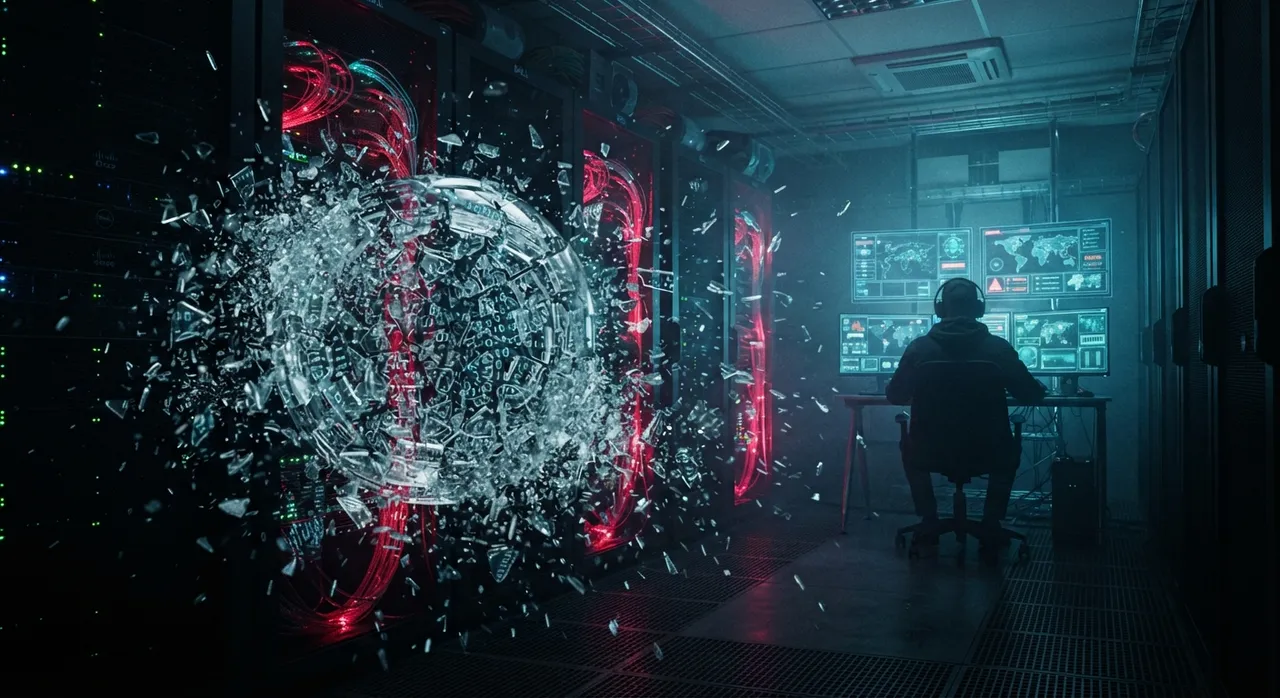
The technical speed of the Space-eyes data breach is perhaps its most alarming feature. IntelBroker, a threat actor who has previously claimed responsibility for breaches at General Electric and the Five Eyes-linked contractor Acuity Inc., asserted that the intrusion into Space-eyes took approximately 10 to 15 minutes. In the world of high-stakes cyber espionage, such a rapid compromise suggests a total failure of “defense in depth” strategies. Security analysts believe the entry point likely involved a combination of exposed API endpoints and misconfigured cloud storage buckets, common pitfalls for firms that scale their SaaS offerings faster than their security oversight.
Initial forensics indicate that the attackers exploited a vulnerability in the firm’s digital infrastructure that allowed for unauthorized administrative access. Once inside, the threat actor moved laterally with surgical precision, targeting the following technical assets:
- Password Hashes: Thousands of encrypted credentials, which, if cracked using high-compute GPU clusters, could provide long-term “persistence” in other government-linked systems.
- Geospatial Metadata: Precise coordinates and location history of maritime vessels and individuals under federal surveillance.
- Internal Correspondence: Thousands of email exchanges detailing the specific “technological support” Space-eyes provides to the NGA (National Geospatial-Intelligence Agency) and the DOJ.
- SaaS Integration Logs: Data detailing how Space-eyes software interacts with the Secure Internet Protocol Router Network (SIPRNet) and other classified federal gateways.
The speed of the exfiltration suggests that the attackers used automated scripts to scrape databases, bypassing traditional Data Loss Prevention (DLP) triggers. This indicates either a lack of anomaly detection for outbound traffic or a sophisticated “low-and-slow” exfiltration technique that masqueraded as legitimate administrative syncing.
The Stolen Intelligence: Beyond PII
While the theft of Personally Identifiable Information (PII)—including the names, phone numbers, and job descriptions of over 26,000 government officials—is a disaster for personnel security, the true danger lies in the operational intelligence. The Space-eyes data breach has effectively handed a map of U.S. geospatial priorities to foreign adversaries. The leaked documents reportedly contain detailed rosters of sanctioned cybercrime entities, such as the North Korean-backed Lazarus Group, and discussions regarding APT-C-26.
Furthermore, the breach includes records of individuals and ships denied entry into the United States. In the context of national security, this data is gold. It allows adversarial nations to understand the “blind spots” in U.S. maritime and border surveillance. By analyzing what Space-eyes was tracking, a foreign intelligence service can deduce what the U.S. cannot see, effectively reverse-engineering the limitations of American GEOINT capabilities.
National Security in the Crosshairs: The Serbian Connection
The attribution of the Space-eyes data breach to a Serbian hacking group raises significant geopolitical questions. IntelBroker, who maintains a high-profile presence on BreachForums, has long been a thorn in the side of the Five Eyes intelligence consortium. While the group often operates under the guise of “hacktivism” or financial gain, the nature of their targets—defense contractors and intelligence-heavy federal agencies—suggests a more complex motive.
Security researchers at firms like Foresiet and Hackread have noted that IntelBroker often operates within a collective known as “Cyber-N” (formerly CyberNiggers). This group has demonstrated a relentless pursuit of high-value U.S. targets. The fact that a Serbian-based actor can compromise a Miami-based defense contractor with such ease highlights the borderless nature of 2026’s threat landscape. Whether these actors are acting as independent “initial access brokers” or as proxies for larger state-sponsored entities remains a subject of intense investigation by the FBI and CISA.
The timing of the breach, occurring on April 17, 2026, coincides with heightened global tensions, where geospatial data is the primary currency of warfare. By compromising Space-eyes, the attackers have not just stolen data; they have compromised the digital sovereignty of the federal agencies that rely on Space-eyes for real-time decision-making.
The Systemic Risk of the Intelligence Supply Chain
The Space-eyes data breach serves as a grim reminder that the U.S. government is only as secure as its least-secure contractor. Space-eyes is part of a growing ecosystem of specialized “boutique” intelligence firms that provide niche technological support to the DOD and DOJ. These companies often operate with the agility of a tech startup but without the hardened cybersecurity budgets of a Lockheed Martin or a Raytheon.
The systemic risks exposed by this incident include:
- Third-Party Dependency: Federal agencies often outsource data processing and geospatial visualization to private firms, creating a “soft underbelly” for attackers to exploit.
- Inadequate Vetting: While these contractors must meet certain security standards, the “10-minute breach” suggests that current audits may be focusing on paperwork compliance rather than active red-team testing.
- Centralization of Sensitive Data: Space-eyes acted as a central repository for data from the Navy, Army, Air Force, and DHS. This makes it a “single point of failure”—a high-value target that, once breached, provides a “treasure trove” of multi-agency intelligence.
The Department of Justice and the Department of Homeland Security are now faced with the monumental task of “damage assessment.” They must determine if any ongoing undercover operations or counter-terrorism initiatives have been compromised by the leak of these “highly confidential” documents. The personal safety of the 26,000 officials whose data was leaked is also a paramount concern, as they are now prime targets for spear-phishing, blackmail, or physical surveillance.
Immediate Response and Mitigation Efforts
In the wake of the Space-eyes data breach, CISA has issued an emergency directive to all federal contractors within the GEOINT space. The following actions are being mandated across the board:
- Mandatory Zero Trust Implementation: Moving away from perimeter-based security to a model where every access request is verified, regardless of origin.
- API Security Audits: Comprehensive scanning of all public-facing and internal APIs to identify unauthorized access points.
- Credential Resets: Immediate rotation of all administrative passwords and a transition to hardware-based Multi-Factor Authentication (MFA).
- Encryption Review: Ensuring that all data at rest—including coordinates and ship manifests—is encrypted with post-quantum resistant algorithms.
While Space-eyes has not yet released a full public statement, internal sources suggest the company is working with top-tier cybersecurity firms to perform a root-cause analysis. However, for the DOJ and DHS, the damage is likely already done. Once 264 gigabytes of sensitive data enter the dark web, they cannot be “un-leaked.”
Looking Ahead: The Hard Lessons of April 2026
The Space-eyes data breach will undoubtedly be a catalyst for legislative change. We expect to see a push for more stringent enforcement of the Cybersecurity Maturity Model Certification (CMMC 2.0), requiring contractors to undergo frequent, unannounced “live-fire” security tests. The era of “self-certification” for small intelligence contractors is likely coming to an end.
Furthermore, this incident underscores the evolution of the threat. The Serbian hacking group’s ability to exfiltrate data from a “digital fortress” in minutes shows that artificial intelligence is likely being used by threat actors to identify and exploit vulnerabilities at machine speed. To counter this, the U.S. government must invest in AI-driven defensive measures that can detect an intrusion the moment it begins, rather than 10 minutes too late.
As we move further into 2026, the Space-eyes data breach stands as a landmark case in the history of cyber warfare. It proves that in the modern age, a single misconfigured server in Miami can compromise the national security of the entire United States. The challenge now is not just to patch the holes in Space-eyes’ systems, but to rethink the entire architecture of federal-contractor intelligence sharing. If we fail to do so, the next “10-minute breach” could be the one that shifts the global balance of power for good.
For security professionals, the lesson is clear: visibility is not security. Space-eyes provided visibility to the government, but it lacked the security to protect that very vision. In the high-stakes game of geospatial intelligence, being able to see the world is useless if you cannot see the wolf at your own door.
Written by
TempMail Ninja
Digital privacy and online security expert. Passionate about creating tools that protect users' identity on the internet.