Trellix Source Code Breach Confirmed After Repository Compromise
Article Content
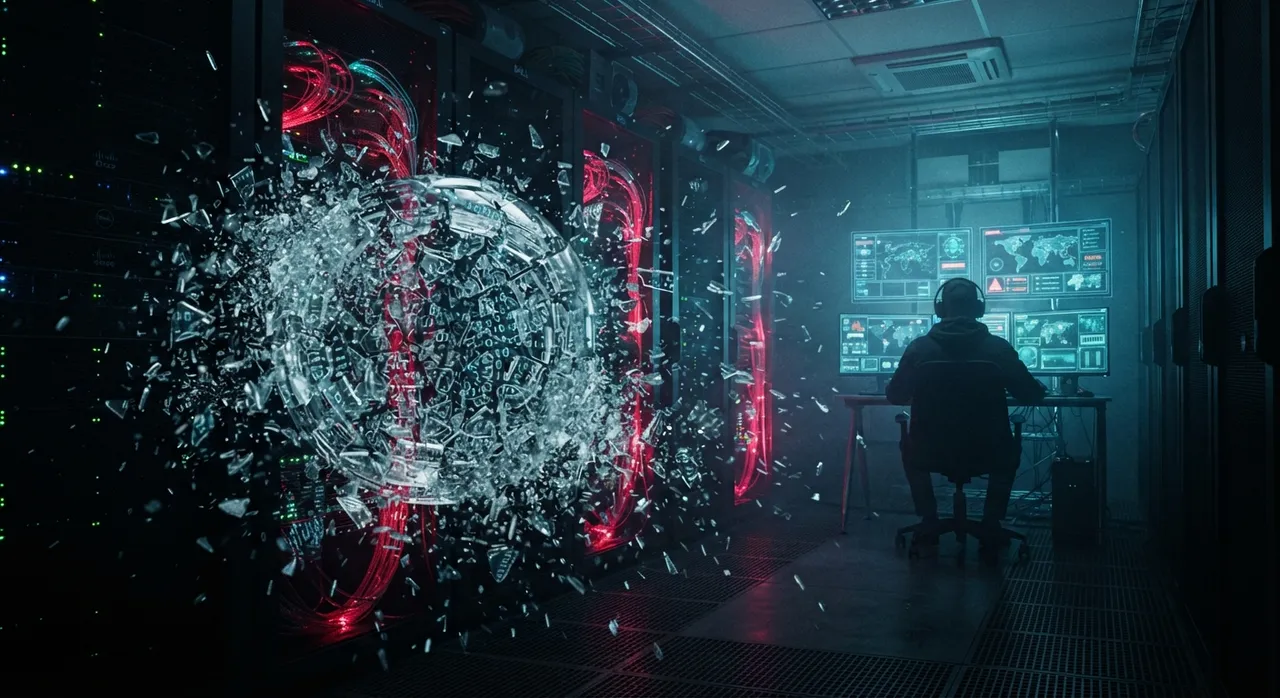
The global cybersecurity landscape was jolted on May 2, 2026, when Trellix, the titan formed by the high-stakes merger of McAfee Enterprise and FireEye, officially confirmed a significant security incident. In a disclosure that sent shockwaves through the C-suites of Global 2000 companies, the firm acknowledged that an unauthorized actor gained access to its internal source code repository. This Trellix source code breach represents more than just a data leak; it is a symbolic and technical assault on one of the industry’s most vital “defenders of the gate.”
While the company was quick to reassure partners that its core product distribution channels remain uncompromised, the gravity of the event cannot be overstated. When a company responsible for the Extended Detection and Response (XDR) and endpoint protection of government agencies and critical infrastructure is itself infiltrated, the narrative shifts from simple corporate espionage to a systemic threat against the software supply chain. As forensic teams from across the globe descend upon the incident, the tech industry is left grappling with a recurring nightmare: the hunters have once again become the hunted.
The Anatomy of the Trellix Source Code Breach
Initial reports indicate that the Trellix source code breach originated within the company’s internal development environment. While Trellix has not yet specified whether the compromise involved GitHub, GitLab, or a proprietary on-premise Bitbucket instance, the focus of the investigation lies squarely on the “repository compromise.” In modern DevOps workflows, source code repositories are the “crown jewels” of intellectual property. They contain not just the logic of the software, but often the architectural blueprints, internal API structures, and occasionally, despite all best practices, latent cryptographic secrets or hardcoded credentials.
The company’s statement on May 2, 2026, noted that the breach was “recently identified,” implying a period of dwell time where threat actors may have had unfettered access to browse the logic of Trellix’s premier security tools. Security analysts suggest that the breach likely involved a sophisticated credential harvesting campaign or a compromise of a developer’s workstation, bypassing multi-factor authentication (MFA) via session hijacking or “MFA fatigue” tactics. Once inside the repository, the adversaries could systematically clone repositories containing the source code for a variety of legacy and next-generation security modules.
Technical Implications: White-Box Testing for Adversaries
The most immediate danger of the Trellix source code breach is the shift from “black-box” to “white-box” analysis for threat actors. Under normal circumstances, hackers must probe a security product’s binary files or active processes to find vulnerabilities—a time-consuming and often noisy process. With access to the raw source code, an adversary can perform deep-dive static analysis to identify:
- Logic Flaws: Imperfections in how the software validates signatures or handles memory, which could lead to buffer overflows or remote code execution (RCE).
- Evasion Techniques: By understanding the exact algorithms used by Trellix EDR (Endpoint Detection and Response) to flag suspicious behavior, attackers can design malware specifically tailored to “go dark” and bypass these detection engines.
- Hardcoded Secrets: Despite modern “secrets scanning” tools, repositories often contain forgotten API keys, staging environment passwords, or internal communication tokens that can be used for lateral movement.
- Kernel-Level Vulnerabilities: Since many Trellix products operate at the kernel level of an operating system to monitor threats, a vulnerability discovered here could grant an attacker the highest possible level of privilege on a victim’s machine.
Assessing the Risk to the Software Supply Chain
One of the primary concerns following the Trellix source code breach is the potential for a “SolarWinds-style” supply chain attack. If an attacker can move from the source code repository to the build server (the CI/CD pipeline), they could theoretically inject malicious code into legitimate software updates. This would allow them to distribute “Trojanized” versions of Trellix products to thousands of customers simultaneously.
However, Trellix has been proactive in addressing this specific fear. In their preliminary findings, the company stated that their core release and distribution mechanisms show no signs of unauthorized modification. This suggests a successful “air-gapping” or isolation between the development environments where the code was stolen and the production environments where the final software is signed and shipped. Nevertheless, the industry remains on high alert. The integrity of a security provider is built on trust, and even if the “bins” are clean, the “blueprints” are now in the hands of the enemy.
The Recurring Trend: Targeting the Security Providers
The 2026 Trellix incident is not an isolated event but the latest chapter in a troubling trend where cybersecurity firms are high-value targets. By compromising a firm like Trellix, a state-sponsored actor or high-level cybercriminal group achieves several strategic objectives:
- Force Multiplier Effect: Instead of hacking 1,000 individual companies, the attacker hacks the one company that protects those 1,000 targets.
- Intelligence Gathering: Understanding what a security firm knows about “current threats” allows attackers to adjust their own infrastructure to remain undetected.
- Prestige and Disruption: Breaching a brand like Trellix—born from FireEye and McAfee—serves as a psychological blow to the cybersecurity community, eroding confidence in digital defenses.
History reminds us of the 2020 FireEye breach, which eventually led to the discovery of the SolarWinds Orion compromise. In that instance, the attackers stole “Red Team” tools. The Trellix source code breach of 2026 appears to be an evolution of this strategy, moving past the tools and into the fundamental DNA of the security products themselves.
Forensic Investigation and Industry Response
Trellix has mobilized an “elite squad” of third-party forensic experts to conduct a comprehensive audit of their internal systems. This investigation is expected to last weeks, if not months, as they parse through terabytes of logs to determine the exact timestamp of the initial entry and the volume of data exfiltrated. The company has also proactively engaged with law enforcement, signaling that this may be the work of a sophisticated nation-state actor (APT).
Industry reaction has been a mix of support and scrutiny. While competitors often offer assistance during such crises, the reality is that the Trellix source code breach will force every Trellix customer to re-evaluate their risk posture. Security analysts are currently recommending that organizations using Trellix products take the following steps:
- Monitor for Anomalous Updates: Closely audit all incoming updates from Trellix, ensuring that digital signatures match known-good certificates.
- Implement Defense-in-Depth: Do not rely solely on a single security vendor. Layered defenses can mitigate the risk if one vendor’s detection logic is compromised.
- Enhanced Logging: Increase the verbosity of logs on critical servers to detect any potential evasion techniques that might be developed using the stolen source code.
- Zero Trust Architecture: Accelerate the move toward Zero Trust, which assumes that the internal network (and the security tools on it) could be compromised.
The Road Ahead: Rebuilding Trust in 2026
As we move further into 2026, the Trellix source code breach serves as a stark reminder that no organization is unhackable. The merger of McAfee Enterprise and FireEye was intended to create a “living security” ecosystem capable of adapting to threats in real-time. This incident tests that very premise. If Trellix can demonstrate a transparent, rapid, and thorough remediation process, they may be able to turn this crisis into a masterclass in incident response.
However, the long-term impact on the cybersecurity industry will likely involve stricter regulations regarding the protection of source code. We may see the emergence of mandatory “Source Code Vaulting” standards for critical infrastructure providers, requiring that code repositories be kept in highly secure, hardware-isolated environments with biometric access controls and immutable logging.
Conclusion: A Defining Moment for Digital Defense
The Trellix source code breach is a watershed moment for the software supply chain. It highlights the vulnerability of the very tools we use to stay safe in an increasingly hostile digital world. For Trellix, the mission is now two-fold: they must continue to protect their global client base while simultaneously performing “open-heart surgery” on their own internal security architecture.
While the full fallout of the May 2nd announcement remains to be seen, one thing is certain: the battle for the integrity of our source code is the new frontline of global security. As adversaries become more adept at identifying latent vulnerabilities through stolen logic, the defense must become even more resilient, transparent, and collaborative. The Trellix source code breach is not just Trellix’s problem—it is a wake-up call for the entire global technology stack.
Written by
TempMail Ninja
Digital privacy and online security expert. Passionate about creating tools that protect users' identity on the internet.